‘Hope is the enemy’ in Scenes from the Climate Era
Millie Wooler praises this bleak, darkly funny production that still finds moments of humanity amid the climate chaos

Everyone knows the tale of Pandora’s Box (or Jar): when the first woman is created, she’s given a jar that she is not to open. She opens it anyway and unleashes all the evils of the world, in beetle-form, onto the unsuspecting men around her. But one beetle remains in the jar – Hope. And for as long as Hope remains in that jar, men will be able to cope with whatever the world throws at them.
It is a tale quite possibly as old as Western civilisation, and the constant presence of hope has given us light through some of our darkest times. Yet, Scenes from the Climate Era, takes this notion to task. David Finnigan’s play has a serious case of gallows humour, transporting the audience at break-neck speed through decades of human inaction and resilience in the face of adversity. Where the audience laughs is where the glimmers of joy still shine through in a world without hope.
“Hope is the enemy”, claims one of the characters, a chemist (Kenya Wilcox), unpicking decades of hope that, arguably, has so far fuelled action. The chemist argues that this hope is also used as an excuse for inaction by the masses – we are always hoping that something else will come our way and magically solve the crisis that we have created. Finnigan is clear that this is not the case.
“Where the audience laughs is where the glimmers of joy still shine through in a world without hope”
One of the defining features of the play is the insertion of locally-relevant scenes by local playwrights to leave the audience with an incredibly claustrophobic sense of unease. Cambridge’s playwrights, Enya Crowley, Kaya Yapp, Wilf Offord, Hannah Yeung and Jen Shaftoe, certainly delivered.
Quite possibly the most moving scene is the ‘endling’ section, set in a shipping container in the Cambridge Botanical Gardens. A frog called Smiley, the last or ‘endling’ of its species, is being cared for by a conservationist (Isadora Vargas Mafort), who slowly lists the endlings of other species we have since lost. In a production that sometimes leans a little too heavily on gimmick or fad, this scene really got it. As the lights gradually fade, representing each member of the threatened species, Mafort’s expert delivery of the moving eulogies leaves the audience with the realisation of what we have lost – and what we will be unable to regain.
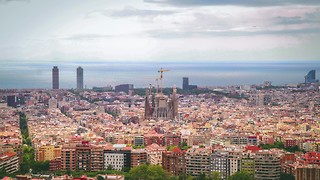
This scene echoes another in the second act; Leni Klöcker plays a builder from Barcelona attempting to aid the construction of a wall to prevent an Antarctic glacier from melting into the sea. One night, a storm hits and wipes away all of their work, yet they begin again, a powerful symbol of human resilience.
“Mafort’s expert delivery of the moving eulogies leaves the audience with the realisation of what we have lost – and what we will be unable to regain”
With the actors playing so many characters, one might expect to be confused, especially with such a limited set and costume range. However, the fifty scenes are self-contained and the actors handle the definition between characters very well. As well as Mafort and Klöcker, Dominika Wiatrowska and Edward Badege give particularly commendable efforts. Badege’s talent really shows in some of his most emotionally complex characters: a scientist unsure about whether unleashing an X-shredder mouse to decimate an invasive species is the right thing to do, and a son trying to save his mother from a Category 4 storm in Cardiff.
Wiatrowska brings comedic precision to resurrect the weaker second scene. The compere in the red coat trying to convince the audience to shove lentils in SUVs feels a little forced. Being handed empty envelopes in which we were meant to imagine a lentil recalled Year 9 drama class. Yet in Wiatrowska’s hands, the character is genuinely funny and the gimmick feels less obtrusive.
The problem is that the play veers between gimmicky and preachy throughout. The longer soliloquies on the impact of climate change can feel forced when they are not rooted in a genuine niche, like the endlings or the Antarctic wall. Even the hallowed guest speaker, Stephen Fry, feels more like a fast way of selling tickets than a necessary component.
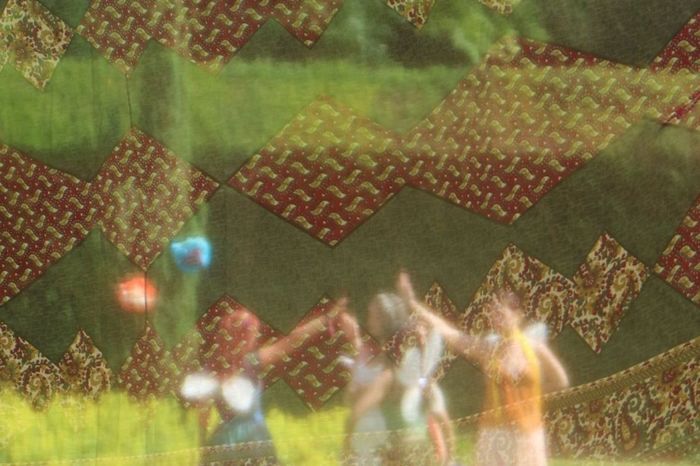
This play is bleak, but not entirely devoid of hope. Our beaches will disappear, life as we know it will change, and we will not live to see the end of this disaster, but, perhaps, a thousand years or so in the future, things will stabilise again. A particularly technical scene details how, 6,000 years ago in Australia, people made nets to sustainably catch eels, which are still in working order to this day, despite two hundred years of neglect.
If the play lacks hope, it is only because we have disconnected ourselves from previous generations – those who knew how to catch eels sustainably – and the generations to come. Once we reconnect, a new normal will emerge again.
Scenes from the Climate Era will continue playing at the ADC Theatre until Saturday 16th May
 Comment / The Cambridge drift1 June 2026
 Comment / Top of the slops: the competitiveness of college dining4 June 2026
 News / Cambridge psychologist warns against blanket social media ban for under-16s1 June 2026
 News / University support staff strikes end after month of action2 June 2026
 Music / We need to talk about Kendrick2 June 2026
- Comment / Top of the slops: the competitiveness of college dining4 June 2026
 Interviews / Bible Scholar Mattie Mae Motl: “God is a woman”4 June 2026
 Features / One big happy (college) family?4 June 2026
 Theatre / Bold beginnings in the Corpus Playroom 3 June 2026
- Music / We need to talk about Kendrick2 June 2026