Bible Scholar Mattie Mae Motl: “God is a woman”
Phoebe Leung discusses the nature of God and a new perspective on biblical masculinity with Mattie Mae Motl

“Blasphemous.” “Satanic.” “Witch.” These words are commonly found in the comment section under Bible scholar Mattie Mae Motl’s Instagram page. If that’s all you know about her, you’d be forgiven for thinking Motl was some sort of enterprising provocateur capitalising on heretics for engagement. However, my conversation with her painted a completely different picture. The woman I spoke to was a strikingly articulate and thoughtful scholar who truly loves her faith and, for this exact reason, insists on the right to criticise how it has been received.
Motl is a PhD candidate in Divinity at the University of St. Andrews and a “progressive Christian” with over 156,000 followers on Instagram and 1.5 million likes on TikTok. On these platforms, Motl shares how she interprets the Bible through a “liberatory lens” which aims to free marginalised people from oppression. Having grown up in Arkansas as a pastor’s daughter, Motl is as much of a Bible nerd as she is an advocate for loving thy neighbour regardless of their background. This approach, however, was not particularly welcomed by her “high control” Southern Baptist community, which “shamed” her for “asking questions”. This eventually led her down a path of deconstruction, a short stint preaching at a progressive church, and a series of degrees in English and Divinity, where she was encouraged to read the Bible with nuance.
“The biggest myth, she says, is the idea that the Bible is a “straight-from-God rulebook””
Now, she’s traded sunny Mississippi for rugged Scottish coasts, and is in her third year studying gender and sexuality in Paul’s letters as a PhD candidate. Motl is “fascinated” by Paul because of how “has been co-opted to oppress minority groups”: conservatives often paint him as a “misogynist, homophobe, and chauvinist,” which she believes are out-of-context misreadings. Instead, her research suggests Paul represents a strikingly “queer” understanding of manhood relative to the heteronormative status quo of the time. Unlike the average Roman who believed men must “always be in control,” Paul looked to Jesus, who was “beaten, shamed, and executed by the state,” and depicted himself, similarly, as “finding strength in weakness”.
It is this model of queer masculinity at the margins of empire that Motl is inspired by, even if she wouldn’t agree wholesale with Paul’s views on gender. “I mean, Paul is a first- and second-century person. If I sat across and had a pint with him, […] I don’t think we would agree on a lot. That being said, there are ways he is working within his particular context that do challenge those contexts in meaningful ways.”
Motl is keen to share her approach to biblical interpretation beyond the ivory tower. She appears on podcasts and posts frequently on Substack, Instagram, and TikTok, where she “busts myths” about the Bible, much to the dismay of angry commenters. The biggest myth, she says, is the idea that the Bible is a “straight-from-God rulebook” that “transcends time, culture, and context” and “can and will apply in modernity”.
“God is a woman, and God is a man, and God is a child”
Instead, Motl treats the Bible as a text. It is the word of God, yes, but written down by “deeply flawed men” for an audience radically different from our own. She finds the idea of approaching and understanding the Bible without considering the socio-political context in which it was written “really scary […] Think of all the training you need to read something as old as Shakespeare. […] You need all of these footnotes to understand what Shakespeare is trying to say. And that’s not nearly as old as the Bible!”
Motl’s loud and proud defense of liberation theology is not without cost. The backlash she faces from “fundamentalist Christians” online makes her contemplate quitting “every day”. “Our brains aren’t meant to handle that much hate from strangers,” she explains, “so there are boundaries I put in place to protect myself.” In addition to mental health, Motl also worries her activism may affect future job prospects, since “academia and public scholarship don’t always get along”.
However, Motl says the impact of her work makes it worth it. “For every two or three hate comments, I have hundreds of people who say they went to church on Sunday for the first time […] or read the Bible for the first time since they were 12.”
When I ask if Motl believes God is a woman, she laughs and says “Yes! God is a woman, and God is a man, and God is a child. God is wonder, God is imagination, God is play. God is everything, and everything is God.”
“We, unknowingly and in the name of patriarchy, restrict who God is”
She then goes on to explain that the Bible uses a variety of “metaphors” to describe God because “God is so big that not even one person can hold him,” and metaphors “break them down into bite-sized pieces” that we can understand. “I think we, unknowingly and in the name of patriarchy, restrict who God is when we just use particular masculine images and language to describe [God].”
As Motl casually autopsies contemporary Biblical reception with practised precision (and satisfyingly beautiful rhetoric), I see the fruits of her academic and preaching training and commitment to getting the Bible right, having seen first-hand the harm that results from willing misinterpretation.
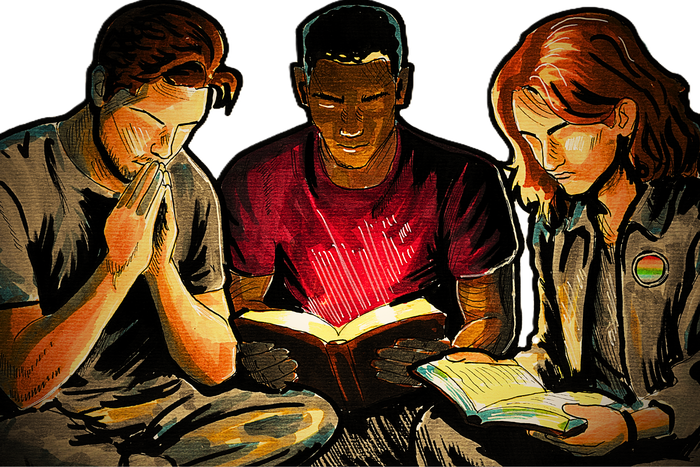
“The Bible is a powerful tool, and people want power,” she elaborates. “However, like many other tools, it can be used for good and […] for harm.” Using the Bible for good is perhaps the best way of describing Motl’s work, and she doesn’t think she’s alone in her approach. She highlights how Pope Leo XIV has recently apologised for St Paul’s role in justifying slavery, and thinks that gender and sexuality will come next. I leave our hour-long conversation inclined to believe Motl. Her erudition and passion reassure me that modern liberation theology is in good hands.
 Comment / The Cambridge drift1 June 2026
 News / Cambridge psychologist warns against blanket social media ban for under-16s1 June 2026
 News / University support staff strikes end after month of action2 June 2026
 News / News in Brief: Corpus climbing, climate cash, and commendable contributions1 June 2026
 Music / We need to talk about Kendrick2 June 2026
 Interviews / Bible Scholar Mattie Mae Motl: “God is a woman”4 June 2026
 Features / One big happy (college) family?4 June 2026
 Theatre / Bold beginnings in the Corpus Playroom 3 June 2026
- Music / We need to talk about Kendrick2 June 2026
- News / University support staff strikes end after month of action2 June 2026