What’s in a costume?
Nabiha Ali suggests costume plays a tangible role as an interpretative tool in theatre
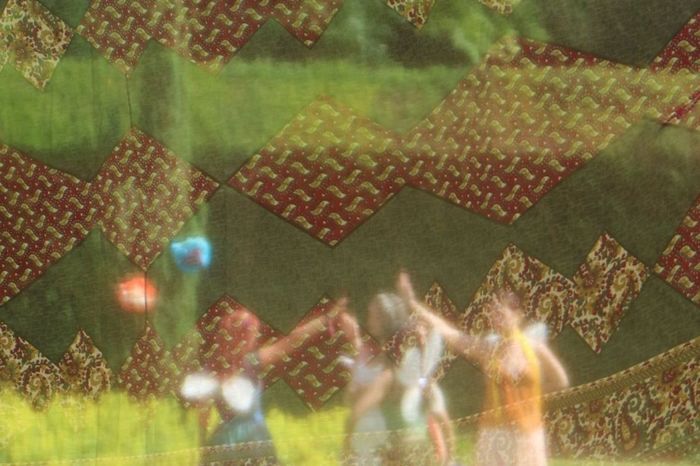
Fellow Hamlet fans might recall The Globe Theatre’s 2018 production of the tragedy, featuring its eponymous prince sporting a clown costume. When I first heard of the production as an A-Level student studying Hamlet, I was initially filled with something akin to mortification: what I saw was a complete desecration of a play engineered with extraordinary sensitivity. I rashly mistook creative interpretation for ridicule, failing to see how a play in which so many of its characters become viciously subsumed by melancholia could be translated in such a way. But, the costume choice was in fact a profound one: with the chalky demeanour and baggy trousers, designers sought to visually crystallise Hamlet’s antic disposition in the play’s latter half, whilst also delicately foregrounding the warped nature of tragedy itself. Reminded of the production during Shakespeare coursework last year, I was able to return to it with a newfound appreciation. I saw how, on closer examination, the obscene, crayon-red smile could have been drawn by a child’s hand, and, more importantly, how it failed – intentionally – to obscure that drooping moroseness which floated beneath: almost like a sad pentimento.
“Costume can be so much more than a mere display of shallow aestheticism”
As this production demonstrates so aptly, costume can be so much more than a mere display of shallow aestheticism: it is a tool gesturing towards the wider body of the play, its encompassing contexts – whether concealed or surface-level. A big fan of period dress, I recently had the delight of seeing the ADC’s staging of Little Women, for which the costume designer was Ellie Russell. I adored the colourful dresses, like large, upturned, drooping flowers. But the March sisters’ dress proved more than just a historically-conventional necessity later on in the play, when the audience witnessed Sallie Gardiner’s (Sky Stobart) zealous grooming and pampering of eldest sister Meg (Isobel McNerney). When an anxious Meg reappears, she comments on how cold she feels. Amidst our shared concern for Meg, the statement adds just the right sprinkling of comedy, when we see her new costume: a frilly, low-necked dress, faintly resembling a meringue.
Of course, there are times when costume choice adds little more than superficial cheerfulness, as if characters are merely decorative fixtures planted strategically amidst a backdrop: offering little room for interpretation. I am reminded of traditional pantos. Anybody who watched last term’s Jack and The Beanstalk Panto will know what I mean when I say I had to crack a smile at the costume choice: stripy stockings and vibrant garments, colours so bright they made your eyes hurt. The Panto’s lighting choice only further accentuated vibrancy. In contrast, the play’s villain flaunted a dull, faintly sludge-coloured cloak. Such overt marginalisation from the onset restricted the kind of nuance or sympathy we might experience when watching a staging of Frankenstein, for instance.
“Interpretation largely rests with the audience […] storyline becomes a silvery thread each must follow individually”
Occasionally, costume becomes little more than a creeping towards superficiality and an empty vessel of interpretation. A good play, I feel, should make its audience work, to envision more closely that which is already before us. When costume is thrust glaringly under the nose, it becomes a condescending invasion at best, and the narrative of the play pales into meaninglessness against such obtrusion. In my time at Cambridge, I have yet to see a student play that has fallen prey to this.
Less conventional plays might abandon costume entirely, allowing actors to perform in everyday wear – I spoke earlier of The Globe Theatre’s Production of Hamlet. I now refer to a somewhat unorthodox adaptation of the same play, staged by The Factory Theatre Company: in a bold display, both costume and props were almost entirely forsaken (the audience being relied upon to supply the latter). In general, there are both perks and dangers to this avant-garde approach. On the one hand, interpretation largely rests with the audience – within the cloister of the theatre, storyline becomes a silvery thread each must follow individually. This is typically resonant of drama – where body language is predominantly a tangible vehicle, bearing beautifully the weight of fruitful interpretation.
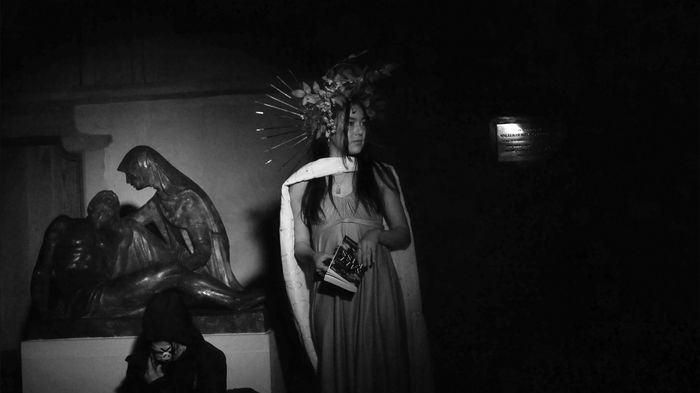
But there is a danger perhaps, in overemphasising costume. A play is not real life: this is something cinema craves to re-create, and there is a sure line between cinema and a play. Visually, a play is not the mirror evincing the reflection of real-life: it only refracts it, positing instead a shadowy, fleeting mimesis. Place too much focus on costume, and the lines become entangled. The fragile boundary between illusion and artifice weakens. Metaphorically, costume is either a gentle nudge or a dictation, fuelling a director’s vision. But to decide how far we are willing to go in allowing this dictation is something forever in our grasp.
 Interviews / ‘You have to take it as it comes’: discussing content creation with Auden Barnes17 May 2026
 News / Science Park to ‘triple’ in size with £3bn investment21 May 2026
 News / Sons of imprisoned Saudi scholars urge Cambridge to call off deal with Saudi defence ministry22 May 2026
 Science / Forked over: dish-parity between college cafeterias17 May 2026
 Theatre / Crossing Points devastates the Corpus Playroom20 May 2026
 Sport / Fitzwilliam narrowly regain Cuppers trophy in tight affair with Selwyn22 May 2026
 Comment / The personal cost of reporting sexual violence at Cambridge22 May 2026
- News / Sons of imprisoned Saudi scholars urge Cambridge to call off deal with Saudi defence ministry22 May 2026
 Science / CamGraPhIC’s crusade to curb the AI energy crisis22 May 2026
 Film & TV / Hokum and the horror of guilt21 May 2026