We need to talk about Kendrick
Daniella Adetoye considers rap and the politics of respectability
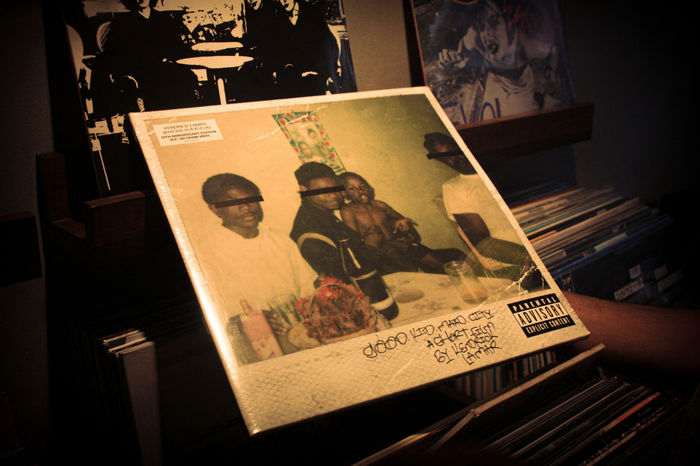
During Drake and Kendrick Lamar’s 2024 feud, Drake spat the infamous line, “Kendrick just opened his mouth, someone go hand him a Grammy right now.” Over two years later, what was meant as a jab poking fun at the idea that Lamar had become the Grammys’ darling feels less like a diss and more like a strangely prescient observation.
In the wake of Drake’s bizarre triple-album release receiving a far colder reception when compared to the dominance he once commanded, Kendrick’s position within rap and the wider cultural establishment feels more untouchable than ever. The feud may have begun as a battle between rap titans, but its aftermath has helped cement Lamar as hip-hop’s definitive prestige artist.
“Each new Kendrick release arrives almost instantly sanctified by the music industry’s most prestigious institution”
With his latest wins, Lamar has become the most awarded rapper in Grammy history. He once again collected trophies across nearly every rap category, winning Record of the Year, Song of the Year, Best Rap Performance, Best Rap Song, and Best Music Video. At this point, each new Kendrick release arrives almost instantly sanctified by the music industry’s most prestigious institution.
These victories follow a triumphant few years for Lamar, marked by the blistering Drake diss ‘Not Like Us’, a Super Bowl halftime headline performance, and new music and an international tour performing alongside SZA. None of this is to say the awards are undeserved. Kendrick Lamar is, by any reasonable metric, one of the most important rappers of this generation. His albums from good kid, m.A.A.d city to To Pimp a Butterfly and Mr. Morale & the Big Steppers have reshaped the sonic and political possibilities of mainstream rap. His lyricism is dense, literary, and ambitious, and his influence is undeniable.
But the sheer consistency with which the Recording Academy rewards him raises an uncomfortable question. Why is Kendrick the rapper the Grammys seem most comfortable celebrating?
“Creating conversations about the Grammys’ inability to recognise Black artistry”
The Grammys have long had a complicated relationship with rap. For decades, hip-hop was either sidelined or misrecognised by the institution. Early controversies included DJ Jazzy Jeff & The Fresh Prince boycotting the 1989 ceremony after the first-ever Best Rap Performance award was not televised, as well as repeated criticism throughout the 1990s that rap was being treated as commercially successful but artistically secondary. More recently, artists such as Kanye West, Jay-Z, and Nicki Minaj have all publicly criticised the Recording Academy’s treatment of hip-hop and Black music. The most infamous example remains the moment in 2014 when Macklemore won Best Rap Album for The Heist over Lamar’s good kid, m.A.A.d city. Macklemore himself texted Lamar afterwards to apologise, writing that he felt Kendrick had been “robbed”. The backlash was immediate and widespread, creating conversations about the Grammys’ inability to recognise Black artistry.
In the years since, the Recording Academy has swung hard in the opposite direction. Using Lamar, in particular, as a corrective figure that the Grammys can confidently crown as both artistically brilliant and culturally virtuous, as his politically conscious, lyrically intricate style reads well within traditional frameworks of artistic merit.
“Lamar’s victory lap has reinforced a narrative in which he emerges as hip-hop’s ethical victor”
This foregrounding of this particular style of rap as “important” and worth rewarding, however, minimises the wider landscape of hip-hop. This year’s rap nominations were full of compelling alternatives. The return of Clipse revived the sharp, skeletal production and razor-edged lyricism that made the duo legendary in the 2000s. Their music thrives on precision, atmosphere, and deep-cut craftsmanship rather than overt moral messaging. Meanwhile, Tyler, the Creator occupies one of the most fascinating spaces in contemporary rap, blending rap, jazz, and surrealist pop into a theatrical, playful, and deliberately eccentric style that resists easy categorisation. Both represent radically different strands of Black creativity within hip-hop – neither quite fitting the Grammys’ preferred narrative of rap.
The timing of Lamar’s latest awards also cannot be separated from the cultural theatre of the Drake-Kendrick feud, which culminated in ‘Not Like Us’, a track which served less as a diss and more as a moral indictment which cast Lamar as a kind of cultural prosecutor. In the context of that feud, Lamar’s victory lap has reinforced a narrative in which he emerges as hip-hop’s ethical victor. This narrative simplifies Lamar’s ethical contradictions. Like any major artist operating within a complicated industry, he isn’t completely morally virtuous. Kendrick has collaborated with controversial figures such as Kodak Black and 21 Savage, both of whom have faced serious allegations of violence against women, reminding us that hip-hop’s networks are rarely morally tidy.
“Hip-hop’s richness lies in its universality”
None of this invalidates Lamar’s music or message. But it contradicts the image of him as a uniquely virtuous figure standing above the genre’s controversial associations. The Grammys’ embrace of Lamar sometimes seems to depend on that myth to uphold the politics of recognition and respectability. This ultimately reflects less about Kendrick Lamar himself and more about the way institutions interact with black art – gravitating towards rap that fits easily into existing frameworks of prestige, such as Lamar’s Pulitzer prize-winning lyricism and esoteric references. But hip-hop’s richness lies in its universality. Placing emphasis on rap which falls into specific intellectual categories contradicts the genre’s rejection of conformity to traditional musical structure.
The disproportionate awarding of Kendrick Lamar reveals that the Grammys fundamentally misunderstands rap as a limitless tool for self-expression. This paints the picture of an institution still trying to reconcile with hip-hop and gravitating towards the version of the genre that feels most legible, respectable, and narratively satisfying. The real takeaway from this year’s ceremony is that hip-hop is still far bigger, stranger, and more varied than the awards designed to honour it, existing in the grit of Clipse’s minimalism and in Tyler’s theatrical eccentricity. In regional sounds, underground experimentation, club records, trap anthems, and deeply weird internet rap scenes. To elevate one figure, however brilliant, as the definitive embodiment of rap flattens that ecosystem.
If the Grammys are going to keep handing Kendrick trophies every time he opens his mouth, the least the rest of us can do is keep our ears open to everything else happening in the genre.
 News / Simon Goldhill resigns following sexual misconduct investigation16 June 2026
 News / News in Brief: Pokémon, planting, and the plague21 June 2026
 News / Join Varsity’s editorial team this Michaelmas22 June 2026
 Lifestyle / Not a pub, not a club: Cambridge nightlife’s best third spaces22 June 2026
 Comment / How do we find exambiguity?22 June 2026
 Music / Liverpool vs Manchester: the musical derby23 June 2026
- Lifestyle / Not a pub, not a club: Cambridge nightlife’s best third spaces22 June 2026
 Fashion / Academic prestige or aesthetic appeal?22 June 2026
 Sport / Martina Abels Marti leads Newbroke to Cuppers victory against SJK amidst transgender ruling controversy22 June 2026
- Comment / How do we find exambiguity?22 June 2026