
Commercial Feature
White Hat SEO Strategy: Build Sustainable Organic Traffic
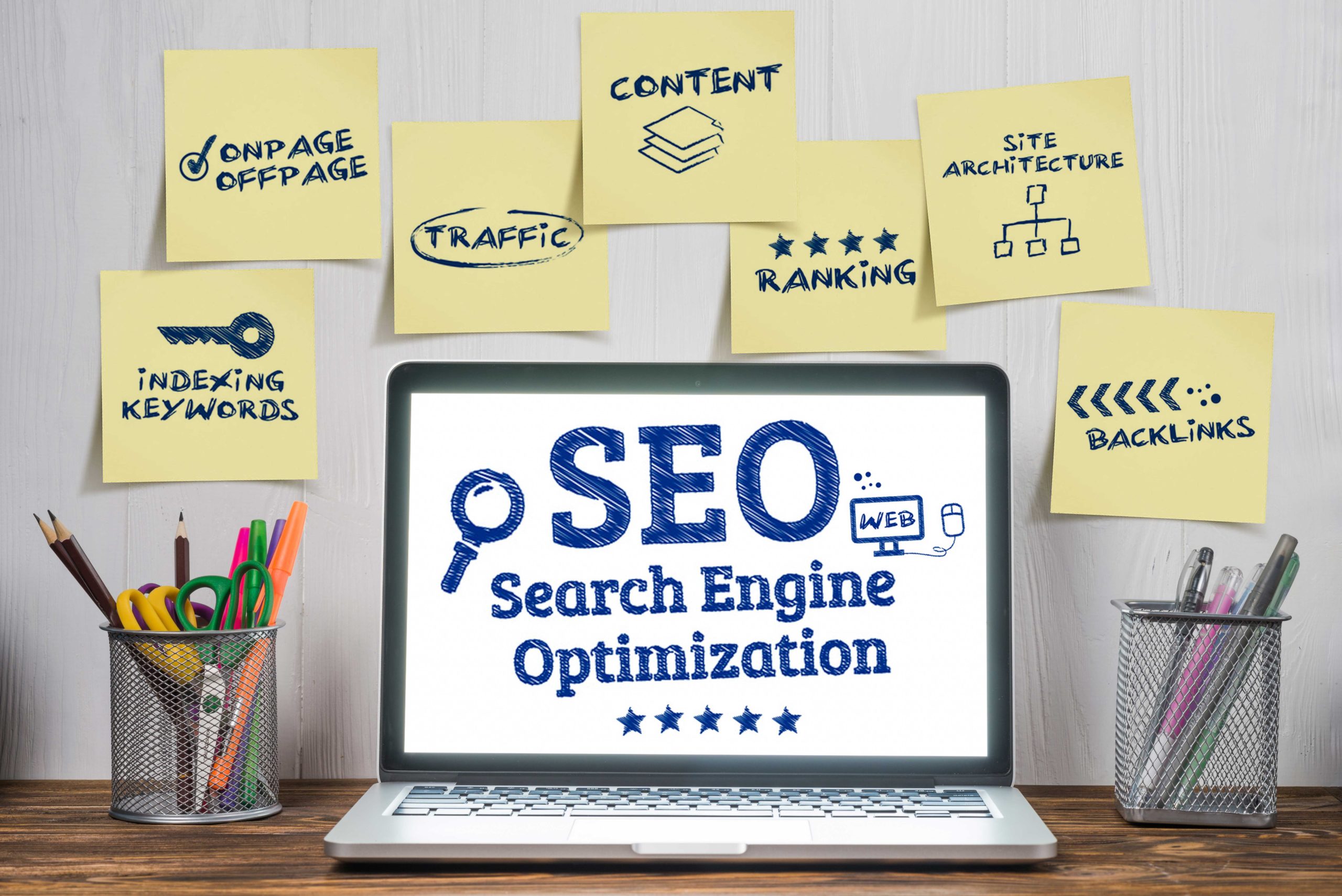
Beyond the Hacks: Building a Modern White Hat SEO Strategy
There is no way to deny the thrill of launching a new website or scaling an existing digital platform. You map out your business objectives, improve your user interface and publish your pages hoping for an audience to flock to your site. But often the reality sets in pretty fast when the initial flood of organic traffic doesn’t appear. It’s like setting up a beautiful, high-end retail store in the middle of a dense, uncharted forest. Your inventory is great but your target audience doesn’t even know you exist, because there are no roads leading to your door.
Many marketers try to find a way out of this digital isolation by trying to find quick optimization shortcuts. They purchase inexpensive backlink packages, use automatic software programs to produce thin text, or even stuff keywords into all headings to trick search engine indexers. Riding that manipulative treadmill is an incredibly dangerous gamble. Search algorithms are no longer simple data pattern matching. When automated crawlers detect a site using deceptive shortcuts, search engines don’t just ignore the signals. They remove the domain altogether from organic visibility.
A basic commitment to a modern White Hat SEO strategy is required to achieve sustainable, safe organic growth. In this model, the focus is on optimizing your digital presence to satisfy human readers, while never violating any search engine quality guidelines. You don’t try to exploit a fleeting algorithm loophole, you leverage the core goals of modern search engines to create a digital asset that gets more powerful and resilient over time.
The Algorithmic Trust Strategic Reality
To win at organic search, you need to understand the primary purpose of search engines like Google first. These platforms’ aim is to deliver the best, most accurate, deeply satisfying answer to users’ questions in as few clicks as possible. If you create content that supports that goal , then search engines naturally reward your pages with high visibility .
Dissecting the E-E-A-T Blueprint
Google and other search engines judge the quality of online content by a strict criteria called E-E-A-T, which stands for Experience, Expertise, Authoritativeness, and Trustworthiness. The algorithm searches for verifiable signals that tell us who authored a piece of content and whether that person has real world, hands-on experience with the subject matter.
To elevate E-E-A-T, it’s important to go beyond surface level, generic summaries. This means publishing transparent author bios with clear credentials, citing reputable academic or industry data sources, and focusing your content production on topics where you have real, demonstrable insight.
Why Sustainability is Better than Short-Term Exploitation
The main focus for engineering teams when rolling out core algorithm changes is web spam and low quality automation. They look for artificial link networks, hidden text, and massive content farms created solely to generate search impressions. Sites built on honest, ethical principles need not worry about these abrupt programmatic shifts. Your pages are giving real value to real people , so core updates tend to push your rankings higher , and manipulative competitors tend to disappear from the search index altogether .
On-Page Architecture: Building Assets for Humans and Crawlers
On-page Optimization is the process of structuring your content in such a way that human eyes enjoy reading it and search engine crawlers can interpret its context seamlessly. Modern on-page architecture is not about hitting a certain % of keyword density, it is about pure topical clarity.
Keyword Pattern Intent Matching Mastery
Natural language processing systems can understand the broader conversational context of your web pages. Your primary job is to fully satisfy the specific informational search intent behind a user’s query. Users looking for informational content want to learn, troubleshoot, or understand a concept.
To make that intention work you need to give full explanations, explicit definitions and breakdowns step by step without a high-pressure sales pitch. When a user searches for “how to fix a leaky faucet,” they need an actionable guide or a diagnostic diagram, not a landing page selling industrial wrenches.
Building a Document Hierarchy that is Readable
A large block of text without any breaks scares away web visitors who will bounce back to the search results page in an instant. Use a strict heading hierarchy to break up your insights and organize your thoughts in a logical manner.
Make your document very scannable for users skimming for specific answers by using short paragraphs, varied sentence structures and very descriptive subheadings. Please also include the direct answer to the main question in the first 50 words of your opening paragraphs for the curiosity of humans and automated snippet tools.
Technical Excellence: Enhancing the User Experience
A slow, broken website infrastructure can totally ruin a brilliant content strategy. All device types (desktop, mobile and tablet) are taken into account and websites that provide a quick, safe and easy browsing experience rank higher in search results.
Core Web Vitals & Mobile Friendliness
A big chunk of your organic traffic comes from mobile devices. Your website should be fully responsive, and should adjust perfectly to any screen size. Indeed, modern search engines routinely de-index non-mobile responsive sites. Use your engineering time to master the three pillars of Core Web Vitals:
- Largest Contentful Paint (LCP): Optimize your technical resources, reduce large images and get rid of unnecessary scripts so your main content loads in less than 2.5 seconds.
- Interaction to Next Paint (INP): Ensure your site responds to user inputs, clicks, and taps within 200 milliseconds or less.
- Cumulative Layout Shift (CLS): Make sure the page remains visually stable by explicitly sizing media assets to prevent layout elements from shifting unexpectedly while a user reads.
Secure Data Channels with HTTPS
Modern web browsers will instantly flag unencrypted websites as insecure, scaring away potential visitors and damaging your brand’s credibility. Use an SSL certificate on your entire domain so all data channels are secure. Offering a secure browsing experience meets a basic technical requirement for search engine indexers and demonstrates to your audience that you care about user privacy.
Off Page Integrity: Build Safe Authority without Purchasing Links
Off-page optimization is the area where the biggest mistakes usually happen for beginners. On the web you will see thousands of ads promising to sell you hundreds or thousands of premium backlinks for just a few dollars. Buying these packages violates search engine guidelines and puts an instant target on your domain for a penalty. No one can buy real authority. It’s earned through building relationships and creating value.
The only way to scale your backlink profile safely is to turn your website into an Authority Lighthouse. A big, trusted place for great insights, unique perspectives, or primary data that other content creators want to link to naturally. When your platform is trusted as an authority, the digital ecosystem naturally gravitates towards your brand and you earn premium citations on auto-pilot.
A Framework for Getting High Value Natural Links
So instead of blasting the same outreach emails to random websites, put your creative energy into creating assets that help the greater industry. The most important parts of the web to your target audience will respond well to real value.
- Documenting Original Case Studies: Write about your own business experiments, your own workflows and your real results. When other writers need real world examples to support their articles, they will link directly to your case study as living proof.
- Publishing Primary Data and Surveys: Conduct simple surveys or gather public data scattered across sources to assemble a clean, comprehensive industry report. Original data is a giant link magnet because journalists and bloggers are constantly looking for statistics to back up their claims.
- Answering Media Requests Directly: Watch for media platform requests where reporters are actively looking for quick quotes from real industry practitioners to close out their stories. Quick, expert answers can earn your brand free editorial coverage in top-tier news outlets.
- Strategic Guest Contributing: Share in-depth educational guest guides with authoritative, human-moderated blogs in your niche. Instead of using the article as a platform to drop self-serving links, focus on delivering undeniable value to their current readers.
Your Next Steps to Scale
Gaining authority online requires patience, a consistent approach, and a great respect for the time of your audience. Real search engine visibility simply can’t be manufactured with cheap transactional shortcuts or automated spam. Satisfying informational search intent, optimizing your technical performance, and earning links naturally are all ways to focus your resources that send clear credibility signals directly to search engine indexers. Stick with these sustainable human strategies and your site will slowly rise above the digital noise to take the top organic spots.
Frequently Asked Questions
What is the core difference between White Hat and Black Hat SEO?
White Hat SEO focuses on creating long-term value for human readers while fully adhering to search engine guidelines. Black Hat SEO relies on manipulative shortcuts, hidden text, and paid link schemes designed to trick algorithms for temporary ranking boosts.
How long does it take to see results from a White Hat SEO strategy?
Because ethical optimization relies on building genuine domain authority, organic trust, and high-quality content assets, it typically takes three to six months of consistent effort to see meaningful ranking and traffic improvements.
Is AI-generated content allowed under White Hat guidelines?
Search engines do not ban AI-generated text. However, publishing raw, unedited AI content often lacks the unique experience and original insights required by quality frameworks. White hat practitioners use AI as a drafting assistant but add human oversight, editing, and personal expertise before publishing.
Do backlinks still matter for search rankings?
Yes, high-quality backlinks remain a critical ranking factor. However, modern search engines focus heavily on link relevance and editorial intent. A single link from a trusted, topically relevant industry blog carries more algorithmic weight than hundreds of spammy directory links.
How can I check if my website has been penalized?
You can monitor your site’s health by checking the “Manual Actions” tab inside your free Google Search Console account. If your site drops in traffic without a manual notification, your content likely underperformed during an automated algorithmic quality update.
 Comment / The Cambridge drift1 June 2026
 Comment / Top of the slops: the competitiveness of college dining4 June 2026
 News / Cambridge psychologist warns against blanket social media ban for under-16s1 June 2026
 News / University support staff strikes end after month of action2 June 2026
 Music / We need to talk about Kendrick2 June 2026
- Comment / Top of the slops: the competitiveness of college dining4 June 2026
 Interviews / Bible Scholar Mattie Mae Motl: “God is a woman”4 June 2026
 Features / One big happy (college) family?4 June 2026
 Theatre / Bold beginnings in the Corpus Playroom 3 June 2026
- Music / We need to talk about Kendrick2 June 2026
