Staging Shakespeare at the altar
Lauren Quinn considers what makes the chapel perfect for performing Shakespeare

From Romeo & Juliet to Measure for Measure and Hamlet, the Cambridge theatre scene certainly enjoys setting a Shakespearean play in a chapel. Boasting a plethora of sizes, architecture and acoustics, the consequential merging of religious themes within a play and the spaces they are staged in, implies a far more purposeful decision than merely making use of a common space in Cambridge.
What struck me about Hamlet in the Chapel last term was the way in which the play was shaped around the religious connotations of the surroundings. Whilst the ADC theatre offers a wealth of flexibility with staging, there was something very magical about seeing Shakespeare’s words brought to life through costumes, a choir and even a conjured ghost – all enhanced by the chapel itself. Cambridge theatre’s preoccupation with utilising such wonderful spaces calls into question how theatre in general can employ religious spaces through setting.
“The allure of a Chapel or church is the acknowledgement of a setting more naturally of Shakespeare’s time”
A striking aspect of a religious space to any director would be the seating of the audience. Placing an audience in pews to watch Hamlet cry “O that this too, too solid flesh would melt,” plunges the question of religion into the play’s preoccupation with suicide. Likewise, having Henry VI declare at the altar “ignorance is the curse of God” creates a dynamic where the actor embodies either the preacher, partaker or the worshipped. Whilst traditionally Shakespearean plays encourage a distinct difference between stage and audience even within the round of the Globe, the concept of the nave or aisle as the place of communion and readings imply a merging between the human and godly in these spaces.
With the Office for National Statistics finding that less than half of the UK’s population identify as of Christian Faith, a question arises as to why Shakespeare is so often staged in such a religious setting, particularly against the backdrop of a modern multi-faith society. Certainly, for the modern director or producer, the potency of a Christian setting may not so much be an appeal to a Christian audience but rather an acknowledgment of key context from when Shakespeare was writing. Shakespeare wrote in a time of religious contention following the recent history of fluctuation between Catholicism and Henry VIII’s establishment of the Church of England. Placing his plays within an overtly religious surrounding therefore leads to a re-evaluation of the dynamics key to his plays.
“Immersing the audience in a context so interlinked with Shakespeare’s plays is a gem that is so pertinently unlocked by the chapel or church”
Perhaps then the allure of a Chapel or church is the acknowledgement of a setting more naturally of Shakespeare’s time, however it also invites a wonderful exploration of how religion is positively enforced or negatively portrayed in the plays themselves. To have the witches of Macbeth taking the role of controllers of fate in a religious context brings to mind questions of how fate is contradictory to the concept of God’s divine omnipotence. This provides parallels to the concept of Romeo and Juliet worshipping each other as idolatrous, when compared to traditional liturgical worship. Placing Shakespeare’s plays in a Christian setting as such encourages audiences to reflect on the potency and variation of language in different settings, particularly in sacred and theatrical contexts.
Furthermore, religious spaces offer a silence often associated with prayer. To have the temptation scene in Othello marred within the religious space it occupies, grants both the actor and director the creative license to discreetly explore themes such as deception. Immersing the audience in a context so interlinked with Shakespeare’s plays is a gem that is so pertinently unlocked by the chapel or church.
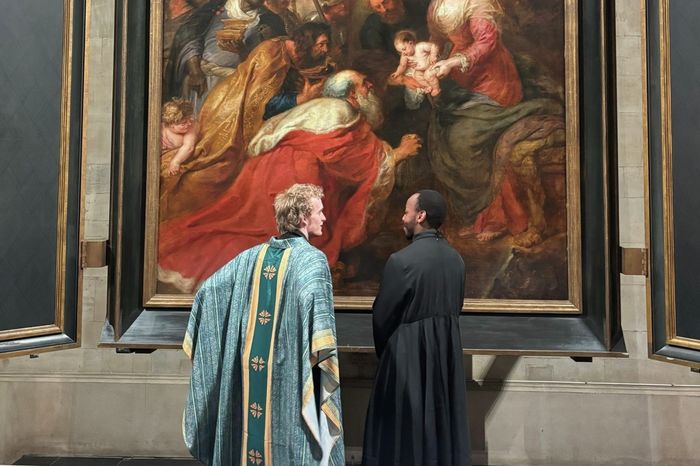
Although religious spaces may not conform to the conventional model of a theatre, the historical and religious connotations that can be fostered unlock a very unique opportunity to portray Shakespeare’s plays. The unique variety and breadth of spaces within Cambridge offers the opportunity to examine how faith (as asserted by the setting) can be subtly interrogated by the flawed vulnerability of all Shakespeare’s characters, a particularly exciting aspect of the Cambridge theatre scene.
 Comment / The Cambridge drift1 June 2026
 Comment / Top of the slops: the competitiveness of college dining4 June 2026
 News / Cambridge psychologist warns against blanket social media ban for under-16s1 June 2026
 News / University support staff strikes end after month of action2 June 2026
 Music / We need to talk about Kendrick2 June 2026
- Comment / Top of the slops: the competitiveness of college dining4 June 2026
 Interviews / Bible Scholar Mattie Mae Motl: “God is a woman”4 June 2026
 Features / One big happy (college) family?4 June 2026
 Theatre / Bold beginnings in the Corpus Playroom 3 June 2026
- Music / We need to talk about Kendrick2 June 2026