Hope is a thing with wings (and a stage, and an audience)
Millie Wooler asks if hope is essential to the theatrical experience
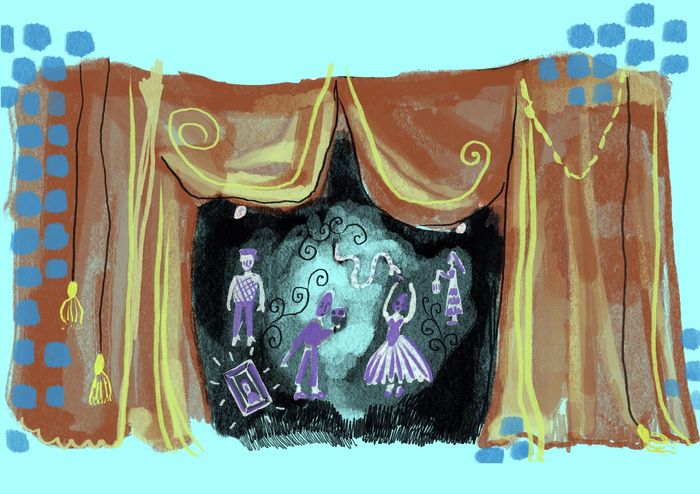
There are three stages to ‘climate distress’ according to David Finnigan’s play, Scenes from the Climate Era: denial, hope and despair. On the other side of despair? More hope. But that hope, so the play suggests, will only collapse again and again into despair. What’s more, while we’re busy hoping for a better future, we’re neglecting to make the changes that might mean there is something other than the total extinction of our species on the other side of the era we are now hurtling towards. In the context of climate change, Finnigan suggests, “Hope is the enemy.”
It makes for pretty dour viewing. I am sure that I was not alone in coming out of the theatre feeling a little disheartened. Is everything that we do really so futile? For me, hope is the thing that keeps you going when everything else has disappeared. While the play argues that joy can continue to exist even after all hope is gone, I would say that it is the other way around. It is hope that keeps us waking up in the morning and dragging ourselves out of bed after joy has dissipated.
“It is hope that keeps us waking up in the morning”
I love political theatre. I think that it’s an essential form and, when done well, it can be transformative. Over the Easter break, I dragged three friends up to Newcastle University, just to see the touring production of I, Daniel Blake. This play has occupied a place in my heart for a long time. Its exploration of the injustice embedded within the infrastructure in place to “support” the disabled community expresses much of the frustration I have felt when helping those around me navigate the system in the real world.
Daniel Blake is a loveable and immediately recognisable figure. He is an everyman, a figure we can see represented across communities. The stage directions note that, although the play is set in Newcastle, the same narrative could take place in any city across the country. By that reasoning, Daniel Blake could be any man from anywhere.
The play has some incredibly difficult scenes, perhaps made more uncomfortable by the relative simplicity of the play – especially in comparison to Scenes from the Climate Era. At the end of the first act, Katie, a young mother relocated from London to Newcastle due to a lack of social housing, goes into a food bank for the first time. Overcome by hunger, she opens a can of beans and eats them raw with her bare hands. Later, Katie’s daughter Daisy sits in the cold on Dan’s doorstep, refusing to move until he comes out to speak to her. Like Katie at the end of the first act, Dan has lost all of his hope, and he is sliding towards sickness in a cold house, stripped of its furniture to pay for food.
“The moments of joy in the play come from a perpetual hope”
But I, Daniel Blake does not end in the depths of despair. Through Dan’s help, Katie is able to find her way back towards a more stable (although never quite secure) position; through Katie’s help, Dan is able to formulate the speech he plans to deliver at the hearing that will determine whether the DWP will recognise him as too sick to work. Daniel dies the night before his hearing, but even this does not extinguish the spirit of hope. The final scene focuses on Katie at Dan’s funeral. Although it is a ‘pauper’s service’, he is sent off by the people who love him. The government, the play suggests, might not be on the side of working people, but the community is – and it is from our community that we draw hope.
I, Daniel Blake has had a palpable political impact. The film has been debated in the House of Commons, as well as across political TV shows. Following the Labour government’s widely-criticised attempts at reordering the disability benefits system, the film and the play re-emerged again in social media discussions (admittedly, sometimes criticised for being too hopeful, but usually admired for its ability to spark the relevant conversations).
I, Daniel Blake, although harrowing, is expert theatre. The moments of joy in the play come from a perpetual hope. Just as Daniel keeps hoping that the DWP will recognise that his life-threatening heart condition renders him unfit for work, the audience hopes that things will turn out differently.
Scenes from the Climate Era doesn’t bring us that same hope. It tells us that joy is still possible in adversity and that the human spirit is resilient, but it underestimates how far this is only possible because of hope. Without hope, Daniel Blake drives himself to death. Without hope, humanity will spiral even more quickly towards extinction.
And theatre is the medium of hope.
 Sport / The imperfect privilege of Cambridge sport12 June 2026
 Lifestyle / A town with a view11 June 2026
 News / C4P vandalises University offices over divestment10 June 2026
 Comment / Top of the slops: the competitiveness of college dining4 June 2026
 Lifestyle / Confessions of a May Ball crasher12 June 2026
 Theatre / Hope is a thing with wings (and a stage, and an audience)14 June 2026
 Science / What’s out there? Earth, exoplanets, and the search for life14 June 2026
 Interviews / Is politics going bananas? 14 June 2026
 Features / ‘Walking on eggshells’: exploring Jewish life at Cambridge14 June 2026
 News / News in Brief: prizes, planning proposals, and pottery14 June 2026