The imperfect privilege of Cambridge sport
Tristan Sykes explores whether Cambridge sport is as accessible in practice as it is in theory
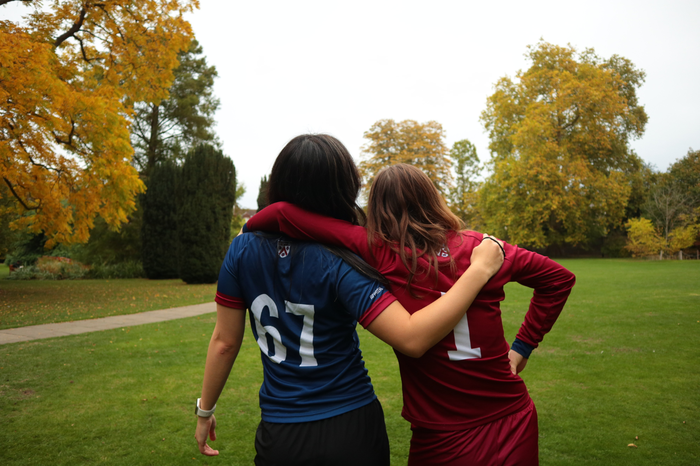
Making sport accessible to all in Cambridge has long been a principal focus of the University and its colleges in equal measure. The success of these initiatives has sparked debate among students who are concerned about a wider framework of issues surrounding accessibility and equality. While issues of accessibility with regard to Cambridge as an institution in general are undoubtedly unresolved, sport represents one of its most progressive achievements.
The foundation of this successful movement towards accessibility is college sport, providing access to a wide variety of competitive and recreational endeavours – often for free. The separation of sports into the collegiate system is, of course, crucial to this progress. The most notable example of this is rowing. Rowing is almost obscenely expensive in itself as a sport. A top-quality shell for eight can cost well over £50,000 – yet, Cambridge’s top collegiate rowing clubs make such equipment, alongside telemetry (on-water sensor systems that measure data to allow the analysis of stroke, technique, power, and efficiency), accessible to students who want to give the sport a go.
“Now, more than ever, there is an expanding plethora of sports to be enjoyed”
Given the financial investments and risks that colleges engage in, the opportunities supplied to students are an incredible privilege, with some colleges not even having membership fees. These opportunities can be further bolstered by college sports funding, which is not limited to those representing the University, and can be obtained for the pursuit of trying out new sports when finances may have proved a limiting factor.
College rowing is equally accessible in its emphasis on providing opportunities to students in spite of previous rowing experience – or sporting background in general. Taster sessions throughout the academic year ensure the sport can be accessed at any point in a student’s degree, while colleges will often have as many as four crews per gender to accommodate varying degrees of proficiency and involvement. Those not wishing to compete also have the opportunity for a more casual and leisurely approach to the sport. College rowing – and even rowing for the University – is not a restrictive system. It is common for the top rowing boats of Gonville and Caius and Lady Margaret Boat Club (two of the current top three in the open division of the May Bumps) to include those who had never rowed prior to their time at Cambridge. The 2026 Boat Race saw Carys Earl represent the Cambridge women’s Blue boat in the same vein. Bumps, rowing camps, and regattas across the country, all for a relatively tiny cost, give Cambridge students participating in college rowing the opportunities to compete and enjoy a standard of sporting excellence which other universities only supply to the athletes at the top of their respective sporting fields – a privilege which must be celebrated.
College sport also generates a sense of community and pride in Cambridge. The recent college football Cuppers finals have seen the sidelines of Grange Road filled with ecstatic supporters. Cardboard signs bearing slogans and the names of players, megaphones, and vuvuzelas create an intensely jovial atmosphere, with those competing spurred on by friends and college peers. These displays of collegiate sporting pride can also be seen in rugby and cricket fixtures, creating unity among those who represent the college, and those who support them.
“The collegiate sporting system provides a sense of community and inclusivity to Cantabrigian sport”
Sport is equally accessible to students beyond the county of Cambridgeshire. This year’s ‘Super Sunday’ football Varsity fixtures saw about 200 Cambridge students travel to Oxford by coach to support the men’s and women’s second and third sides – an impressive figure given the distance. The Blues’ game itself saw even more spectators at Grange Road. The rugby and cricket equivalents took place in London, at Saracens’ StoneX stadium and Lord’s respectively, providing similar opportunities for support at prestigious venues. However, the financial deficit of transport, as well as the time taken away from students’ degrees to travel to such fixtures, may well have rendered such days out inaccessible to some despite such opportunities.
It must also be acknowledged, however, that Cambridge is – at least in part – inherently inaccessible. Its focus on academics depletes the role of sports, unlike at universities like Loughborough or Oxford Brookes, whose emphasis is the reverse. It is something to be celebrated that sport is as accessible as it is despite the intensely academic workload, and Cambridge’s nature as an academic institution cannot be ignored. To maintain the University’s prestige, reputation, and enduring quality, such a focus must take centre-stage. While this precedent will always endure, it is necessary that it adapts to a more accessible framework. Now, more than ever, there is an expanding plethora of sports to be enjoyed, alongside an ever-growing demand amongst young people to engage with this growth. Cambridge’s new padel club is the clearest example of this: a rapidly growing sport taking advantage of the accessibility of sport in Cambridge, leading to more than 150 participants in their first social session of Easter term.

Sport in Cambridge is, on the whole, accessible. The opportunities to participate and compete in sports which are typically out of reach to all but elite athletes is a privilege which must not be ignored. The collegiate sporting system provides a sense of community and inclusivity to Cantabrigian sport, enforcing a structure which enables those of all abilities and expertise to engage. Finally, Cambridge’s sporting scene is undoubtedly deeply rooted in its prestigious heritage as an academic and sporting institution. However, sport in Cambridge has developed to such an extent that this heritage is reconciled with accessibility, ensuring that Cambridge provides opportunities that cannot be obtained at other academic institutions across the country.
 News / C4P vandalises University offices over divestment10 June 2026
 Comment / Top of the slops: the competitiveness of college dining4 June 2026
 Lifestyle / A town with a view11 June 2026
 Theatre / The recipe to success this Easter term 10 June 2026
 Comment / ‘On the Poverty of Student Life’: sixty years on10 June 2026
 Lifestyle / Confessions of a May Ball crasher12 June 2026
 Lifestyle / May Week horoscopes12 June 2026
 Lifestyle / The finalist’s bucket list12 June 2026
 Theatre / All of Cambridge is a stage12 June 2026
 Music / ‘It’s feminine intuition’: predictions for OR312 June 2026