
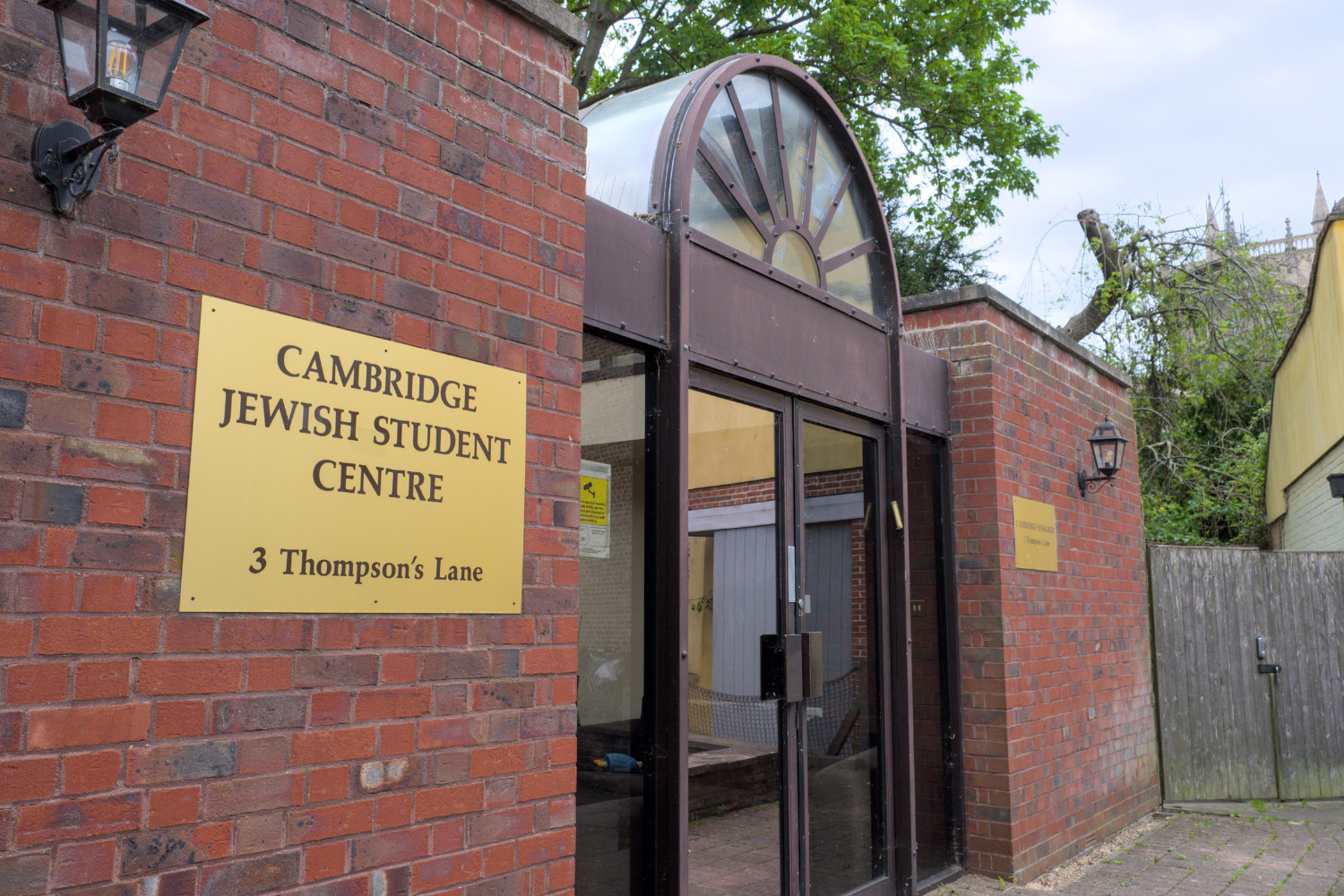
The experience one has at university is often defined by what they choose to do, and who they chose to be. Coming to Cambridge, I decided that I wanted to be a philosophy student, an athlete, a student journalist. But my experience has nonetheless been largely defined by a part of my identity that I didn’t choose: my Jewishness.
Reflecting on this, I originally concede that this is in part to be expected – I’ve made my Jewish identity a far more open and unapologetic part of my life now, especially compared to my first year. But why has that taken me so long to do? Why now does it define my experience in such an all-consuming way? Sometimes, I wonder if I’m alone in having these thoughts; I stop having answers to my own questions, and so I turn to my community for help.
There’s no doubt that the Jewish community here at Cambridge acts as a safe haven for its members, particularly for those who embraced it earlier than I did. One student described the community as a “safe space for Jewish students on campus,” another as a community to which they were able to “slot right in”. This testament of finding safety, security, and friendship within the community was common among students. Yet, for everyone I spoke to, recounting the positive aspects of their experience (while clearly meaningful) merely acted as a preface to much bleaker reflections.
“The saddest bit was convincing myself that I was the problem. And then I thought to myself, ‘how many Jews do that?’”
What immediately stood out to me is that Cambridge is no exception for housing the worst of the Jewish experience. Many agreed that they feel much safer here compared with back home, where their presence in a Jewish majority bubble makes them a target. As put by one student: “I think Cambridge is generally a really good place to be Jewish and I’ve had minimal problems, but, of course, nowhere is perfect.” Yet falling victim to extremism and blatant Jew hatred still defines the experience of many. Students recounted various hateful statements being directed towards them on the streets of Cambridge, including “Heil Hitler” and “dirty Jew”. A Jewish student also recently reported finding a swastika drawn on to a bench inside Caius college.
A particularly shocking story arose from the aligned testimonies of two students. One of them recounted how, over one summer, a student they previously had a friendly relationship with began to completely ignore them. That same student reportedly acted in the same manner towards another Jewish student, this time immediately upon meeting them. Investigating this odd behaviour, the students enquired: was it due to an assumed political position? Or something they had done? To their surprise, they were told explicitly that it was because they were Jewish.
One of these students said: “the saddest bit was convincing myself that I was the problem. And then I thought to myself, ‘how many Jews do that?’ Someone hates them and they just think they’re a bad representation of Jews.” The other reflected on the odd reality of the situation: “It’s just very, very weird and uncomfortable to know that somebody hates you, like hates you viscerally, but they don’t even know you.”
“It started ‘f*ck Israel, f*ck that’, and then it went on to ‘f*ck the Jewish people, Jewish people are the devil’”
But the Jewish struggles at Cambridge aren’t limited to obvious cases of extremist influence – they extend to what can and is perceived as rational, righteous, and sensical. One student highlighted this point as follows: “I always have, and probably always will, experience bigoted, extremist antisemitism. But a new – and in a way a more upsetting – development is subtle, unchallenged, almost unnoticeable, progressive antisemitism.”
During every one of my many conversations with Jewish students, the room we occupied also hosted a rather large elephant: the connection between that student – as a member of the Jewish diaspora – and Israel. The problem is clear: criticisms of one are utilised as weapons against the other. And this happens most often through conflation of the two in truly nonsensical ways.
Again, many students recount negative experiences even when meeting people for the first time, where their Jewish identity is used as grounds for interrogation. One student recounted how time spent with friends would often get ruined by such conflation, noting that revealing their identity turned them into “the spokesperson of Israel”. They continue: “I’m exhausted […] I’m bored of it. I just want to have fun on my night out and not debate about Israel because I’m Jewish.” A similar annoyance was expressed by another student, who said: “often when meeting people I immediately get asked about my opinions on Israel […] it’s not a conversation I want to be having when I first meet someone.” And, indeed, why should it be?
“I’m walking on eggshells, I can’t be visibly Jewish”
Criticisms of Israel aren’t just projected onto Jewish students, but they’re weaponised against them. In Michaelmas of one student’s first year, their college parents decided to ‘disown’ them. The supposed reason was that they ‘thought they may be a Zionist’, despite the student stating no political opinions at that time.
Another common theme across my conversations was learning about direct public attacks involving a pipeline of verbal abuse, starting with Israel and ending with overt Jew hatred. As part of just one of these stories, a student recalls “it started ‘f*ck Israel, f*ck that’, and then it went on to ‘f*ck the Jewish people, Jewish people are the devil’.”
Getting treated in this way leads to habits – habits of hiding one’s identity as to not stumble into such uncomfortable situations. One student said: “I used to wear my Star of David necklace everywhere. And I stopped […] because I got fed up.” The same caution was prominent in the testimonies of many others: “I’m walking on eggshells, I can’t be visibly Jewish. I might not wear my jewellery or certain clothes in order to protect myself.” The same upsetting reality ensues for a different student: “I won’t do things that will intentionally put me in harm’s way, and I do feel like wearing anything that indicates that you’re Jewish is just going to do that.”
“You’re either gonna fit into their narrative, or you’re going to have to work hard to try and change it”
What I then discovered is that the apparent need to hide one’s identity comes from the mutual feeling that, as put by one student, “there are definitely more Jews than allies.” A different student builds on this idea: “I am made to feel that I don’t belong in my friend groups. People, including friends, and even some lecturers, make lots of antisemitic comments which (often unintentionally) single me out.” A student with family in vulnerable areas, including Israel itself, also recounted how they have never received an unprompted message of support from some of their closest friends following an attack that could have plausibly impacted them directly. “I’ve always told myself that getting mad at that was unreasonable, but given that these are truly some of my best friends, I can’t seem to shake that.”
What is nonetheless promising is the manner in which the Jewish community has found formal allyship in the University itself. On this, the Jewish Society External Officers said the following: “Many Jewish students have personal connections to the places and people affected [by Jewish-targeted attacks], and have to balance the anxiety of this current epidemic on top of the various demands of Easter term. We are deeply grateful to the University administration for its continued support to Jewish students throughout this challenging time. The sensitivity and seriousness with which they have listened to our concerns, alongside the tangible support provided, has been profoundly meaningful to so many Jewish students.”

On top of countless insights, my time speaking to Cambridge’s Jewish community also gave me a validating diagnosis of my original hesitance to publicly embrace my identity, summarised by one student: “the hardest thing about going into Freshers’ Week is that most people are anonymous – but as soon as you tell people you’re Jewish, you’re no longer anonymous. People are now projecting their ideas of what Jews are onto you, and you’re either gonna fit into their narrative, or you’re going to have to work hard to try and change it.”
It seems, therefore, that I’m not alone – I am far from the only one whose university experience is defined by their Judaism. Whether that’s a good, bad, or neutral thing remains ever-changing and ambiguous, and – in truth – out of our own control.
