Why Cambridge rocks
Sophie Patel explores the geology of our city from the ground up
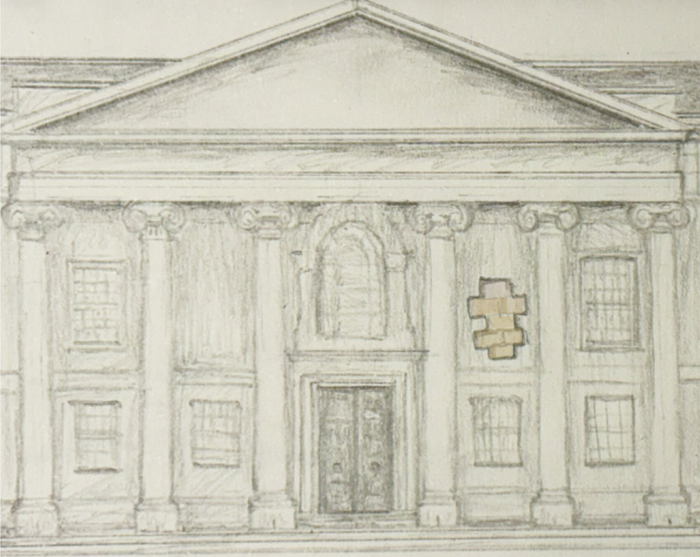
As a budding geologist, I’ve recently found myself inspired by the stones which make up the iconic Cambridge cityscape – both the physical building blocks of the city and the bedrock itself. Collating information about these stones has led me on a journey involving monarchs, dinosaurs and the Wars of the Roses.
In a city of never-ending spires, a ribbon that weaves it all together is the instantly recognisable yellow-y stone used to build Cambridge from the ground up (think Corpus Christi New Court, Downing College and Trinity College’s Wren Library). I was amused to discover that this stone is a Jurassic ‘oolite’ – a name that sounds coincidentally similar to the ‘oohs’ and ‘ahhs’ one can often hear from tourists around these spots. They’re not wrong to be awestruck. Jurassic oolite is, as you might expect, from a long-departed age of dinosaurs strolling the earth, free from the misery of weekend supervisions.
“This stone is a Jurassic ‘oolite’ – a name that sounds coincidentally similar to the ‘oohs’ and ‘ahhs’ one can often hear from tourists around these spots”
The specific Jurassic oolite that provides the distinctive rough lustre and pale yellow glow of a classic Cambridge building is known as Ketton stone. If you’ve ever wondered how Cambridge manages to achieve that otherworldly feeling of detachment, you may find part of your answer here. Nowhere else on the planet has such a significant level of this Jurassic stone used in construction, making it no surprise that Cambridge feels like it has been left on pause while time marches on.
Undoubtedly one of the most quintessentially Cantabrigian sights, King’s College Chapel is partially made from a limestone from Yorkshire, dating back to the Permian period (around 300 million years ago). On discovering this I came across a conundrum. How did Permian limestone from Yorkshire travel so many miles to get here during the construction of the chapel in the 15th century? I imagined the cost would have been astronomical and the blood, sweat and tears shed unimaginable. Where there was enough money, there was a way to move this beautiful stone and we need not look further than the monarchy to find this source.
Henry VI founded, and funded the development of, King’s College, originally part of his educational foundation, which also included Eton. Unsurprisingly, there were some bumps in the road to the Chapel’s completion following the Wars of the Roses. A Yorkshire limestone was a curious choice for the last Lancastrian king of England. After Henry VI’s death, work was paused (the story tells that the masons didn’t have the motivation to continue) and resumed using a cheaper and more local oolite. The original limestone used before Henry VI’s death is mostly present in the lower portion of the chapel, and can be distinguished when looking at the chapel by its notably paler colour than the oolite used later.
“Kings College Chapel is partially made from a limestone from Yorkshire, dating back to the Permian period”
Don’t let all this talk of building stone fool you into believing geology is only relevant to the physical building blocks of this city, as it influences our lives from beneath too. Cambridge, like much of the south east of England, has extremely hard water. As a Londoner myself, this required no great adjustment, but for those of you fortunate to be from areas of softer water this will have been an unwelcome surprise; kettles and showerheads build up limescale, water has a distinctive taste, and your hair might feel different after a shower. Whether water is hard or soft is down to the minerals it contains, specifically calcium and magnesium, which are abundant in areas like Cambridge, built on limestone and chalk.
When cycling at breakneck speed along King’s Parade, running late for yet another 9am, I now try to let myself slow down (mentally) and appreciate my surroundings. Yes, I may be late to a lecture, but I am surrounded by buildings made of iconic Jurassic stone from the time of the dinosaurs. Perhaps next time you find yourself appreciating the otherworldly feeling of the Cambridge bubble, remind yourself it’s not magic – it’s Ketton stone.
 News / Venue cancels Cambridge talk by right-wing commentator Matt Goodwin after backlash28 May 2026
 Interviews / Cambridge MP Daniel Zeichner on political realism and the ‘politics of grievance’29 May 2026
 Features / The language of optimisation and the architecture of merit30 May 2026
 Comment / We must support our strikers29 May 2026
 Lifestyle / Blind Date: ‘I should’ve changed my socks’24 May 2026
 Film & TV / Project Hail Mary’s production design shows the power of human creativity30 May 2026
 Music / This music DOES contain hope30 May 2026
 Sport / Should we play more BUCS?30 May 2026
- Features / The language of optimisation and the architecture of merit30 May 2026
- Comment / We must support our strikers29 May 2026