Should we play more BUCS?
Nicholas Hall questions whether more Cambridge sports teams should compete on a national level

British Universities and Colleges Sport (BUCS) provides a platform for academic institutions across the nation to compete against each other in over 50 different sports. High-performance athletes represent their universities such as Loughborough, Nottingham and Bath against other teams, vying for pride as well as elite competition. The University of Cambridge however, as with many other aspects of university life other than sport, does things differently. BUCS competitions are an afterthought for several Cambridge sports teams, perhaps most notably the rugby blues. Does this hinder performance levels, or is the tradition of Lent and Easter Varsity matches – alongside an already condensed academic calendar – good reason for things to remain unique
“The size of the Cambridge rivalry with Oxford is no secret”
The size of the Cambridge rivalry with Oxford is no secret. Preparation for Varsity competitions that typically take place from March through till June often begins before Michaelmas term has even commenced at the start of September. It is the pinnacle of each sporting club’s calendar each academic year and even the most miserable of winters are forgotten if victorious against the dark blues. The rowing and rugby calendars best highlight this emphasis on Lent term Varsity fixtures. The Boat Club (CUBC) pits two of its own crews of eight against each other on the Thames before a series of Tideway ‘fixtures’ against Leander Club, Oxford Brookes University and the Dutch National Team, among others, ahead of their attention-grabbing clash with Oxford in April. Cambridge University Rugby Union Football Club has a series of traditional fixtures against various Armed Forces teams, the invitational Steele Bodger XV in front of an often-sold-out Grange Road and the Cambridge town team as preparation for Varsity. Varsity Matches are nearly 200 years old now and the dedication required to secure victory makes the choice not to compete in BUCS fixtures, in favour of forming a more bespoke programme, seems understandable.
“BUCS competitions are an afterthought for several Cambridge sports teams”
BUCS competitions are structured to fit the termly calendars that most universities follow: two long ‘semesters’ to start the academic year, followed by a shorter exam period in May and early June. Cambridge’s three blocks of eight-week terms works against involvement in BUCS in two key ways. Firstly, the academic intensity of the shorter terms means students are generally less able focused on sports than their counterparts across the country. The rigour of frequent supervisions, lectures and a greater number of deadlines mean students spend a greater proportion of their day on academic work rather than training. Secondly, the longer vacations in the Cambridge calendar creates periods where BUCS matches are ongoing, yet Cambridge students are at home and not training with their university teams. Academic success for many comes as more important than sporting achievement, and the University does not offer the sporting scholarships that draws top level athletes elsewhere.
The University does not entirely isolate itself from participating in BUCS, with 54 teams competing across 19 sports from the beginning of the Michaelmas term of this year. Among those entered there were notable league successes for the men’s football first team, the women’s first and men’s second hockey teams, as well as the American football, water polo, netball and frisbee teams. There is no clearcut correlation between BUCS performance and the Varsity result of the same season, which begs the question as to whether Cambridge should play more BUCS. Weekly or biweekly league fixtures could provide experience and develop game management skills for the end goal of Varsity towards the end of the year. Greater involvement in BUCS could also foster stronger team spirit and higher performance levels, and perhaps even attract more talented sportsmen and sportswomen to apply.
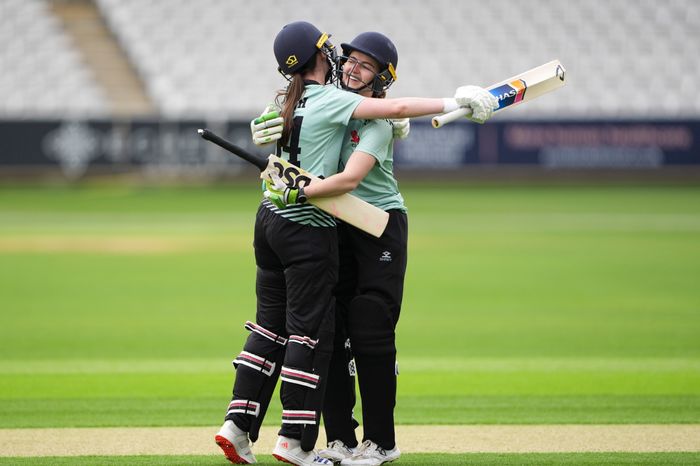
Light blues beat Oxford in low scoring thriller at Lord’s
Cambridge, admittedly, is never going to be the best all-round sporting university because of the intense pressure of exams, frequent essay and problem sheet deadlines, and vast workload. Nevertheless, the few teams that do compete in BUCS prove that it is possible to balance Varsity matches, academics and to still excel in regional and national competition. It will be interesting to see if more teams follow the example set by the triumphant football and hockey teams from this year or whether the looming giant, that is the Varsity fixture, is too great to allow for an even more congested schedule.
 News / Simon Goldhill resigns following sexual misconduct investigation16 June 2026
 Comment / Exercise, academia, and the Cambridge addiction to both17 June 2026
 Theatre / A celebration of Queer Love in sacred spaces: Romeo and Juliet in Peterhouse Chapel16 June 2026
 Theatre / ‘Mental illness doesn’t exist in a vacuum’ says Obsessive, Compulsive, Divine 18 June 2026
 Music / ‘Returning again and again’ to the Bateman room16 June 2026
 News / Ted Yip elected Union President after contested race 19 June 2026
 Lifestyle / You can’t always get what you want 18 June 2026
- Theatre / ‘Mental illness doesn’t exist in a vacuum’ says Obsessive, Compulsive, Divine 18 June 2026
 News / Caius to begin antisemitism inquiry after Nazi symbol carved into bench18 June 2026
 Film & TV / Gen Z, FilmTok and the A24 problem17 June 2026