Cambridge MP Daniel Zeichner on political realism and the ‘politics of grievance’
Giovanni Lacroix speaks to Daniel Zeichner about his changing political views from Cambridge student, to minister, to Member of Parliament
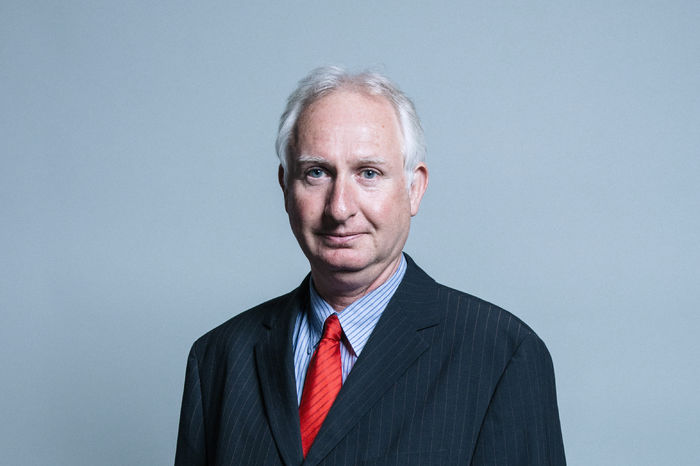
It’s important to have an awareness of the political landscape of the city in which you live, but we students might often find ourselves forgetting that we live in the city of Cambridge, and not only the University. As we sit down at the Varsity office, Daniel Zeichner, Labour MP for Cambridge, tells me how much he prefers in-person meetings to Zoom or Teams – a fitting start to a conversation that comes to revolve around the importance of dialogue and on-site political action.
We started by discussing his fourteen months as Farming Minister (July 2024 – September 2025). Starting “halfway through a financial year,” says Zeichner, was a significant challenge that led him to operate on a limited budget. He nevertheless outlined achievements such as the fulfilled promise “to stop the use of neonicotinoids” and the gradual transition away from “Common Agricultural Policy, which allocates support just on the basis of land area”. He advocates for subsidies factoring environmental outcomes, praising “a big, radical change to tackle climate issues”.
“The University still being so closed off is a problem”
“I was barricaded into a taxi by protesting farmers,” tells Zeichner, emphasising again the value of decisive change, especially in the face of adversity. He recalls debating and defending some unpopular measures, claiming to have been “on the receiving end of some difficult protests”. We also addressed the growing influence of Reform UK in rural areas: Zeichner argues that this correlation is not caused by rurality itself, but rather by a range of external factors including a “strong Brexit vote” and inequalities in “educational attainment”.
The conversation then shifted towards Cambridge. While mentioning its exceptional history, innovation and diversity, Zeichner reflects on the inequalities of his constituency and its ‘town versus gown’ divide: he is surprised that “citizens of Cambridge can’t walk through the colleges and have access to places,” arguing that the University “still [being] so closed off is a problem.”
His awareness of this issue was shaped well before his parliamentary term. Zeichner was indeed a historian at King’s College, and found the place socially “intimidating” from his “lower middle class” perspective. Hoping for more mobility and dialogue between the two sides of Cambridge, Zeichner uses the example of sports, saying: “I’m a Cambridge United supporter, and I do encourage people to get up to the northern part of the city.”
On his priorities for the constituency, he claims to work on the “future of the city,” through expansion and “building more homes”. Zeichner regrets that “the Greens consistently have opposed a lot of housing developments”.
“Zeichner believes there is a “place for grievance,” but you need to “navigate difficult compromises””
We start discussing University funding, donations, and investment. Zeichner provided nuanced comments on Chris Rokos’s world-breaking £190 million donation and on the University Council’s partial arms divestment in Michaelmas. Regarding the former, he says that ideally “I would like a world where wealth was distributed more fairly,” but he asserts that “at the moment, private philanthropy is important”. He mentions, for instance, the opening of the “new Cavendish laboratory” last year, which he attended and encouraged.
Regarding the second event, he declares that “I’ve long supported the overall campaign for divestment” that culminated in a lengthy review process from July 2024 to October 2025. Nevertheless, a “really purist view” can be unrealistic to uphold on defence matters, says Zeichner, praising Labour’s ability to uphold “a pragmatic view”.
Zeichner continues on the importance of realism, contrasting Labour’s approach with the strategy of Reform UK and the Green Party, which he calls the “politics of grievance and protest”. He sees in both parties a shared weakness: while there is a “place for grievance,” argues Zeichner, you need to “navigate difficult compromises” when “you actually face hard decisions”.
“He describes the Greens as an “enigma” and “actually very conservative””
He identifies the 1984-5 major miners’ strike as his turning point from idealism to pragmatism. Witnessing those events as a student led him to notice “a gap between [his] theoretical approach” and “the approach actually needed in democratic politics”.
Speaking of today’s youth, Zeichner is confident about the new generation’s ability to “negotiate and do the hard work of building trust” rather than only resorting to the politics of “protest and sloganising”. He connects this opinion to his support for Keir Starmer, who may not be the most “glamorous” or “charismatic” figure, says Zeichner, but an effective advocate for a “rules based order” on the international stage.
As our conversation draws to a close, we turn to the local elections – which, at the time of our interview, were only the day before. Zeichner started by declaring that although “the Labour Council has done a remarkably good job over the last decade” he is confident that he could work with a leader from another party. His main worries revolve around “housing and transport,” which he believes are Cambridge’s core issues, and on which he argues other parties have had a “pretty mixed record”. The Greens, for example, he describes as an “enigma”; when “it comes to decisions” on “housing development” or “energy transition,” he describes them as “actually very conservative”.

Reaching the end of our conversation, we inevitably turn to Labour’s future in Cambridge and nationwide, as that morning several defeats had already begun to roll in. Zeichner says this “kick back in terms of local elections” is a natural and typical consequence of the 2024 victory. He hopes that, for the next general election, voters will not choose leaders such as Nigel Farage or Kemi Badenoch, a choice that Zeichner believes would constitute a “big risk”.
 News / Venue cancels Cambridge talk by right-wing commentator Matt Goodwin after backlash28 May 2026
 News / Cambridge researchers warn of ‘underestimated brilliance’ if AI grades essays26 May 2026
 Interviews / Cambridge MP Daniel Zeichner on political realism and the ‘politics of grievance’29 May 2026
 Lifestyle / Blind Date: ‘I should’ve changed my socks’24 May 2026
 Comment / The no man’s land between triposes25 May 2026
 Sport / Should we play more BUCS?30 May 2026
 Features / The language of optimisation and the architecture of merit30 May 2026
 Comment / We must support our strikers29 May 2026
 Arts / A retrospective on Robinson Art Festival29 May 2026
 Science / Where science meets policy29 May 2026