News in Brief: billion-pound plans collapse, bat virus discoveries, and base appeals
A quick round-up of this week’s stories, from billion-pound plans falling through to bat virus discoveries.
New Bat COVID Discovery Raises Spillover Concerns
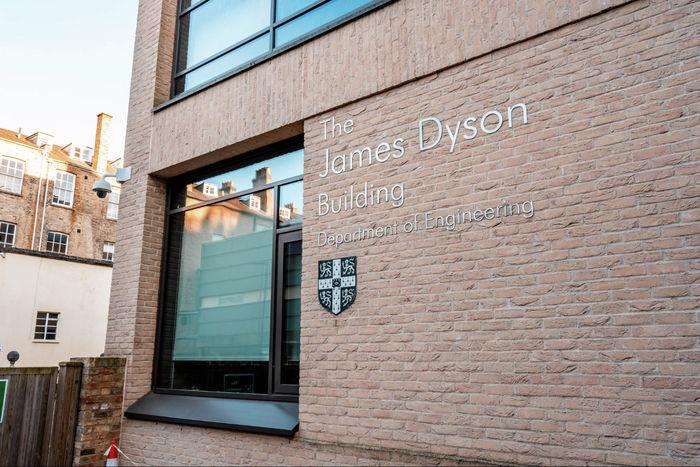
An international team of researchers has discovered an East African bat coronavirus capable of entering human cells. There is no evidence that the virus, Cardioderma cor coronavirus, has infected local human populations in Kenya. Using genetic databases instead of the live virus, the team analysed spike proteins and found the virus targets the human receptor CEACAM6. The team from the University of Cambridge, The Pirbright Institute, the KEMRI-Wellcome Trust Research Programme, the University of York and the National Museums of Kenya stated in the science journal Nature that their findings show the bat virus can use various receptors to enter human cells. Professor Stephen Graham in the Department of Pathology at the University of Cambridge, joint senior author of the paper, said: “We hope our findings will help better understand the risk from the family of viruses we identified that can use the human receptor.”
Graphene Goes Boom for AI Speed Boost
University of Cambridge spinout CamGraPhIC has secured £183 million in funding from the European Commission to develop graphene-based photonic transceivers, representing the single largest public grant awarded to a Cambridge spinout company. Co-founded by Director of the Cambridge Graphene Centre, Professor Andrea Ferrari, and Dr Marco Romangnoli, the spinout’s photonic chips and optical transceivers enable faster, more energy-efficient data transmission using up to 80% less energy than its silicon alternatives for AI, telecommunications and computing. Professor Andrea Ferrari said that the grant “will enable the establishment of a manufacturing facility for these new cutting-edge devices, and it comes a few months after a private investment funding of €25 million.”
East Anglian Air Ambulance launches £8.2m appeal
East Anglian Air Ambulance has launched an £8.2 million fundraising appeal to build a new Cambridge base, after securing planning permission for a site near Fulbourn Hospital. The charity must relocate before 2030, as its current home with Cambridge City Airport is set to close. The charity explained that without a Cambridge base, its service would be “cut in half, leaving just one airbase in Norfolk and dramatically increasing response times to people facing life-threatening emergencies across the region.” The planned base near Fulbourn Hospital at New Shardelowes Farm aims to ensure continued critical care for nearly 1,000 patients a year, including children and trauma victims.
Huawei Puts Cambridge Mega-Site on Sale After £1bn Plans Collapse
Chinese technology giant Huawei has officially put its 513-acre Cambridge Campus development site up for sale, after abandoning plans for an over £1 billion research centre near Cambridge’s Biomedical Campus. The land is being marketed by Knight Frank, and is expected to fetch over £65 million. Huawei originally bought the land for £37 million, and secured planning permission for an optoelectronics research hub in 2020. UK restrictions on ‘high-risk vendors’ in 5G networks, following various US sanctions and security concerns about the role of the Chinese firm in the UK, stalled the company’s plans. The ban came into force in December 2020, and all existing equipment must be removed by 2027.
 Comment / Top of the slops: the competitiveness of college dining4 June 2026
 Interviews / What’s the story behind Pages coffee house?8 June 2026
 News / News in Brief: Cambridge crowns, council confirmations, and competitive cricket8 June 2026
 Comment / The Cambridge drift1 June 2026
 News / Cambridge researchers produce ‘world-first’ AI vaccine6 June 2026
 Arts / Don’t rush me – I’m reading!9 June 2026
 Lifestyle / Don’t Cry at Me, Argentina – a next-year abroad story8 June 2026
- News / News in Brief: Cambridge crowns, council confirmations, and competitive cricket8 June 2026
 Science / Failure is the foundation of science8 June 2026
 Fashion / The hidden gems of formal fashion8 June 2026