‘I don’t think you can put a date on doomsday’: Luke Kemp on existential risk
Giovanni Lacroix talks with the existential risk researcher about past, present and future threats to humanity
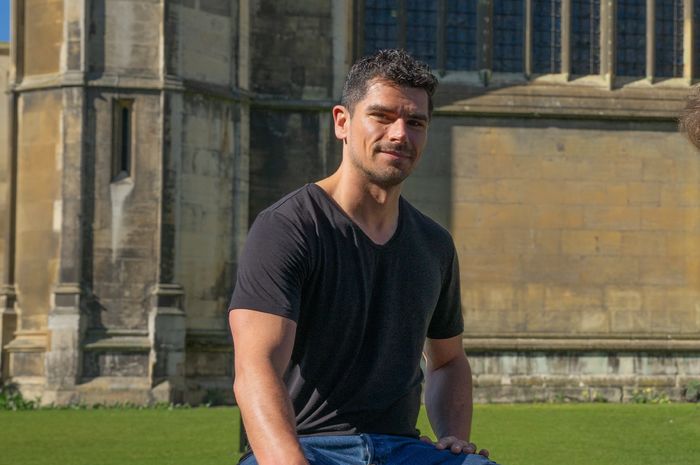
Luke Kemp was drawn to the history of societal collapse after teaching Climate Change Science and Policy at the Australian National University. He wanted to address “a much wider plethora of risks” in his research while aiming to identify the “root cause” of our tendency to produce threats in a modern global society.
We met for coffee on King’s Parade, as he is now a research affiliate at the Cambridge Centre for the Study of Existential Risk (CSER). What differentiates Kemp’s approach is his focus on history, which he uses as his primary guide for studying the future. In 2019, he wrote a successful piece for the BBC, using a historical lens and analysing the lifespan of ancient civilisations. He was then approached by an editor who suggested turning this research into a much larger project.
“I don’t think you can put a date on doomsday”
The book, titled Goliath’s Curse (2025), analyses patterns of downfall in what Kemp calls a “Goliath,” meaning any form of organised society with resource inequality and power imbalance. Before considering their “curse,” however, Kemp stresses that one must understand how Goliaths grow. The three main forms of Goliath fuel are “monopolised weapons, lootable resources, caged land,” suggests Kemp, which led humanity to exit the era of “nomadic, egalitarian hunter gatherers”. Following this logic, one might define nations as evolved “organized crime rackets,” an idea first proposed by American sociologist Charles Tilly.
On the topic of anticipation, Kemp starts by acknowledging that “I don’t think you can put a date on doomsday,” as the phenomena are too complex for prediction models. However, he suggests there are some telling indicators of a vulnerable society. Indeed, Kemp says: “one of the biggest risk signs is growing world inequality,” an increasingly central issue of today’s economies. Other factors correlated to inequality include “the rise of the far right, increasing polarization, falling trust in public institutions, democratic backsliding and the cost of living crisis.”
“Sometimes collapse is good for people”
Even if collapse does happen, its aftermath varies from one case study to another. Citing historical examples, the researcher refers to the story of Cahokia as “an example of complete abandonment”. This native American Goliath, of “10-15,000 people, active roughly 1,000 years ago,” was effectively erased after its collapse, both in terms of activity and memory. On the contrary, the aftermath of Rome’s collapse did not hinder “the passing on of major structures,” such as the influence of the church or the Latin language. While collapses can vary widely, they tend to feature a “rapid, enduring fragmentation and contraction of power structures”. This is not necessarily an apocalypse, Kemp clarifies, as - in the case of oppressive Goliaths – “sometimes, collapse is good for people”.
Comparing those historical examples to the contemporary status quo, Kemp identifies the same “basic dynamics of inequality”. The nature of threats, however, has evolved under the influence of widespread technology, social democracy, globalisation, and the capitalist nation-state model. On the one hand, says Kemp, “most of the world is still heavily hierarchical and works for domination”. On the other hand, “the big difference,” he suggests, “is that we have a global life,” potentially leading to the development of one single, unprecedented, global Goliath.
“We should be trying to find more effective ways of doing democracy at scale”
In short, a different society means different risk-management. States are indeed “much better at suppressing dissent internally” because of evolutions in the police, military and intelligence sectors. When it comes to global rather than state-specific risks, such as climate change, those have “often played a role in collapse as a triggering event”. Today, man-made emissions have generated “a much more ubiquitous, rapid climate change”.
Nearing the end of our conversation, we pivoted to AI, a modern invention that has reignited debates around existential risk. The researcher remains skeptical on the possibility of an AI apocalypse, admitting it is “a prospect which, while I think is unlikely, I do take seriously”. Though on a less radical level, the risk of “AI super charging mass surveillance systems, or massively concentrating wealth and power” is “very real and already happening.” We also addressed the idea of replacing and automating jobs, which for Kemp is not without political danger: “if states become less dependent upon their people [for work], they have less economic and political bargaining power.” In short, fewer jobs leads to less popular sovereignty, “creating a fast track towards democratic backsliding”.
The question thus remains: how can we use our individual and collective impact to globally reduce existential risk? From the perspective of Cambridge students, a first step might be to stop seeking and idealising careers within highly controversial industries, such as arms or fossil fuels. In fact, says Kemp: “the reason why you end up with Goliaths is because of status competition,” which puts money and prestige higher than overall well-being. The key is to pursue not only the “maximisation of good, but also the minimisation of harm”.
What is necessary, Kemp suggests, are “more effective ways of doing democracy at scale,” helping humanity move towards the goal of an open democracy. Some features of Kemp’s open democracy would include “citizen assemblies and citizen juries,” proven to lead to positive legislation outcomes. He ends our discussion with the example of the Trinity test, the first ever nuclear test. Scientists at the time had concluded that nukes had a non-zero chance of destroying the atmosphere. Kemp theorises that if this evidence had been presented to “a citizen jury,” constituted of “randomly selected citizens,” the test would certainly have never been done. Within our global Goliath, then, Kemp’s final assertion is clear: it is the “open democracy [that] can help save the world.”
 Comment / The Cambridge drift1 June 2026
 News / News in Brief: Corpus climbing, climate cash, and commendable contributions1 June 2026
 News / Cambridge psychologist warns against blanket social media ban for under-16s1 June 2026
 Theatre / CUMT’s The Wind in the Willows brings a classic to life 31 May 2026
 News / Venue cancels Cambridge talk by right-wing commentator Matt Goodwin after backlash28 May 2026
 Music / We need to talk about Kendrick2 June 2026
 News / University support staff strikes end after month of action2 June 2026
 Arts / To the letter2 June 2026
- News / Cambridge psychologist warns against blanket social media ban for under-16s1 June 2026
 Sport / Caius beat Magdalene in last-minute thriller to clinch mixed netball Cuppers final1 June 2026