Judge Business School seeks deal with Saudi Defence Ministry
University leadership has approved a ‘memorandum of understanding’ with Saudi Arabia
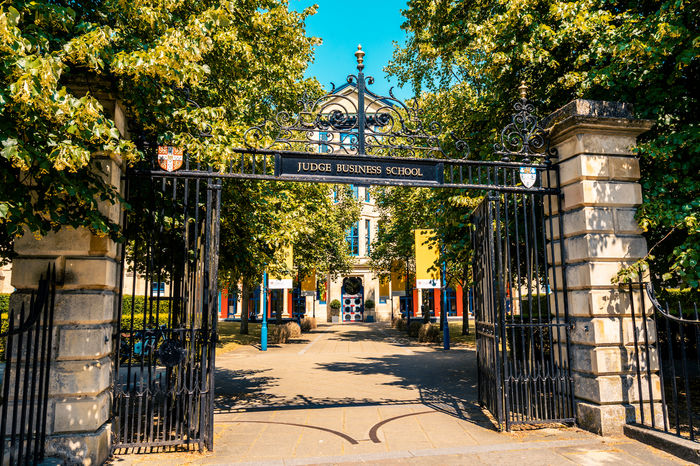
The Judge Business School (JBS) is seeking to provide “leadership development” and “innovation management” to Saudi Arabia’s ministry of defence. This comes amid human right concerns surrounding the defence ministry’s involvement in regional conflicts including Iran and Yemen.
The University’s leadership approved a proposal by JBS to form a memorandum of understanding (MoU) with Saudi Arabia’s defence ministry for services and training. This would follow an initial introduction by the UK’s ministry of defence.
Documents seen by Varsity state that an agreement “would set preliminary goals and terms for potential collaborations to develop executive education, innovation management, leadership development and healthcare administration strategies, working exclusively with the civilian administration of the [Kingdom of Saudi Arabia’s ministry of defence].”
A JBS spokesperson said: “Cambridge Judge business school has not signed such an MoU with the Saudi Arabia defence ministry.”
Cambridge’s committee on benefactions and external legal affairs, which is responsible for scruntinising funding and research proposals for reputational risk, was told by JBS that it “was requesting permission to enter into a Memorandum of Understanding with the Kingdom of Saudi Arabia’s (KSA) MoD ”.
The request was approved by the benefactions committee by a majority vote at its meeting in January. The committee decided an agreement “would in principle be acceptable” but required the committee to be consulted on individual contracts.
Confidential minutes of the meeting show that committee members expressed significant concerns over the Saudi government’s “record on human rights and climate change […] and the ability of the university to safely maintain its staff’s academic freedoms.”
One academic described the idea as “horrifying” and a betrayal of Cambridge university’s commitments to freedom of expression.
An academic who sits on the University’s council said: “This is horrifying. The University of Cambridge’s values are to protect ‘freedom of thought and expression’ and ‘freedom from discrimination’. Instead of fighting for our principles, we’re selling them out to the most murderous regime in the world.
“The idea that our academics would be safe in a country that arbitrarily imprisons and murders those who dare diverge from state dogma is shameless and disgusting. It’s a total betrayal of what we should stand for,” they added.
JBS’s director of alumni relations and external engagement told the benefactions committee: “the proposal aligned with the University’s mission to benefit society through education and was strategically aligned with the UK government”.
The committee was told: “Strong mitigations were in place to protect against reputational risk, including emphasis within the draft MoU of its civilian-only scope, and noting that any future funded contracts could be contracted with the [Saudi government’s] Institute for Public Administration, rather than the MoD.”
Those on the committee advocating for the deal claimed it offered “an opportunity to effect change positively within the KSA government”.
This decision comes amid continued controversy surrounding weapons divestment by the University, with Regent House calling for full divestment. The Council instead approved a transparency-focused approach, with no formal restrictions on investments in conventional weapons.
Student representative on the University’s Council Darragh O’Reilly said: “Cutting a deal with a foreign military is a very serious error of judgement. Cambridge’s unique university democracy, with its delicate checks and balances, is on the verge of collapse.
“I am deeply worried that the university regulator is asleep at the wheel. Our governing statutes are being constantly reinterpreted by senior staff, there is an increasingly uncomfortable atmosphere in our council meetings, the accountability mechanisms are broken.
“In my view, there is an agenda to permanently curtail democracy, entrusting all power in a small group” he added.
 Comment / The Cambridge drift1 June 2026
 News / News in Brief: Corpus climbing, climate cash, and commendable contributions1 June 2026
 News / Cambridge psychologist warns against blanket social media ban for under-16s1 June 2026
 Theatre / CUMT’s The Wind in the Willows brings a classic to life 31 May 2026
 News / Venue cancels Cambridge talk by right-wing commentator Matt Goodwin after backlash28 May 2026
 Music / We need to talk about Kendrick2 June 2026
 News / University support staff strikes end after month of action2 June 2026
 Arts / To the letter2 June 2026
- News / Cambridge psychologist warns against blanket social media ban for under-16s1 June 2026
 Sport / Caius beat Magdalene in last-minute thriller to clinch mixed netball Cuppers final1 June 2026