News in Brief: self-driving cars, speeding trains, and Selwyn shortlisters
A light-hearted round up of this week’s stories, from prestigious journalism awards to rocket building societies
Self-driving cars arrive in Cambridge
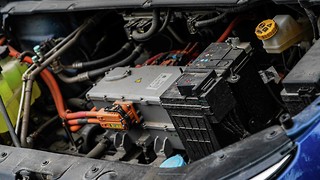
The Wellcome Genome Campus in southern Cambridge has just received government funding for a trial of self-driving cars. The research aims to assess how self-driving vehicles could promote growth and job opportunities in the region while cutting congestion between the campus and Whittlesford Parkway station. The funding, which was provided as part of the government’s CAM Pathfinder Programme, will allow the campus to carry out a year-long study. Although the vehicles will not yet carry passengers, campus chief executive Robert Evans said that a successful study could lead to the implementation of self-driving vehicle initiatives across the country.
Speeding train launched passengers out of seats
The Rail Accident Investigation Branch (RAIB) has published its report on a train speeding incident from 11 December 2025. On a service from London Kings Cross to Ely, operated by Great Northern, multiple passengers fell out of their seats as the train travelled 90 km/h instead of 40 km/h when crossing Cambridge Junction. The RAIB found that the driver expected the train to travel on a faster line, but then realised that it was blocked, causing them to brake abruptly. They were also “newly qualified,” having only been working unaccompanied for 11 days. The recommendations from the RAIB called on Network Rail to assess junctions where there is risk of derailment, and on drivers to remain vigilant at junction signals.
Uni space society inspired by Artemis II
Inspired by NASA’s recent Artemis II mission, the Cambridge University Space Flight Society have said they hope to become the first students in Europe to launch a rocket into space. Artemis II set the record for the furthest humans have journeyed into space, travelling 406,771 km. The society’s co-presidents Elisabeth Rakozy and Ben Sutcliffe have restated their goal to pass the Kármán line, 100 km above the earth, within the next two years. The society has previously launched rockets in the United States, and has recently made progress in their plans to launch a rocket in Scotland. Sutcliffe told BBC Radio Cambridgeshire that the society plans to launch “more rockets soon” and continue their progress on their 100 km mission.
Student investigating far-right rhetoric shortlisted for prestigious prize
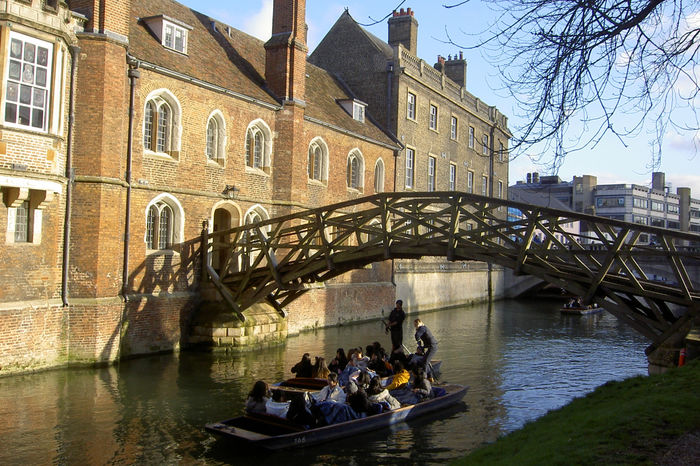
A Selwyn PhD student was shortlisted for the prestigious European Press Prize, under the innovation category. Raphael Hernandes, a Cambridge Digital Humanities student specialising in AI, journalism, and society, was nominated for his work as part of a team at The Guardian looking into a network of UK-based Facebook groups perpetuating far-right rhetoric. “We traced the footprints of individuals who were charged with online crimes during the anti-immigration and far-right riots that took place in summer 2024 in the UK, and we found a whole ecosystem of groups they were part of,” said Hernandes about the project. The European Press Prize is one of the largest journalism awards in Europe, and the ceremony is set to be held in Lisbon on 3 June.
 Comment / Top of the slops: the competitiveness of college dining4 June 2026
 Comment / The Cambridge drift1 June 2026
 News / Cambridge researchers produce ‘world-first’ AI vaccine6 June 2026
 News / Two more women allege sexual harassment by classics professor Simon Goldhill 28 April 2026
 Features / One big happy (college) family?4 June 2026
 Fashion / The hidden gems of formal fashion8 June 2026
 Interviews / What’s the story behind Pages coffee house?8 June 2026
 Theatre / ‘Where does actor begin and puppet start?’7 June 2026
 Music / T.S. Eliot meets Eurovision: LYR + Natalie Wildgoose at The Storey’s Field Centre7 June 2026
 Features / Chronic illness and the Year Abroad6 June 2026