The laundry revolution – Cambridge’s problem with technology
Ruben Francis looks into the dark side behind the university’s laundry system and what it reveals about Cambridge’s wider relationship with technology
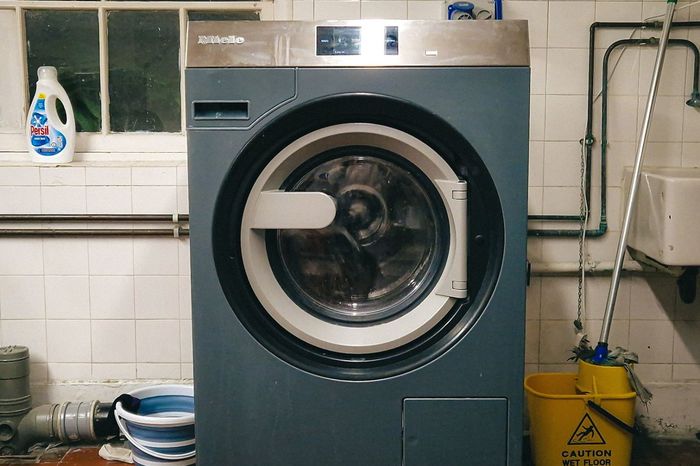
For centuries, Cambridge has managed to muddle through without a single laundry app. Now it has three. College by college, a consensus has emerged that the analogue washing machine, once the mainstay of our laundry rooms, must be digitised.
The first app to arrive was Circuit Laundry. The registration process is so laborious, and the payment mechanism so convoluted, that one can easily forget there’s a washing machine to go with it. Only once you have surrendered a wealth of personal data do the app’s bountiful privileges become apparent, including bluetooth-activated washing at a 30-metre range and access to the Circuit Calendar, allowing you to schedule your washing for the weeks ahead.
“Beneath this mindless slop, Circuit serves a more sinister purpose”
Then came Circuit Go. This entirely separate app integrates the student into the global Circuit network, enabling them to wash laundry on multiple continents. It also provides relief from the crushing boredom and loneliness that haunts the traditional laundry room experience. For companionship, students get access to a 24/7 chatbot, and to keep up with the most pressing laundry issues of our time, an unlimited subscription to Circuit’s bespoke blogs. Struggling academically? Make sure to check out Circuit’s ‘pro tips’ on how to get the most from your lectures. Lacking social plans for the holidays? Read Circuit’s advice on how to enjoy your Easter break. And if you’re particularly bored, indulge yourself in Circuit’s ‘festive puzzles’ or enter into their annual Christmas competition: 12 Days of Circuit. You can also give your washing machine a follow on Instagram.
Circuit Laundry Plus finally integrates man and machine. Armed with a Unique Customer ID, the Circuit Citizen can now pre-load their laundry card using the PinMate, a slightly sinister machine that lurks in the laundry room like Hal from 2001: A Space Odyssey. You can also embed yourself further into the Circuit matrix by signing up for a personalised weekly newsletter. Perhaps Circuit should compete on the short-form media market as well; we’ve already got reels, shorts, and TikToks – why not ‘cycles’?
“It is not so hard to imagine a future where the bar at The Regal becomes obsolete once students entirely convert to the Wetherspoon’s app”
But beneath this mindless slop, Circuit serves a more sinister purpose. The company is a subsidiary held by the global private equity firm Cinven, which has made $52bn in realised proceeds. Circuit (a relatively small part of its portfolio) has lavished its directors with millions each year from profits.
Now this would all be quasi-forgivable for students if the company simply had an app problem. But the fact is that the washing and drying machines are pretty awful as well. To maximise your chances of receiving genuinely dry clothes, one would need an atomic clock calibrated precisely to the rhythms of the machine, so that you can arrive before the water seeps back in. One needs to only look at the reviews on the app store (average of 1.2/5), or browse the Reddit forums that demand the student-led boycott of Circuit, to realise the magnitude of discontent with the state of their washing machines.

Laundry, of course, is the least of our problems. But the technology issue is much bigger than this – it’s about the digital colonisation of the everyday. Over the course of Lent, I have been discriminated against by a digital parking meter on Gresham Road. Become a fugitive of the digital menu. Out-QRr’d by more adept digital citizens. Even the term cards for many societies are only accessible through Instagram. It is not so hard to imagine a future where the bar at The Regal becomes obsolete once students entirely convert to the Wetherspoon’s app, or 24/7 college chatbots are the only support for students’ pastoral needs.
In Nolen Gertz’s book Nihilism and Technology, he describes such developments as the “leisure-as-liberation trend in technological design." We accept technology because it furnishes us with more leisure time, allowing us to engage in the ‘pleasurable activities’ that we need to be human. We see this at work when students shop online and use voice-activated assistants – when technologies drive, check the weather, or deliver food for us. It saves enormous amounts of time that enable us to pursue an unparalleled quantity of leisure beyond historical comprehension. But the worry is that as technology captures more and more tasks previously assigned to us, we lose sight of where it begins and ends. The role of the machine and the human swap places; rather than technology helping us to achieve our ends, our ends are algorithmically determined for us. Technology becomes a way of organising the world so that we don’t have to experience it.
 Comment / The Cambridge drift1 June 2026
 News / News in Brief: Corpus climbing, climate cash, and commendable contributions1 June 2026
 News / Cambridge psychologist warns against blanket social media ban for under-16s1 June 2026
 Theatre / CUMT’s The Wind in the Willows brings a classic to life 31 May 2026
 News / Venue cancels Cambridge talk by right-wing commentator Matt Goodwin after backlash28 May 2026
 Music / We need to talk about Kendrick2 June 2026
 News / University support staff strikes end after month of action2 June 2026
 Arts / To the letter2 June 2026
- News / Cambridge psychologist warns against blanket social media ban for under-16s1 June 2026
 Sport / Caius beat Magdalene in last-minute thriller to clinch mixed netball Cuppers final1 June 2026