
Commercial Feature
The History of Playing Cards: From Ancient China to Modern Day
With thousands of card games to choose from today, it’s hard to imagine that they never existed. But way back in Ancient China, the first card game was developed. As trade routes expanded, playing cards spread across the world as a form of entertainment.
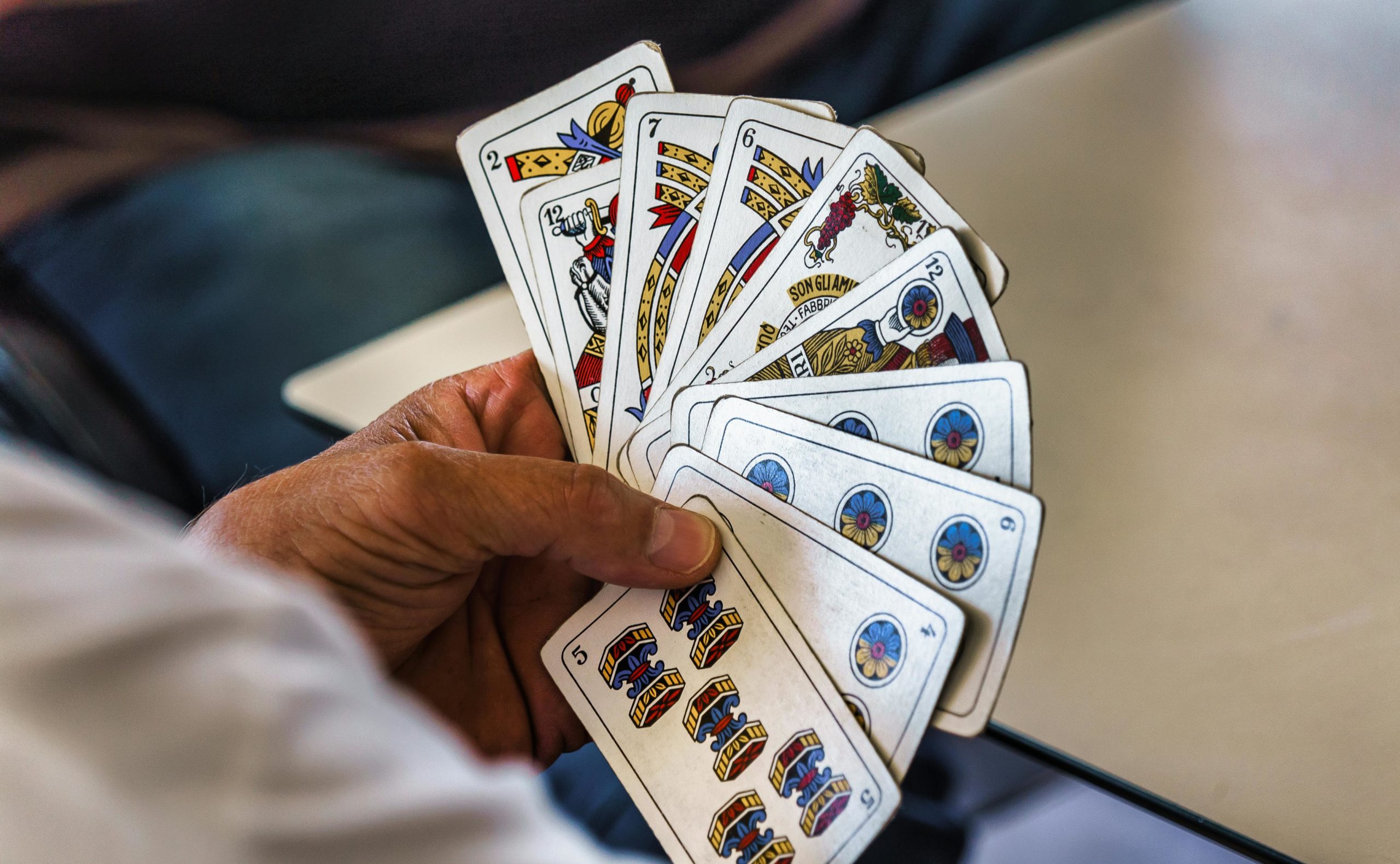
Today, card games are more popular than ever at online and land-based casinos. Games like poker, blackjack and pontoon card games are staples with live dealer variations and tournaments upping the thrill. If you’re a card lover, stay with me as we delve deep into the rich history of card games.
Origins and Early History of Playing Cards
While there is some debate, card games are believed to have originated in 9th-century China. The earliest official record dates back to 1294. This describes players in the Yuan Dynasty who were arrested with paper playing cards and wood blocks used to print the cards.
From China, card games were picked up by travellers and spread across Europe and Asia. In the 15th and 16th centuries, playing cards were standardised by the French. The heart, diamond, spade and clubs we know today were established, alongside popular games such as Tarot and Whist.
The Development of the Modern Card Deck
Original playing cards looked a lot different to what we see today. Early cards were used by the Chinese as money cards. Instead of suits, they had coins reflecting currency. Rather than playing with money, players would stake their cards.
When card games reached Europe, they began to reflect the times. The art you see on playing cards today shows cultural elements from the 15th to 19th centuries.
- Hearts: The Clergy. Relate to priests and religious figures who were looked upon to guide and nurture society.
- Diamonds: Aristocracy. The diamond, which represents wealth and luxury, relates to aristocracy.
- Clubs: Peasantry. The three-leafed clover of the club is thought to represent peasantry. Peasants worked the land and the simple club reflects the unpretentious life of the common people.
- Spades: The Military. The spade, shaped like a spearhead, is said to represent the military.
Face Card Evolution
While suits represented social hierarchy, face cards were designed to represent famous historical personalities. Furthermore, they reflect the nobility ranks. This is why picture cards are worth 10. But in poker, the king will outrank the queen or the jack when it comes down to the highest card.
The face cards of today look quite similar, although this was not how it began. Far back, the kings, queens and jacks had historical associations.
Alexander the Great was depicted as the King of Clubs, as he embodied military prowess and strength. Hector, the Trojan prince, was used as the Jack of diamonds. And, the heroine Judith from the Bible’s Old Testament was often depicted as the Queen of Hearts.
The Creation of the Joker
Jokers were first thought to be invented by American Euchre players in the 1860s. For this game, it was decided that they needed an extra trump card and the Joker was born.
First printed by the US Playing Card Company, it was originally known as ‘’The Little Joker’’ and later on ‘’The Jolly Joker’’. By 1880, the Joker was seen in English packs and is still often used today as a wild card in certain poker games.
The Spread of Card Games Across the World
In the 11th century, card games made their way to Egypt. Here, they developed their own cards, consisting of 52 cards in the deck. Each card had different suits such as coins, swords, cups and polo sticks. Mamluk playing cards were elaborately designed with abstract patterns and calligraphy.
Playing Cards Get Banned in Europe
Not long after arriving in Europe, card games started to get banned by authorities. While they were a popular source of leisure time excitement for some, they also attracted anti-social behaviour, card sharks and swindlers.
This led to card games being demonised by preachers and local authorities trying to find ways to regulate them. Further bans continued across Europe, but this didn’t stop people, as many continued to play illegally.
The American Influence On Card Games
Playing cards are thought to have first reached the USA from England. Over time, American publishers started printing their own decks and streamlined the design to what we see today. It was here that the game ‘Poker’ emerged in the 19th century. It is thought to be influenced by earlier games such as the Spanish game Primero and the French game Poque.
With time, Poker developed numerous variations such as Omaha and Texas Hold’Em. Each has a unique set of rules and strategies and requires players to use a mix of skill and psychology. In the 20th century, Poker moved from the backstreet shadows into mainstream media, boosted by live, televised tournaments.
Card Games and Casinos
In the 17th century, card games started popping up in land-based casinos. One of the first is thought to be Venice’s Redito, established in 1638. These gambling houses provided a controlled environment where players could enjoy a range of casino games and social interaction.
As casinos spread across Europe, formal rules were established, alongside tournaments. Casinos eventually made their way to America and cities like Las Vegas were born, attracting millions each year to the glitz and glamour of the strip.
The Birth of the Internet: How Playing Cards Changed Forever
When the internet was born, the gambling world underwent another shift. The first online casinos emerged in the 1990s, allowing players to gamble from the comfort of their homes. No longer did you have to set foot in a casino – if you had a computer with internet, you could gamble at any time.
Microgaming was the first pioneer to start developing gaming software in 1994. In the same year, they opened the first-ever online casino. Players could enjoy video poker, craps, roulette and blackjack. Fast forward to today, there are over 2,000 online casinos that host thousands of card games (although it’s impossible to determine the exact figure).
The journey of card games through the ages has been nothing short of remarkable. And with continuous technological advancements, who knows what types of card games we might see in the future?
 Comment / Top of the slops: the competitiveness of college dining4 June 2026
 Interviews / What’s the story behind Pages coffee house?8 June 2026
 News / News in Brief: Cambridge crowns, council confirmations, and competitive cricket8 June 2026
 Comment / The Cambridge drift1 June 2026
 News / Cambridge researchers produce ‘world-first’ AI vaccine6 June 2026
 Arts / Don’t rush me – I’m reading!9 June 2026
 Lifestyle / Don’t Cry at Me, Argentina – a next-year abroad story8 June 2026
- News / News in Brief: Cambridge crowns, council confirmations, and competitive cricket8 June 2026
 Science / Failure is the foundation of science8 June 2026
 Fashion / The hidden gems of formal fashion8 June 2026
