Art-ificially aesthetic
Yulianna Nunno discusses how artificial intelligence disrupts the creation and reception of art
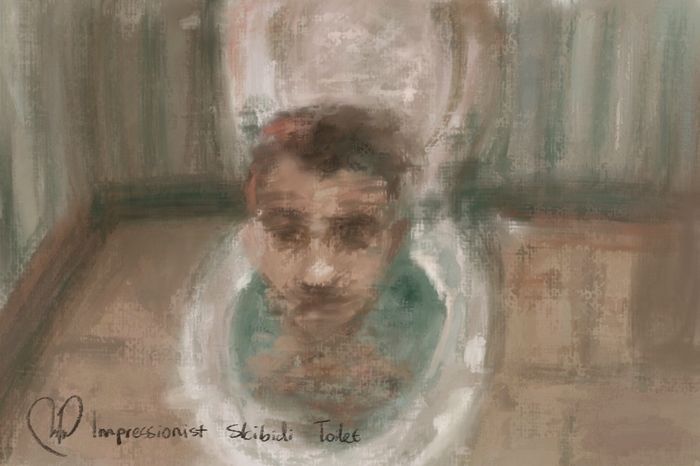
What defines the aesthetic of the AI-generated image? Is it cartoonish absurdity, as in the hybrid, anthropomorphised characters of Italian brainrot? Or the plasticky, smooth, oversaturated sheen of AI ‘slop’ content? It seemed to me that the uncanny, absurd aesthetics were generative AI’s visual norm – until I came across Niklas Engvall.
Engvall generates images which emulate the grain and cinematic colouring of film photography, taking old money aesthetic cues from iconic photographers such as Slim Aarons and Terry O’Neill. One of Engvall’s images depicting a skating waiter is particularly reminiscent of photographs by Alfred Eisenstaedt and Horace Abrahams. It’s a far cry from the glossy, oversaturated and cartoonish aesthetics we’ve grown to associate with AI-generated images. It made me wonder how can such contradictory aesthetics can emerge from the same medium.
“It seemed to me that the uncanny, absurd aesthetics are generative AI’s visual norm”
To work through this question, I spoke to literary historian and computational humanist Dr. Ryan Heuser. In a recently published paper, Dr. Heuser examined the formal and aesthetic patterns of AI-generated poems. He found that generated verse adheres to stricter formal conventions (rhyme scheme, meter) than poetry from even the most conservative periods in literary history. This is despite the overrepresentation of contemporary texts in training data. His findings suggest a wider adherence to aesthetic features in AI-generated work.
So why do generative systems get ‘formally stuck’? Well, the AI is programmed to not want to disappoint. We often see this with AI ‘hallucination’, when Chat-GPT would prefer to give a false or fabricated answer than admit to not knowing. This emerges as an aesthetic feature when generative AI is enlisted in creative production. AI poetry, images and music prioritise that which pleases rather than work that engages in artful frustration. We can think of AI-generated images as “the average of our aesthetic desires”. Dr. Heuser mentioned America’s Most Wanted by Komar and Melamid, a painting that was made based on survey responses from the American public in 1994. The questions ranged from favourite colours to painting styles to subject choice. The result was a landscape reminiscent of Albert Bierstadt’s Among the Sierra Nevada, California (1868). With a cameo from George Washington, of course. It’s the pre-AI version of an AI-generated work, exhibiting many of the aesthetic qualities we associate now with the latter: smooth, bright colours, incoherent composition and absurdisms. The aesthetics of America’s Most Wanted were made to please the demands of the survey prompters, not unlike the AI images of today.
“AI poetry, images and music prioritise that which pleases rather than work that engages”
This seems to be the logic beneath the aesthetics of AI-generated images. Italian brainrot characters and Engvall-esque photo-realisms are two sides of the same made-to-please coin. Brainrot engages in pleasure by rendering reality absurd. It tells us to have a laugh at an anthropomorphised shark in comically large blue Nikes. But internet aesthetics such Engvall’s old money creations engage in pleasure through nostalgia. That instead encourages us to imagine an alternative reality, to escape into the past when things were better. Yet in both variations, the aesthetics are made solely to please.

I asked Dr. Heuser where art criticism should go from here. His answer? It’s worth questioning the political function of AI’s made-to-please aesthetics. Slop might entertain, and Internet aesthetics may be pretty, but pleasure-seeking aesthetics risk eating our brains away. This ethos seems to me to explain how we ended up with Emerald Fennell’s Wuthering Heights, a movie made more for the Pinterest board and marketing campaign rather than critical engagement with Brontë’s original text. It makes me think that AI-generated images, as the average of our aesthetic desires, tell us something about ourselves. We ought to listen.
 Comment / The Cambridge drift1 June 2026
 Comment / Top of the slops: the competitiveness of college dining4 June 2026
 News / Cambridge psychologist warns against blanket social media ban for under-16s1 June 2026
 News / University support staff strikes end after month of action2 June 2026
 Music / We need to talk about Kendrick2 June 2026
- Comment / Top of the slops: the competitiveness of college dining4 June 2026
 Interviews / Bible Scholar Mattie Mae Motl: “God is a woman”4 June 2026
 Features / One big happy (college) family?4 June 2026
 Theatre / Bold beginnings in the Corpus Playroom 3 June 2026
- Music / We need to talk about Kendrick2 June 2026