How misfired pottery hits the mark
Ollie Liversedge takes comfort in the imperfection of ancient art
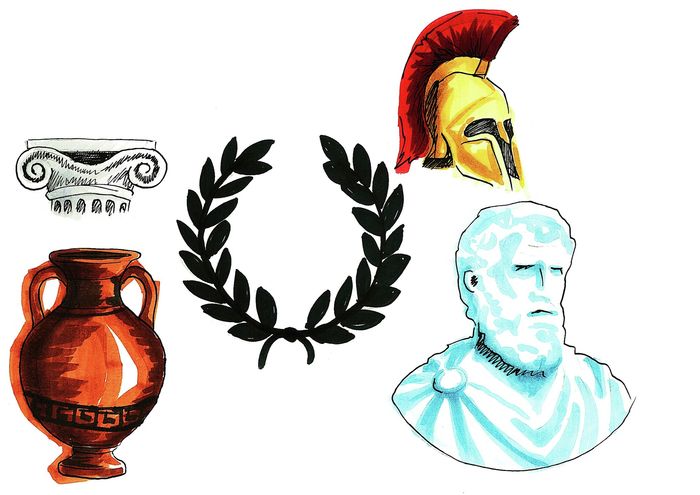
The Fitzwilliam Museum sits beside my college, Peterhouse, making it easy to escape there when the workload becomes too much. For instance, I spent most of last week trying to write an introduction to what will (hopefully) become a 15,000-word Master’s dissertation. Structure, voice, style: all of it seemed to slip away from me the second my fingers touched the keyboard. Paralysed by perfectionism, I watched my cursor hover accusingly over “this essay argues” for minutes. It had all become so flawed and fragmented on the page. Needing a break, I made my way to the Greek & Roman Gallery of the Fitzwilliam Museum where, in the far corner, I came across misfired Greek pots and fragments of amphorae. These were objects on display because of their flaws, not despite them. In their scuffs and skews, I found an answer to Cambridge’s demands for perfection.
“Imperfections are the making of the pot, just as our own imperfections are the making of us”
One vitrine in the corner of the Greek & Roman Gallery is dedicated to pottery. The ancient processes of firing clay plates and bowls is explained through a series of plaques and examples. Amongst them are misfired fragments of pottery, included both as instances of the process going awry but also as interesting and exemplary artefacts in their own right. In their uncommon gradients of red and black, these fragments have a characterful beauty that is just as stunning as the ‘perfect’ pots beside them. Safe to say, they drew my eye. Bringing with me the anxiety of my failing introduction, I was reminded that sometimes the essayistic misfires can have their own experimental charm and intrigue – certainly worth discussing and learning from in a supervision or redraft. Sometimes the queerest and quirkiest parts of an essay or seminar contribution are its best bits, and they combine to make something that is even more than the sum of its parts.
“The absence of one part does not mean the failure of the entirety”
Inside the vitrine is a vase which has been reconstructed from a collection of fragments and shards. A plaque explains that “the edges of the foot, which does not belong to the original vase, have been ground down to fit on to the bowl.” There are large parts missing, with jagged lines exclaiming these absences, yet the shape can be observed and appreciated regardless. The fact that this pot is cracked and incomplete makes it more precious, not less. Such imperfections are the making of the pot, just as our own imperfections are the making of us. Sometimes we can punish ourselves for struggling to find the ‘perfect’ phrasing for a sentence or the ‘perfect’ reference to affirm our argument, but then sometimes we need to let go of this perfectionism and recognise that our work makes sense as it is – having its own observable and appreciable shape. The absence of one part does not mean the failure of the entirety.

Walking back to the library from the museum, I had affirmed to myself a holistic, imperfectionist approach to work. I was reminded that the scuffed and skewed parts were just as viable and valuable as the supposedly ‘perfectly’ polished parts. At Cambridge, it is all too easy to trick ourselves into believing that we have to get everything right on our first go, or that we have to compare ourselves to the people who we think have never been wrong in their supervisions, seminars, essays, or lives. What my trip to the Fitzwilliam Museum reminded me of was that even the ancient Greeks – who built the Parthenon, invented democracy, and wrote literature that has lasted millennia – misfired pots and vases. And, what’s more, those misfired pots and vases have lasted millennia too, precisely because they have value and intrigue in their own right. If a pot can outlive its misfiring, then perhaps my dissertation introduction can outlive its weak opening line.
 Comment / The Cambridge drift1 June 2026
 Comment / Top of the slops: the competitiveness of college dining4 June 2026
 News / Cambridge psychologist warns against blanket social media ban for under-16s1 June 2026
 News / University support staff strikes end after month of action2 June 2026
 Music / We need to talk about Kendrick2 June 2026
- Comment / Top of the slops: the competitiveness of college dining4 June 2026
 Interviews / Bible Scholar Mattie Mae Motl: “God is a woman”4 June 2026
 Features / One big happy (college) family?4 June 2026
 Theatre / Bold beginnings in the Corpus Playroom 3 June 2026
- Music / We need to talk about Kendrick2 June 2026