From pupil to poet
Rachel Jones speaks to the new generation of Cambridge bards
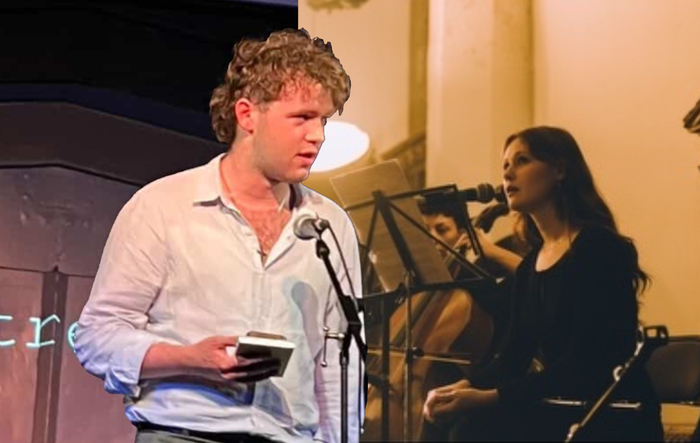
Cambridge’s poetry scene is thriving. It is kept alive by the dedication of students like Joe Wright and Millie Jeffery, who both balance creative writing with final year degrees in English literature. Wright founded Magdalene Poetry Society in his first year, while Jeffery is currently president of The Pem. Both have had work in some of Cambridge’s many student publications: Wright’s poem ‘Killhope Cross’ was chosen for The Mays 32, and Jeffery has been featured in zines such as The Wicked Ant. Intrigued by this hybrid lifestyle, I sit down with both of them to discuss their work and what writing poetry while at Cambridge is actually like.
You might think the daily routines of university would be conducive to a regular writing practice. Wright confesses the opposite: “I don’t have any brainspace when I’m in Cambridge.” Instead, he writes at home, during the holidays, and reserves term time for listening and learning. Jeffery agrees: the intensity of Cambridge means that she gets the impulse to be creative less and less regularly as the term progresses, only “in really inconvenient moments,” like late at night or when she should be finishing her essays. She admits to finding this strain unexpectedly stimulating: “I find when I have loads of time it’s also quite hard to channel that, and if I’m stressed and a bit overworked it gets easier to access different things.” Is poetry a kind of release, then? “Yeah, I guess so, sure. Or just like, a way of making sense of something that you didn’t even know had to be made sense of.”
“Wright is dubious about writing about somewhere so poetically infamous, while Jeffery confesses she only writes about the city from a distance”
I ask both of them whether Cambridge as a location has ever inspired their work. No, surprisingly: Wright is dubious about writing about somewhere so poetically infamous, while Jeffery confesses she only writes about the city from a distance - Coe Fen or Castle Hill. It seems that it is hard, then, to find a home for your work in a city that feels to be possessed by so many people, and to be so fleetingly yours. What actually inspires poetry, then? For Jeffery, it is sometimes churches (“gold and Catholics and all that kind of drama”); sometimes trains, tunnels, and “those kinds of late night holes that you find yourself in”. She is particularly interested in the liminality of these places, and the social contracts between strangers that govern public spaces. For Wright, it is primarily the landscape around his home county of Durham, and the traces that its industrial past has left upon it (Contour lines map strangely well onto the turning of verse). He talks about the “weird, mythological space” of the abandoned mine shafts that he went down as a teenager, and the complex relationship he has with this part of his region’s identity, not being from a mining family. It makes him pay attention to “what the voice is doing in a poem, and what it takes ownership of”.
But a Cambridge degree doesn’t spell the complete death of poetic enterprises. Wright stresses the significance of finding a community of friends and writers with whom he could talk about poetry. This love for an oral, dialectic approach to writing saw him start the Magdalene Poetry Society as a place for students to share and develop their own work. “I really like reading stuff aloud… I think it’s one of the ways in which I edit a lot – just on hearing – especially with an audience, it does change it, for me.” He also mentions Tristram Fane-Saunders’ poetry group at Trinity, and hanging out with the creative writing master’s students. Jeffery similarly credits the passion of her peers at open mic events and sharing sessions like those of the Shirley Society, but admits that she didn’t immediately see the diversity of it, having come from an extremely varied London writing scene. “But then I think I just started listening, and people are just very different, and I think it’s just about paying more attention. And everyone’s so good!”
“A Cambridge degree doesn’t spell the complete death of poetic enterprises”
I wonder if the objects of study from an English degree are liable to invade poetry. Referencing the more alien literary worlds that the period papers open up, Wright describes playing with the register of a poem by smashing the medieval into the contemporary – for example, a Durham ghost trying to understand its rights under modern land law. “I guess I’m trying to play around with where we feel we are in time; where we feel we connect with other people in time. And I’m interested in voices and characters that feel very marooned between something that feels like now and something that feels like then.” So can a poem be a kind of seance? “I don’t think I can do that. I want what I’m writing to at least engage with that idea and problematise it a bit. Fragmentation is really important, I think, to that. A sense of having fragmented voices that come to us, and where those fit into our own lives.”
Meanwhile, Jeffery wrote her second year dissertation on female Beat poets. She says their interest in a permeable and fluid female body have started to come out in her writing. I ask her if she could imagine a Cambridge college as generating the same kind of symbiosis that she saw in the Beat generation. She admits there are parallels with the closeness of a college community, and sometimes artistically: “You find people inspiring your work and you inspire other people’s work.” She is reluctant to fully equate the two, though, one reason being (hopefully) a contrast in the number of roaches.

I am interested in how this new generation of poets think about their work. What does it do, to a reader, to the things that are written into it? Wright agrees with Audre Lorde that poetry is a “skeleton architecture of our lives” – for him, it is a “through form,” a “way of thinking”. But, in a time when more people write verse than read it, he admits that “the emphasis is less on what a poem might do to somebody else, than how it might help you as a writer.” It becomes more marginal: “there’s a kind of awareness intrinsic to that, that we’re recording things in this poem that are only maybe ever going to exist in this poem.” Jeffery is more Aristotelian with her answer: “I think [a poem] is successful when it effects emotion. When poetry doesn’t do anything, you read it and you feel the same afterwards. Even if it’s minute, that change, of just slightly altering what someone thinks… it’s such a privilege to be able to be moved by something in that way.” She thinks poetry is key to fighting current trends of polarisation, as it forces readers to pay attention to the nuances of a view different to their own.
Finally, what would it feel like to interview their own poetry? “A year ago, I would have asked it: ’Why are you trying to be so northern? ’” laughs Wright. Jeffery also finds the idea amusing: “They’d probably look like me but… extreme, like a concentrated version of myself.”
 Comment / The Cambridge drift1 June 2026
 Comment / Top of the slops: the competitiveness of college dining4 June 2026
 News / Cambridge psychologist warns against blanket social media ban for under-16s1 June 2026
 News / University support staff strikes end after month of action2 June 2026
 Music / We need to talk about Kendrick2 June 2026
- Comment / Top of the slops: the competitiveness of college dining4 June 2026
 Interviews / Bible Scholar Mattie Mae Motl: “God is a woman”4 June 2026
 Features / One big happy (college) family?4 June 2026
 Theatre / Bold beginnings in the Corpus Playroom 3 June 2026
- Music / We need to talk about Kendrick2 June 2026