You’re invited to Cambridge’s zine scene
Rachel Jones guides us through Thomas Nashe and Cambridge’s world of cheap print
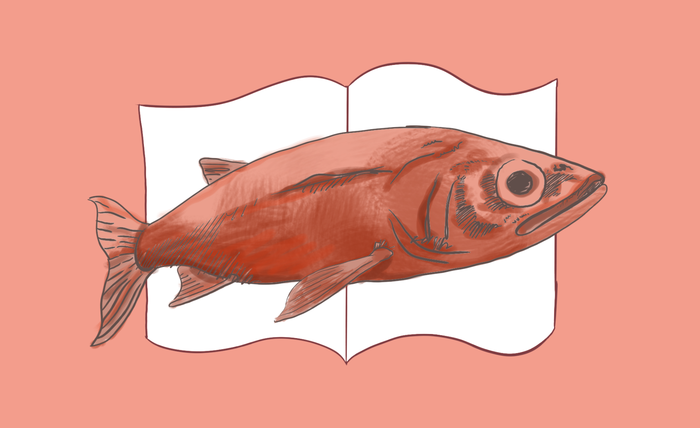
“Head, body, tail and all of a red herring you shall have of me, if that will please you” (Thomas Nashe, Lenten Stuffe, 1599)
Slim, light, almost pocket-sized: the zine (from ‘magazine’) may come in a humble form, yet it harbours a dizzying kaleidoscope of student creativity, from poetry and essays to paintings and photography. Before I arrived at Cambridge, I had never heard of such a thing. But after a year of my English degree, I am beginning to recognise the important part that these publications play in the university’s arts scene.
“Unpretentious, open-minded, zines are thus places for practice and experimentation”
Most colleges now have arts societies that print their own zine. Jesus has Eliot’s Face, Downing The Leaves, Catz The Wicked Ant. Such editions are special because they offer a place for almost anyone to present their work, in whatever art form it may take. Most college-based ones are not highly competitive or exclusionary, welcoming the wide range of creative endeavours that are submitted to them, and so offer a unique opportunity for students to see their work in print. Unpretentious, open-minded, they are thus places for practice and experimentation – a first taste of creating for publication. In their variety, they form a bright patchwork of art, and encourage students to collaborate through editing, illustration, and design. Writing an essay for The Cambridge Review of Books in my second term was the first experience I had of my work being properly edited – suddenly writing became a shared project, and I had a voice of clarity to consult about my ideas. Most importantly, I think, amid terms shaped by academic pursuits, zines prompt a switch to a more creative headspace, and showcase a different kind of work that may go uncelebrated otherwise.
“Literature suddenly became highly exchangeable, highly manufacturable”
This modern world of cheap print reminded me of Thomas Nashe’s reflections on his own publishing scene in his 1599 pamphlet Lenten Stuffe. The printing press had only recently arrived in England in 1476, and throughout the 16th century the volume of literature being printed grew massively, as writers used the new technology to publish in new forms, such as cheap pamphlets or tracts. Literature suddenly became highly exchangeable, highly manufacturable – words became stuff: a tradable commodity. This is what Nashe draws attention to with Lenten Stuffe’s red herrings, that come to stand in, allegorically, for his own commercialised words. The red herring becomes the backbone of Nashe’s imaginary economy: it “sets a-work thousands”; “it is every man’s money, from the King to the courtier”. Nashe dwells on the anxieties of having your work made available to the masses – he laments those who “disjoint and tear every syllable betwixt their teeth severally”. The exchange of words becomes something volatile, unpredictable in its slipperiness, dangerously open to interpretation. Yet Nashe is simultaneously transfixed by the alchemy of the commodification of his word-fish: “in his skin there is plain witchcraft”.
When turning back to our own local economy of student print, Nashe reminds us of what is at stake in taking part. Choosing to publish your work for readers is daunting – once you have put it out for them to digest, it is out of your hands, and could be entirely transformed by someone else’s mind. Yet he also points to the magic that may occur when you allow it to enter a whole market of art and meaning and creativity. The zine scene in Cambridge is just that: an economy of imagination made material – expansive, various – waiting to introduce you to its very own species of ever-abundant fish!
 Comment / The Cambridge drift1 June 2026
 Comment / Top of the slops: the competitiveness of college dining4 June 2026
 News / Cambridge psychologist warns against blanket social media ban for under-16s1 June 2026
 News / University support staff strikes end after month of action2 June 2026
 Music / We need to talk about Kendrick2 June 2026
- Comment / Top of the slops: the competitiveness of college dining4 June 2026
 Interviews / Bible Scholar Mattie Mae Motl: “God is a woman”4 June 2026
 Features / One big happy (college) family?4 June 2026
 Theatre / Bold beginnings in the Corpus Playroom 3 June 2026
- Music / We need to talk about Kendrick2 June 2026