What does the fox say?
Emily Cushion solves the mystery of Homerton’s fox by tracing the creature’s literary movements
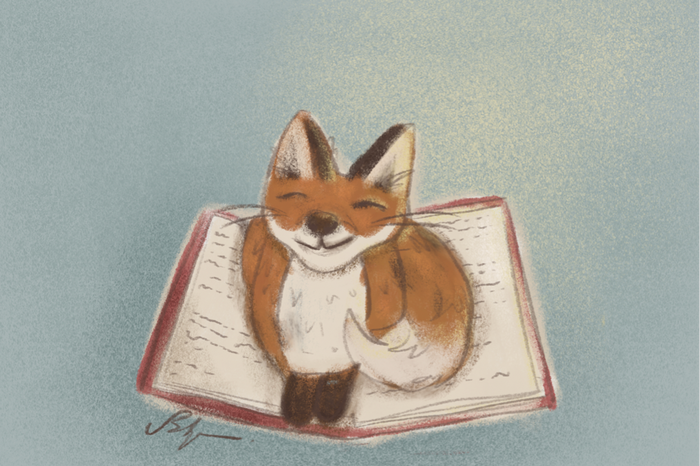
Last term, one of the foxes at Homerton started behaving abnormally – walking around the orchard in the daytime, loitering around students instead of running away, and at one point even chasing someone across the field. Nobody understood why the fox was acting like this. Mass emails were sent, Homfesses posted, and everywhere that little fox went, it was followed by a herd of Homertonians wanting a photo. Our college wildlife has always thrived: we have squirrels, magpies, a pond full of ducks that get fed every morning. But attention became focused solely on the fox, because it wasn’t, well, acting like a fox.
For such an elusive creature, the fox has been present in my mind ever since. I’m not alone in wanting to understand it – Mary Oliver gets into a vulpine mindset in ‘Straight Talk from Fox’. Oliver’s fox, the poem’s speaker, is quite like the Homerton one in feeling “It is like / music to visit the orchard.” It used to be an evening ritual of mine to leave my room and see the fox, squinting to catch a flash of orange dancing through the orchard in the moonlight. Our fox was soundtracked less by the ambience of nature, like Oliver’s, and more by the sound of trains passing behind college, or glasses smashing in the bar. No wonder it gave up being nocturnal.
“Wanting desperately to unearth the fox’s secrets, we instead find our own, extracted with just one glance”
A fox in the daytime is matter out of place. It belongs to the night, which is why its early appearances were so surprising. In D. H. Lawrence’s short story, the titular fox does not shock when seen, but rather when it sees. Attempting to hunt this fox, protagonist March makes eye contact with him: “And he knew her. She was spellbound – she knew he knew her.” Lawrence’s choice of “spellbound” imbues magic into the fox’s gaze. March feels “possessed” by the creature, whose supernatural potential is realised through sight. The speaker of Rachel Spence’s ‘Fox’ is similarly affected by a fox’s eyes, which “drill me, down to the bone”. There is an unnerving quality to a look that burrows into you like this. Wanting desperately to unearth the fox’s secrets, we instead find our own, extracted with just one glance.
The renard in Antoine de Saint-Exupéry’s Le Petit Prince, however, feels differently: “On ne voit bien qu’avec le cœur. L’essentiel est invisible pour les yeux” (“We only see clearly with the heart; what’s essential is invisible to the eyes”). Being nocturnal, foxes have excellent eyesight, but Saint-Exupéry considers a different kind of sight which is embedded within the heart. In Alice Oswald’s ‘Fox’, the animal is similarly found “hungrily asking / in the heart’s thick accent”. According to Saint-Exupéry, love evades sight, and Oswald argues that it also evades language: the fox’s heart reveals its own content through its “thick accent”. Another Oliver poem, ‘A Fox in the Dark’, alludes to “a yearning for which we have no name” – this feeling is all the more palpable for its ineffability.
“I have been unable to determine why the Homerton fox is so affective”
Phoebe Waller-Bridge’s Fleabag is home to one of the most famously inexplicable foxes of all time. The priest complains that “foxes have been after me for years” – they represent what chases us; what we run from. After their final conversation, left alone at the bus stop, Fleabag sees a fox and sends it after the priest: “He went that way.” While other quotes from this scene have gone viral (I’m sure you’ve seen the “it’ll pass” tattoos), these are actually the final words of the show. The audience anticipates one final wall break, a line to wrap the show up neatly, but Fleabag just shakes her head. There are no words left; there is only unutterable heartbreak, tethered to the elusive, allusive fox.
Waller-Bridge has been incessantly asked what the show’s fox signifies, but she always declines answering. I too have been unable to determine why the Homerton fox is so affective, and what it might represent for me. I’d never thought about it before, but foxes are actually everywhere. They are the stuff of medieval fabliaux; their name borrowed for everything from pub names to constellations; they have been made into a commodity, hunted and worn as scarves. We all know the famous pangram “the quick brown fox jumps over the lazy dog,” containing every letter in the alphabet – and again, the fox. Maybe this is why they are so difficult to place; they resist delineation.
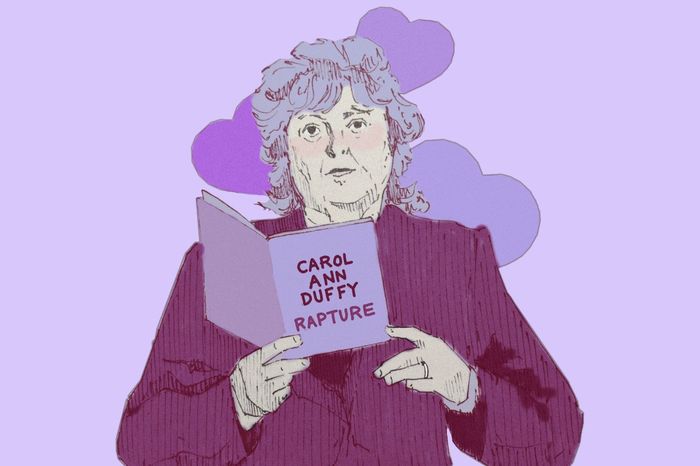
Nobody has seen the Homerton fox for months. Once uncommonly present in our lives, it has now walked entirely out of them – Shinjiro Kurahara’s ‘A Fox’ explains it well: “It is a shadowy existence, as if all or nothing.” But I never walk through Homerton’s orchard without thinking of the fox. I still hear people ask about it every now and then, wondering where it went. Even though we no longer see it, the fox lingers. Spence somehow manages to articulate it: “Perhaps she was always there.”
 Comment / The Cambridge drift1 June 2026
 Comment / Top of the slops: the competitiveness of college dining4 June 2026
 News / Cambridge psychologist warns against blanket social media ban for under-16s1 June 2026
 News / University support staff strikes end after month of action2 June 2026
 Music / We need to talk about Kendrick2 June 2026
- Comment / Top of the slops: the competitiveness of college dining4 June 2026
 Interviews / Bible Scholar Mattie Mae Motl: “God is a woman”4 June 2026
 Features / One big happy (college) family?4 June 2026
 Theatre / Bold beginnings in the Corpus Playroom 3 June 2026
- Music / We need to talk about Kendrick2 June 2026