Law don launches divestment petition
Latest attempt at achieving arms divestment follows the University Council’s failure to make a decision at its last two meetings
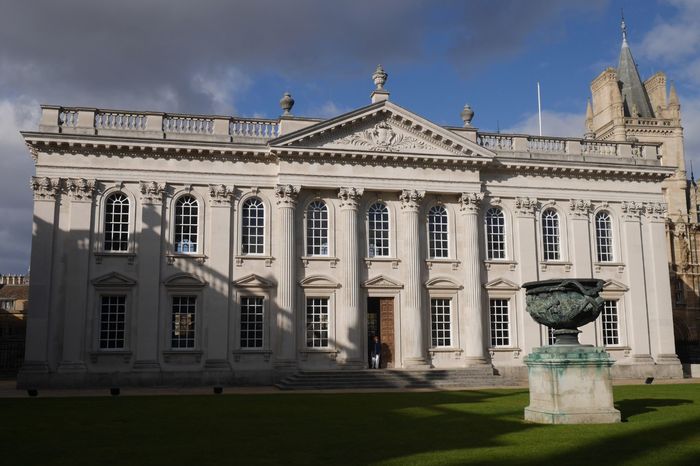
A law fellow at King’s has launched an official petition, or ‘Grace’, aimed at forcing the University to commit to arms divestment.
Dr Henning Grosse Ruse-Khan, a specialist in intellectual property law, wrote the Grace in response to the University Council repeatedly delaying a decision on the extent to which Cambridge will divest from investments in the defence sector.
According to the University statutes, the University Council, its principle executive and policymaking body, has sole authority over investments. However, it can transfer this power to other University bodies with permission from the Regent House – the University’s main governing body comprising all academics and staff.
The University’s £4.2 billion endowment fund (CUEF) is managed by the University of Cambridge Investment Company (UCIM) – a separate entity that is wholly owned by the University. Final decisions on investments are made by the endowment’s trustee body (CUETB).
The Grace argues that because the Regent House initially allowed the Council to transfer control of investments to CUETB, it also has the power to amend the statutes to include arms divestment as one responsibility of this body.
If passed, the Grace would require CUETB to oversee divestment from conventional and controversial weapons, as well as fossil fuels, providing annual reports on its progress to both the Council and the Regent House.
CUETB and the Council would have the right to establish the definition of ‘arms companies’ to ensure it works with the current investment model. However, this classification would need to be proposed by 31 July and approved by the Regent House.
The Grace includes a backstop definition in case they fail to agree on one by 2027. Ruse-Khan warns that if CUETB ignores these requirements, the Regent House has the authority to alter its membership or dissolve the body using a separate Grace.
In order to pass, the Grace needs 50 signatures from members of the Regent House. The Council can then either accept the Grace – in which case the proposal is approved unless 25 members of the House request a vote – or provide a report explaining their reasons for rejecting the proposition. If the Council rejected the Grace, a Discussion of the Regent House would be held, where members could vote to overturn the decision.
This is not the first Grace aimed at bringing about divestment. In November 2024, 156 members of the Regent House demanded the University end investments in the defence sector by Michaelmas 2025.
The Council accepted this Grace but claimed that it was non-binding as “it has sole responsibility for decisions about investments”. Varsity understands that the new Grace seeks to avoid this problem by leaning on the Regent House’s authority to change the University ordinances.
Ruse-Khan told Varsity that divestment was “fundamentally the morally and ethically right thing to do for higher education institutions”. His College, King’s, became the first to divest from arms last May.
He continued: “In the current geo-political context with an ever-increasing disregard for international law – not only in relation to protecting the environment and acting against climate change, but also related to armed conflict, the use of force and the protection of civilians – we all have a responsibility to act, and at Cambridge, one way to do so in my view is to promote divestment from fossil fuels and arms companies.”
The undergraduate president of the Students’ Union (SU), Matthew Copeman, who worked with Ruse-Khan on the Grace, added: “After months of delay, we’ve lost faith that the Council intends to take any decision on this topic. It’s for the members of this University to collectively determine what its values are, and not for the Council alone. We strongly urge members of the Regent House to sign and support this Grace as it passes through the governance processes. There is no acceptable level of investment in the human suffering these arms companies manufacture.”
However, for some academics, arms divestment represents an abandonment of the University’s national security responsibilities. Richard Penty, an engineering professor, commented: “Recent global events show that the national security threat to the UK has not been greater since the Cold War […] this is absolutely not the time to step away from the UK’s defence sector.”
Penty continued: “It is therefore good that Council has accepted the working group’s recommendation that it is appropriate for Cambridge academics to collaborate with defence companies. If such collaborations are considered ethically permissible, it is consistent to align the University’s investment policy with this stance and allow CUEF to maintain its current limited level of investment in the sector.
“Departing from this approach would carry significant financial risks for the University, including disruption to CUEF’s investment model and the potential loss of industrial research funding and studentships. It would also damage our reputation with [the] government, with research funders and with UK stakeholders more broadly.”
The Working Group on Investments was established in July 2024 in exchange for the disbanding of the Cambridge for Palestine encampment outside King’s College. After a long delay, the Group published its report in October 2025.
Cambridge followed the report’s recommendation to divest from weapons illegal under UK law. However, the Group offered three options for how much to divest from conventional weapons. During meetings in November and February, the Council failed to reach a decision about which option to pursue.
Dr Thomas Jeffrey Miley, a lecturer in political sociology , said he supported the Grace as “in this age of never-ending wars, it is very important for the University to pursue an ethical and peaceful approach to investment and to research”.
Miley continued: “Transparency and democracy should be values that orient our collective self-governance as a University community, and this grace is a step in the right direction. That said, there remain gaps in decision making power and democratic deficits in the financial model of governance, and full transparency remains a far way off.”
Cambridge for Palestine described the Grace as “a crucial democratic mechanism that will end the University’s complicity in the arms industry”.
The group continued: “Currently, billions in University assets are managed by UCIM and the CUETB – unelected bodies operating without meaningful transparency or democratic oversight. This legislation would mandate annual reporting to both the Council and Regent House, ensuring the academic community can track where our institution’s money is invested.
“As an institution that claims to uphold democratic values, Cambridge University must respect the will of its governing bodies – especially at a time when these values are under attack globally […] This isn’t just about divestment, it’s about who controls our University’s financial future and whether we allow unelected structures to make decisions behind closed doors.”
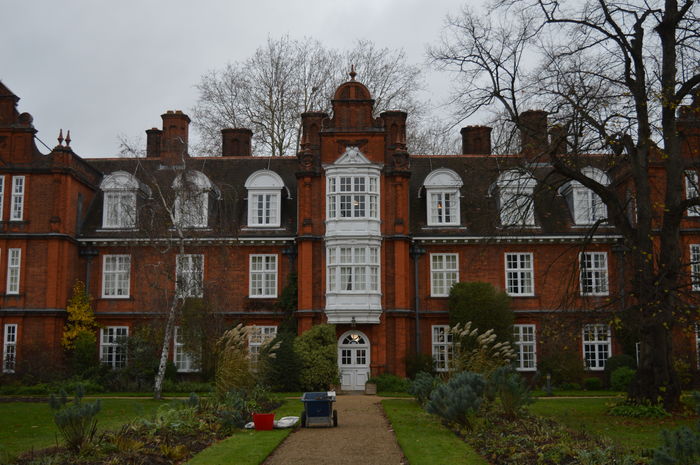
The Grace comes after Varsity reported that Newnham College has established a working group to reassess its ethical investment principles.
 Comment / The Cambridge drift1 June 2026
 News / News in Brief: Corpus climbing, climate cash, and commendable contributions1 June 2026
 News / Cambridge psychologist warns against blanket social media ban for under-16s1 June 2026
 Theatre / CUMT’s The Wind in the Willows brings a classic to life 31 May 2026
 News / Venue cancels Cambridge talk by right-wing commentator Matt Goodwin after backlash28 May 2026
 Music / We need to talk about Kendrick2 June 2026
 News / University support staff strikes end after month of action2 June 2026
 Arts / To the letter2 June 2026
- News / Cambridge psychologist warns against blanket social media ban for under-16s1 June 2026
 Sport / Caius beat Magdalene in last-minute thriller to clinch mixed netball Cuppers final1 June 2026