CUMT’s The Wind in the Willows brings a classic to life
Ella Hardy praises this charming musical production that reminds us why the beloved story continues to endure
I watched CUMT’s Wind in the Willows on closing night. Walking into the auditorium, I was touched by the wide range of ages in the audience. This reminded me of the universal charm that this story possesses; before the show had even started it felt like I was a part of something special and shared.
I’d forgotten how much I loved Wind in The Willows growing up, perhaps since the storyline itself had become hazy over the years. But from the first song – a joyous anthem celebrating spring-time – I found myself immersed once again in the world of Toad Hall. It was impossible not to smile at the carefree joy of Rat and Mole “messing about” on the river, as if they’d never left the river of my childhood.
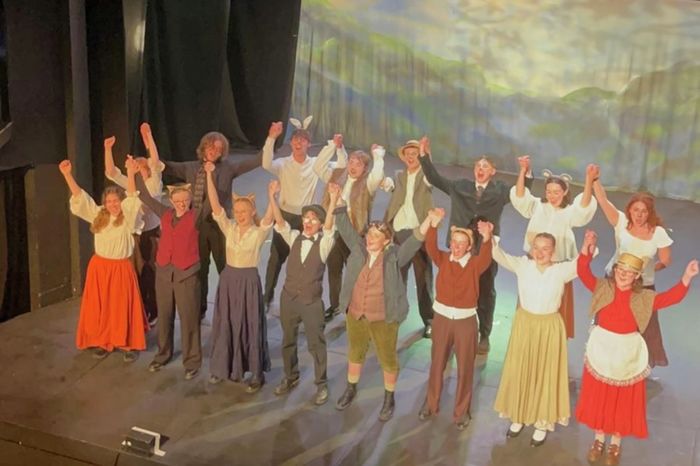
The play was a beautiful homage in so many ways to the work that came before it. The costume and set stayed very much true to its Edwardian roots, without ever feeling outdated. Rather, the production was extremely ambitious, featuring both a model motorcar and rowboat. The vocabulary of the characters, from “chaps” to “grouching”, encapsulated an old English charm which perhaps not many of us have experienced first-hand; yet which, from my conversation with director Caitlin and producer Seyan, still feels so bound up in our shared childhood memory: a product of the classic stories we all knew and loved.
“Every song was like turning a page, transporting the audience to the next chapter”
While eliciting nostalgia, this production brought a new upbeat energy to a timeless classic. I’m convinced that this is a story that works best on-stage as a musical; with such a range of characters it demands to be performed loud and proud. This rendition of Julian Fellowe’s soundtrack did just that. Every song was like turning a page, transporting the audience to the next chapter in the most exciting way possible. Some personal favourites include ‘The Hedgehog’s Nightmare’, in which a group of the ensemble adorned furry jackets and timidly attempt to build up the courage to cross the road; Toad’s (Ella Jenkins) ‘As if in A Dream’, an unsuccessful last-ditch attempt to escape arrest for dangerous driving; and, perhaps most memorably, the excitement and drama of ‘We’re Taking Over the Hall’ as Chief Weasel (Barney Sayburn) paraded menacingly across the dining hall surveying his party of evil thieves.
The contrast between the riverbank songs and those sung by the Wild Wooders punctuated the play with an exciting sense of danger, although what I loved most was the endearing, adorable charm of the production. There is something undeniably cute about naughty stoats and foxes excitedly plotting to take over Toad Hall, even if they are supposed to be the bad guys. Nevertheless, I hope that my top-picks convey the emotional range that the cast was able to perform; I certainly want to emphasise that this cast was absolutely filled to the brim with talent. They are all incredible actors, singers and dancers.
“Just the sort of playful interaction you’d expect two otters to have”
As I was watching, I remembered my conversation with director Caitlin and producer Seyan, and how excited I was by their notion that each character would adopt the mannerisms of their animal character. Part of what captivated me was just how well this was done. With minimal costume and make-up to suggest that the actors were animals, every member of the cast, even those in the ensemble, was distinct and original in how they chose to zoomorphise themselves. Mr Toad was a triumph; proud, pompous and lavish, Mole (Oliver Kingston) was endlessly kind and hopeful. Rat (Wilf Offord) moved smoothly and and self-assuredly across the stage whilst Badger (Alex Sutton), the wise grandpa of the group, leant on his cane. The Wild Wooders, although in the same gang, were also distinctive: Chief Weasel was a delightfully ferocious leader with whom the seductress Sheryl Stoat (Zaria Jankelovitz-Gelvan) seemed absolutely infatuated with, meanwhile Lesser Weasel (Katelyn Hornagold) played the tempting trickster. The dynamic between Mrs Otter (Olivia Mornin) and daughter Portia (Irmak Yesilkaya) was just the sort of playful interaction you’d expect two otters to have.
This show was the first musical I’ve watched in Cambridge, and it certainly contrasted other pieces of student theatre I have seen during my time here. It was a delight to watch from start to finish, and I left the theatre with the refreshing reminder that theatre can, and should be joyful.
 News / Simon Goldhill resigns following sexual misconduct investigation16 June 2026
 News / News in Brief: Pokémon, planting, and the plague21 June 2026
 News / Join Varsity’s editorial team this Michaelmas22 June 2026
 Lifestyle / Not a pub, not a club: Cambridge nightlife’s best third spaces22 June 2026
 Comment / How do we find exambiguity?22 June 2026
 Music / Liverpool vs Manchester: the musical derby23 June 2026
- Lifestyle / Not a pub, not a club: Cambridge nightlife’s best third spaces22 June 2026
 Fashion / Academic prestige or aesthetic appeal?22 June 2026
 Sport / Martina Abels Marti leads Newbroke to Cuppers victory against SJK amidst transgender ruling controversy22 June 2026
- Comment / How do we find exambiguity?22 June 2026