Newnham activists achieve working group on investments
The College has agreed to review its investment principles following pressure from Newnham for Palestine
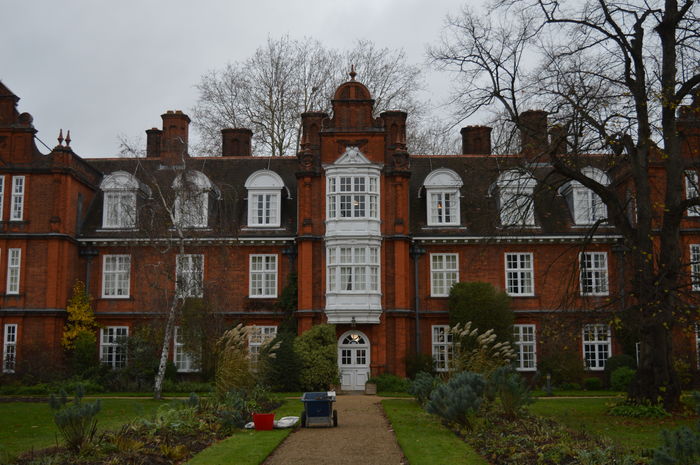
Newnham College has agreed to establish a working group to review its current investments and rewrite a statement of investment principles.
This comes after the activist group Newnham for Palestine (N4P) published an open letter in October accusing the College of investing “at least £20 million in companies complicit in genocide, occupation, and human rights abuses”.
In an Instagram post, the group claimed that Newnham has agreed to divestment, writing: “The updated investment principles will guide a divestment away from companies complicit in genocide, occupation, human rights abuses, international law violations, and fossil fuel production.”
A spokesperson for Newnham told Varsity: “At a meeting of the College Council on 3 December 2025, the Council agreed to set up a Task and Finish Group, including elected student representatives, to review the College’s Statement of Investment Principles. Any revision will be made public in due course”.
N4P claims that at the same meeting, the College Council agreed to recommend the Cambridge University Endowment Fund (CUEF) to disclose its investments and divest from “complicit companies”. However, a spokesperson for the College denies this.
The CUEF is a £4.2 billion fund which is separately managed but wholly owned by the University. Several Cambridge academics recently accused the University of “maximal obfuscation” over its failure to reveal which defence companies it invests in. However, others, such as engineering professor Richard Penty, have urged the University not to “turn its back on UK national security”.
N4P acknowledged that its campaign is “not over” and that it still needs “to ensure the College follows through on its commitments”.
However, the group added: “Newnham College Council’s decision proves once again that divestment is possible – even if some colleges or university officials claim otherwise.”
N4P’s original open letter, which has received over 450 signatures, included a long list of companies it accused the College of investing in, including £3.9 million in Microsoft, £2.8 million in Alphabet, and £105,800 in Palantir.
At the time, Newnham denied the allegations, telling Varsity: “Newnham College does not invest directly in any of the companies listed. Newnham College invests in the State Street World Screened Index Equity Fund which follows the MSCI Word Screened Choice Index, which has about 1,250 companies in it.”
The College has not conceded two of N4P’s demands, namely adopting the principles of Universities of Sanctuary – a national network which campaigns for universities to support refugees and asylum seekers – and cutting “non-investment ties to complicit companies”.
As an example of this second point, the group cites the College’s use of Booking.com to list Newnham rooms for short-term rentals. Activists have called for a boycott of the website due to its operation of holiday rentals in parts of the West Bank.

This comes as the University Council has repeatedly delayed a vote on the extent to which Cambridge will divest from arms manufacturers. The University ceased investments in weapons illegal under UK law in October, following a report from a Working Group on Investment. However, this report stopped short of proposing full divestment, instead offering the Council three options to consider.
N4P emphasise that they “intentionally recommended a broader divestment” than advocated by the University’s Working Group, instead taking inspiration from King’s, which became the first College to divest from weapons manufacturers in May.
The group explained: “Our Council paper made a point to include companies which produce conventional weapons as well as dual-use products that are significantly used for both military and non-military goods.”
 Comment / The Cambridge drift1 June 2026
 News / News in Brief: Corpus climbing, climate cash, and commendable contributions1 June 2026
 News / Cambridge psychologist warns against blanket social media ban for under-16s1 June 2026
 Theatre / CUMT’s The Wind in the Willows brings a classic to life 31 May 2026
 News / Venue cancels Cambridge talk by right-wing commentator Matt Goodwin after backlash28 May 2026
 Music / We need to talk about Kendrick2 June 2026
 News / University support staff strikes end after month of action2 June 2026
 Arts / To the letter2 June 2026
- News / Cambridge psychologist warns against blanket social media ban for under-16s1 June 2026
 Sport / Caius beat Magdalene in last-minute thriller to clinch mixed netball Cuppers final1 June 2026