Does volunteering make you a good person?
Ruby Randall questions if her volunteering may be more hypocritical than helpful
As I type, I’m looking at a bracelet from the corner of my eye. It’s golden, with little heart pendants and a small crystal ring. It’s not really my style – I find bracelets uncomfortable and prefer statement jewellery. The reason I’m wearing it is because this bracelet was a gift, given to me by a woman, who I’m ashamed to say I don’t actually know the name of, and who I can only speak to through a translator app. Wearing it sparks a lot of mixed feelings.
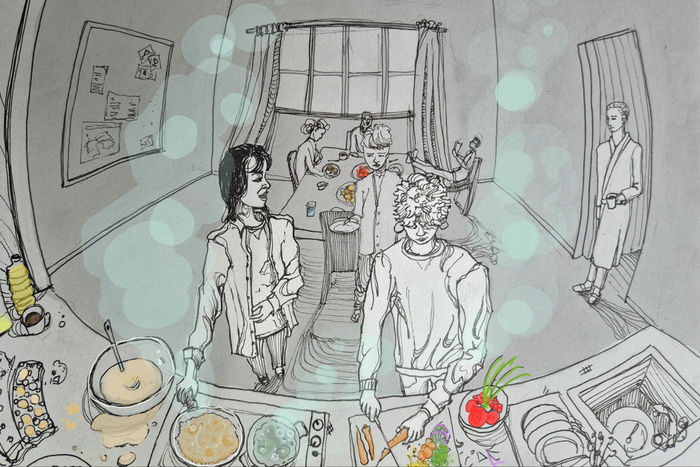
I started tutoring two Syrian children at the start of Lent term as some volunteer work for a local refugee resettlement charity. Every week, I visit their home for a two hour English class: I’m welcomed by their mother, and we sit down with tea to go through whatever slapdash lesson plan I’ve conjured. The boys I tutor are five and seven, and they can speak English pretty well; we work on writing letters, numbers, and reading stories. After this, I’m invited to have lunch with the whole family, and we eat marinated aubergine, bulgar wheat with tomato, hummus, egg, flatbread, and braided cheese. It changes every week, but their mother, who only speaks Arabic, always makes sure to tell me what I’m eating, and always breaks off some of her own bread to give me samples.
“I consider myself a politically active person, but do the small things really count?”
For the first meal, I was shown to the head of the table, and talked to the mother the whole time, interspersed with awkward silences and mainly consisting of “this food is delicious”, “I’m glad you like it my dear”. The second meal, I talked to the boys a bit more, and sat next to their older sister, who I embarrassed myself in front of by putting what was definitely dessert into my flatbread filled with hummus. “This is very sweet!” I said into the translator, “Yes…” she replied, looking at me strangely. During the third meal, there was a shift, and a lot less silence. The boys were chatting and laughing with their mum and sister, as I sat, bemused, until the long phrase she said, laughing into the translator, came out as the robotic explanation, “we are laughing about games”. At the start of this meal she also said “Sahtein” to me (not into the translator), explaining, this means “to your health – we say it before meals”. I repeated the word, and she smiled: “we can learn from you, and you can learn from us,” replied Google’s monotone voice.
As the lessons continue, I wonder how these meals might go on. I’ve been feeling a strange mix of embarrassment and desperation in telling people what I’m doing, because I catch myself doing that inevitable expectant pause following the phrase “I’m a volunteer” that also often follows “I go to Cambridge”. I enjoy charity work and fundraising, but I can’t help worrying that I’m doing it for selfish reasons, or if I have some kind of self-indulgent white saviour complex. I consider myself a politically active person, but do the small things really count? Am I avoiding really making a difference in focussing on ‘nice’ actions that stroke my ego? And is my teaching actually helpful?
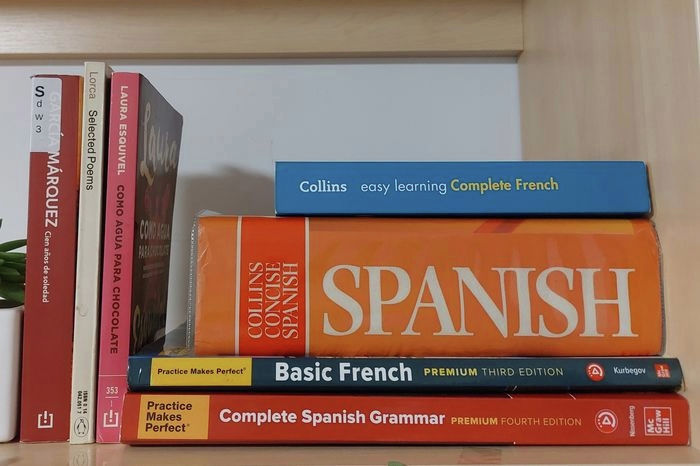
Following that third meal, I realised that I had been told something quite important. In being the teacher and the guest, I’d forgotten the fact that a very rich world was operating beyond the simple phrases we said through the translator, and if I wanted access to it, I’d have to get a bit more than ‘Sahtein’ under my belt.
“I think that a fear of hypocrisy shouldn’t stop you from going out of your way to help people”
I don’t want to be one of those students who get a funded trip to build schools halfway across the world, and come back with anecdotes of ‘how simple life is’, pretending to have made a connection with a local they ‘introduced’ snapchat filters to, and I don’t want to be an awkward presence at the dinner table to which I’m so generously welcomed. It’s easy to question whether you’re doing enough. However, I think that a fear of hypocrisy shouldn’t stop you from going out of your way to help people. Unlike the fun runs, bake sales, and recycling schemes I’ve taken part in, volunteering with this family is first and foremost a direct relationship.
I want to get to the point where I’m doing this for them because of that social bond, however tricky and separated it might be. I worry that the language barrier and overly structured nature of our interactions might prevent any kind of friendship from developing. Yet, considering my bracelet, I feel like its giver might be aware of that fact. Because she presented it to me after only one lesson, I’m inclined to wonder if it was less a “Thank You” gift than an offering of, or faith in, a stronger bond between us.
 News / Venue cancels Cambridge talk by right-wing commentator Matt Goodwin after backlash28 May 2026
 Interviews / Cambridge MP Daniel Zeichner on political realism and the ‘politics of grievance’29 May 2026
 Features / The language of optimisation and the architecture of merit30 May 2026
 Comment / We must support our strikers29 May 2026
 Lifestyle / Blind Date: ‘I should’ve changed my socks’24 May 2026
 Film & TV / Project Hail Mary’s production design shows the power of human creativity30 May 2026
 Music / This music DOES contain hope30 May 2026
 Sport / Should we play more BUCS?30 May 2026
- Features / The language of optimisation and the architecture of merit30 May 2026
- Comment / We must support our strikers29 May 2026