How rising food costs are changing student life
Francesca Evans delves into the diverse ways students save money amid inflation and college limitations

The kitchen in Girton bustles with students cooking up an assortment of dinner dishes. Plates are stacked on the side, rice bubbles away, and the smell of the signature classic, pesto pasta, wafts my way. Stirring the pan, Jess remarks on the recent shock of shopping at Sainsbury’s, where “you buy like three things and it’s 12 qui.
This price shock has hit the whole country, with the latest British Retail Consortium (BRC) figures showing food prices increasing drastically, up from 3.3% in December to 3.9% in January. Within the same period, fresh food inflation rose to 4.4%, as meat, fish and fruit showed weak supply and stronger demand. So when money is tight and food shops are a budgeting nightmare, how are students’ shopping and eating habits changing?
“As well as saving money, students are keen to save time”
Last year, Jess and Emily lived in Eddington, a short walk away from a big Sainsbury’s. While a convenient option, it was the only supermarket in town, so it limited grocery shopping to a more expensive chain. Now they are living in Girton, a college where Emily notes “people are quite savvy”. Because “you’ve got to buy in bulk when you’re not going back and forth to the shop,” Girtonians “have got to be smart with what [they’re] getting”.
Some students opt for food deliveries and recipe boxes to shave pounds off their meals. For Emily, one of these limited-time deals has enabled her to buy ten meals for £2, a “much more affordable” option for the meantime which enables her to cook “more elaborate” food. Jess laughingly remarks that since the whole floor has caught onto it, the kitchen is far busier, filled with many “keen cooks”.
As well as saving money, students are keen to save time. In Jonny’s experience, balancing nutritious cooking three to four times a week with work, sports and having a social life is “unrealistic”. With third year came freezer space and the convenience of batch cooking. Making food for himself inevitably drives food costs down, but batch cooking in particular has given him the time to cycle out to Lidl (or similar), offering a “pretty noticeable difference” in price versus the city centre. When I enquired about the social aspect of cooking, Jonny remarked that going to hall “isn’t the mainstay of my social life”. Beyond this, sharing a kitchen with half a dozen people “is hardly an isolating experience either”.
For Caius student Mari meanwhile, eating in hall maintains a “strong sense of collegiality across year groups”. Caius highly values meal-times as “an important time to get together and catch up” and “take a break from busy schedules”. As the College themselves note: “our students eat in Hall more than in most colleges”. Under their ‘minimum dining requirement’, undergraduates are required to pay for 36 dinners a term upfront, in an attempt to encourage community and reduce food waste. Mari remarks on the benefits of this system, where “the variety and amount of food for what it costs is second to none”.
Formal is served every evening (one of Caius’ unique draws). It costs a mere £6, and serves “the indistinguishable iterations of the classic ‘Caius sponge’ for pudding” (something Mari notes could be varied!). Of course, the system does limit inspiring chefs, who would have to luck out with accommodation such as Mike’s and Mary’s, rather than the Old Court, with kitchens deemed “not worth the space they take up”. The gyps that are in place instead are designed only “to prepare your own snacks and simple meals,” so Mari is grateful that the cafeteria food provides such “nutritious and ample” choices as opposed to “anything I could cook for myself”.
“It is a battle against the fear of rising food costs, and the calculator never seems to be far away”
Freddie and Naomi* haven’t gone to Hall since their first year, aside from the staple weekend brunch, and exclusively cook during the week. In a now annual Cambridge tradition, the pair host a Bridgemas dinner, a meal that has adapted with the changing landscapes of their college accommodation. From the first year gyp, consisting of a desk dining table and tortillas, to second year where they served up a three-course meal hosted on two adjoined desks. This year was their biggest yet, with the large dining table hosting 15 people for a full Christmas dinner with decorations to boot. When sharing a three-course meal with friends, the prices were arguably quite cheap, considering the ample alcohol, which “we didn’t even manage to get through!” As Freddie remarks: “Having that social space outside of hall was really helpful and important to all of us,” allowing them to host regular dinners with a larger group of friends.
And indeed, this year has been a “massive upgrade,” with an oven, freezer and a hob, meaning Freddie can do his “weekly shops and actually look at what’s on offer so you can cheaply buy some things. And then budget for the week.” He remarks that it finally “feels like very normal living!” The kitchen space is intrinsically linked to food budgeting, with Naomi recalling that her second year kitchen had “no ventilation, no window and was the span of my arms in length”. As a result, she spent “so much money on food that term,” lamenting an (in)ability to cook in that kitchen, which required a “shower every time because it was so hot”. As she rightly points out, having an arancini every day is never good “for the budget or the waistline!”
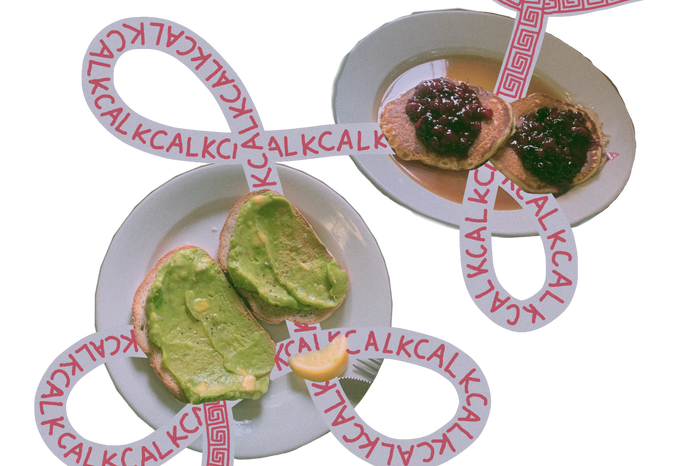
Mealtimes can be a battle against the fear of rising food costs, and the calculator never seems to be far away. But whether you’re boiling the kettle for a pot noodle in your box-sized gyp, eating in Cauis’ ancient hall or making the long trek to Aldi, it is clear that students are still managing to cook up innovative ways to stay social, savvy and nutritionally sustained.
*Names changed upon request
 Features / The language of optimisation and the architecture of merit30 May 2026
 News / Venue cancels Cambridge talk by right-wing commentator Matt Goodwin after backlash28 May 2026
 Comment / We must support our strikers29 May 2026
 Theatre / CUMT’s The Wind in the Willows brings a classic to life 31 May 2026
 Interviews / Cambridge MP Daniel Zeichner on political realism and the ‘politics of grievance’29 May 2026
 Fashion / From princesses to PAs, power dressing is nothing new31 May 2026
 Lifestyle / What kind of punter are you?31 May 2026
- Theatre / CUMT’s The Wind in the Willows brings a classic to life 31 May 2026
 Science / Wired and tired: the science of caffeine31 May 2026
 Interviews / ‘Thank you for the music’: ABBA Support Society on friendship and managing stress through fun 31 May 2026