Should college halls be dishing up calorie information?
Lydia Bearne talks to students about whether calories on college menus are harmful or handy
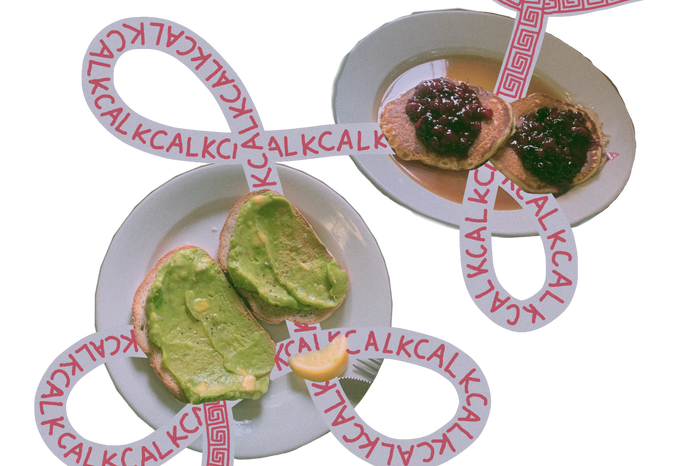
The college dining hall is often a lifeline for the tired student, dreading the prospect of empty fridges, hobs that won’t turn on, and the depressing thought of eating alone. For some, the decision one faces at the dining hall – of pasta or curry, veggie or meat, one scoop or two – is inconsequential. For others, it is freighted with far heavier meaning. In a university where gym memberships, wellness initiatives, and productivity culture sit alongside struggles with disordered eating, mealtimes can be shaped by much more than appetite. Calorie labelling exists at the uneasy intersection of these experiences, promising empowerment to some, while posing a genuine risk to others.
Since April 2022, calorie labelling has been mandatory for large out-of-home food businesses, generally those with over 250 employees, covering chain cafés and restaurants across the UK. However, college dining halls, smaller and often semi-private, are exempt. Only one college displays calorie information on its dining hall menus.
“I can’t stress enough the damage that adding calories to college dining hall menus could do”
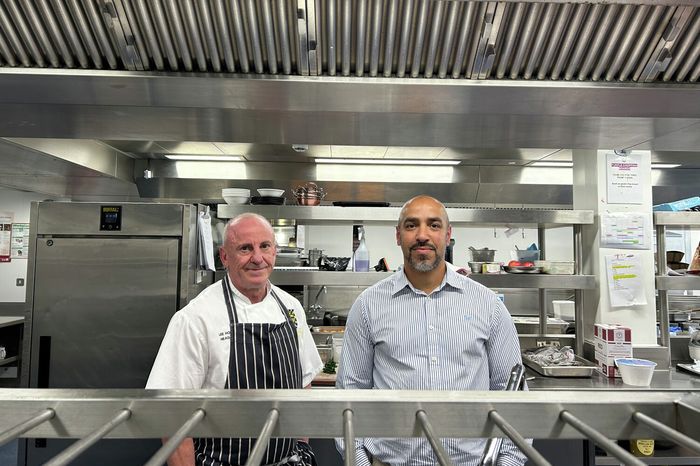
At Downing College, weekly menus are published via a ‘Kafoodle’ link that lists ingredients, allergens, dietary tags, and nutritional and carbon breakdowns. A touchscreen in the hall provides the same information at the point of choice. When asked what motivated the adoption of this system, Downing College told Varsity: “We anticipated future calorie-labelling regulations applying to mass caterers and wanted to be prepared rather than reactive.” The College stated that feedback on the system has been “extremely positive”.
Downing student Ben Lubitsh claimed: “I personally only really make an effort to notice the information when looking at high-protein meal choices. A lot of my friends who are super into their gym stuff definitely take note of it more than I do, but I’d say the majority probably don’t notice it or make an effort with it.” He had “not personally heard of anyone finding the system difficult,” and overall felt the College was “trying to do something genuinely helpful rather than putting a greater burden on [students]”. To Lubitsh, Downing have adopted a subtle approach – a system that is simply “there if you want it”. He supported the idea of other colleges adopting a similar system because “there are loads of people out there who want to formally track their calories or even just want to be a bit more conscious of them, and it’s such an easy thing for a college to do”.
Downing’s rationale reflects a broader institutional logic. Calorie labelling is framed as a matter of preparedness, compliance, and transparency – not one of student behaviour. Yet the impact of such information is rarely neutral. What is introduced as a technical or operational improvement can be experienced by students as a moral signal about what and how they should eat. One student explained: “Having only recently recovered from an eating disorder, I can’t stress enough the damage that adding calories to college dining hall menus could do. College is a safe space for me, but to be affronted with nutritional information when I’m simply looking for a home-cooked meal would be too much.” This aligns with concerns raised by eating disorder charity Beat’s Chief Executive, Andrew Radford, who argued that “calorie labelling exacerbates eating disorders of all kinds”.
However, opinion is divided. Nutritional and calorie information can offer a sense of autonomy, particularly for those trying to maintain routines shaped by sport, medical advice, or personal fitness goals. One student felt: “Personally, I’d want calories on college dining hall menus, alongside protein, carbs and other macros. It would be super helpful for me with cutting and bulking.” Another student admitted in the past to struggling with skipping meals but thinks having calories on a menu could be helpful “because I think sometimes in my mind things have more calories than in reality,” and she would like to be better informed.
“It can be experienced by students as a moral signal about what and how they should eat”
It remains unclear whether broadening nutritional information on menus would lead to genuine behaviour change among those with health goals. Cambridge’s Behaviour and Health Research Unit found that PACE labels, which show how much physical activity is required to burn off a food item, had little to no impact on the total calories purchased. Information, it seems, may not necessarily translate into changed behaviour.
Some colleges attempt to promote healthy choices without providing numerical details. For example, Robinson College’s dining hall labels some options with a ‘healthy eating’ tag. Yet one Robinson student claimed they “barely notice” the icon at all, suggesting that gentle nudges may be easily ignored, or that health messaging has become so ambient as to lose meaning.
In a university where health is variously defined as nourishment, performance, recovery, or control, no single approach to food information can meet every need. As colleges weigh transparency against wellbeing, the absence or presence of calories on menus remains less a technical decision than a negotiation about our relationship with food.
 Features / The language of optimisation and the architecture of merit30 May 2026
 News / Venue cancels Cambridge talk by right-wing commentator Matt Goodwin after backlash28 May 2026
 Comment / We must support our strikers29 May 2026
 Theatre / CUMT’s The Wind in the Willows brings a classic to life 31 May 2026
 Interviews / Cambridge MP Daniel Zeichner on political realism and the ‘politics of grievance’29 May 2026
 Fashion / From princesses to PAs, power dressing is nothing new31 May 2026
 Lifestyle / What kind of punter are you?31 May 2026
- Theatre / CUMT’s The Wind in the Willows brings a classic to life 31 May 2026
 Science / Wired and tired: the science of caffeine31 May 2026
 Interviews / ‘Thank you for the music’: ABBA Support Society on friendship and managing stress through fun 31 May 2026