How the internet punishes educated women
Amelie Rothwell investigates digital misogyny and its repurcussions in Cambridge

“You could’ve had four babies in that time.” “Eggs aren’t getting any younger.” “They’re just handing degrees out to anyone now, huh?” These were just some of the misogynistic comments that flooded Dr Juliet Turner’s viral post on X, celebrating her PhD at the University of Oxford. Her crime? Being a young woman with ambition.
Turner could not have predicted that four years of rigorous academic work would become a meeting point for ‘manosphere’ vitriol, an online culture known for promoting ‘traditional masculinity’ and opposing feminism. Yet her experience was no anomaly. The backlash against visibly educated women has become an increasingly common part of the mainstream culture of digital misogyny.
Evie Judge, a law undergraduate at Lucy Cavendish, recalls similar hostility as a teenage TikToker. “If I posted anything remotely political, my comments were filled with men telling me I didn’t know what I was talking about.” What stuck with Judge the most was the response to her Cambridge offer, after one boy commented: “Who gives a f***, you’re clapped anyways.” She has since stepped back from social media, describing the digital landscape for women as a “can’t-win situation.”
For those steeped in ‘red‑pill’ ideology, which teaches men to expect virginal, dependent wives, educated women like Turner and Judge are effectively ‘rage bait.’ In their world, a woman’s value depreciates with every independent choice she makes; her career is not an achievement, but a ‘theft’ from the family. Successful women create such a reaction because they act as uncomfortable reality checks to manosphere content, which routinely packages female submission as a natural fact.
“Her career is not an achievement, but a ‘theft’ from the family”
Joe Larkin, a second year engineering student, noted how algorithms strike upon vulnerability. “It’s very easy for your ‘for you page’ to get sucked in after a breakup or heavy drinking; liking one reel about something like that often generates a lot more quickly.” Ralph Munday, at Emmanuel College, sees a slippery slope: “While many guys are simply pursuing self-improvement, it can make them more vulnerable to extreme options, especially if they become obsessive.”
Their observations align with an algorithm study by Cambridge’s Minderoo Centre for Technology and Democracy, which found that searching for “masculinity advice” such as traditionalist content or “self-improvement” quickly led to a 56% increase in misogynistic or extremist content. What begins as neutral or even positive self-help can become a soft gateway into exclusionary politics, repackaged in aspirational and expensive-looking posts.
Young men scrolling through Instagram reels or TikTok can encounter endless posts of 1950s housewife propaganda, titled ‘all a man wants’, or ‘imagine how much propaganda it took to convince women this was oppressive’ – often amassing hundreds of thousands of likes. Accounts such as ‘Western Aesthetics’ (157k followers) almost exclusively feature images of blonde, rich mothers while posting anti-immigration rhetoric designed to incite fear. Critics have noted parallels to Nazi propaganda where ‘pure’ motherhood symbolised a return to order. Such content exerts the strongest pull among those facing precarity. Dr Leor Zmigrod of Cambridge’s Department of Psychology identifies this as “cognitive fingerprints” of extremist ideologies, where in times of economic instability – as in the UK’s ongoing cost-of-living crisis – rigid binaries offer a sense of control. By labelling an intellectual woman “infertile” or a career woman a “bad mother,” the manosphere is effectively attempting to self-soothe.
“Cambridge students are not unfamiliar with this world of digital abuse”
The villanisation of educated women is just one part of a wider trend centred around controlling women’s bodies with content policing, ‘purity’ and reproduction becoming increasingly popular. These beliefs are often upheld by pseudoscience, such as ‘manfluencer’ Clavicula’s claims on livestream that women’s “bonding hormones” break after one partner, or that women “expire by 25”. Alongside this sits the rise of ‘looksmaxxing’, a trend dedicated to ‘optimising’ attractiveness, where streamers rank faces from sub 3 (least attractive) to true eve (most attractive). This provides the logic behind the attacks on Turner or Judge – that women are valued only for their appearance, purity and reproductive capability. It’s this culture that allows their academic success to be dismissed with dehumanising comments on her looks, or the state of her “eggs”.
The consequences are clear in research from 2024–2026, finding that technology has dramatically increased the scale and reach of gender-based violence. Digital platforms have made traditional forms of abuse into persistent, 24/7 threats, yet there are very few consequences since legal frameworks have failed to keep pace. Studies suggest those who saw “nothing wrong” with deepfakes were overwhelmingly men under 45.
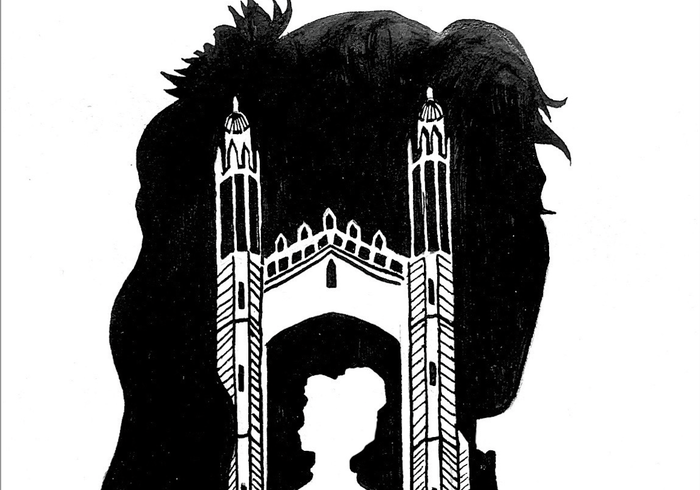
Cambridge students are not unfamiliar with this world of digital abuse. A student from St John’s, who attended an all-boys grammar school, recalled a student making a deepfake of a female teacher. The boy was suspended, but his peers remained “normal” toward him upon his return. Given that this school sends a high percentage to Oxbridge, the lack of social consequences offers a concerning outlook for the elite networks of tomorrow.
When the UN published the statistic that Gen Z men are more likely to hold misogynistic, regressive views than their fathers, for many women this wasn’t news. It represented the reality that many face, like Turner for earning her PhD, or Judge for simply being visible online – as they navigate a digital landscape that has grown increasingly hostile to their existence. This online mockery of women’s successes ultimately feeds a worldview that categorises and disciplines women through appearance, purity, and perceived domestic function.
 Features / The language of optimisation and the architecture of merit30 May 2026
 News / Venue cancels Cambridge talk by right-wing commentator Matt Goodwin after backlash28 May 2026
 Comment / We must support our strikers29 May 2026
 Theatre / CUMT’s The Wind in the Willows brings a classic to life 31 May 2026
 Interviews / Cambridge MP Daniel Zeichner on political realism and the ‘politics of grievance’29 May 2026
 Fashion / From princesses to PAs, power dressing is nothing new31 May 2026
 Lifestyle / What kind of punter are you?31 May 2026
- Theatre / CUMT’s The Wind in the Willows brings a classic to life 31 May 2026
 Science / Wired and tired: the science of caffeine31 May 2026
 Interviews / ‘Thank you for the music’: ABBA Support Society on friendship and managing stress through fun 31 May 2026