What to expect from The Mays 34
Ludovica De Lorenzo sits down with the Editors-in-Chief of The Mays 34
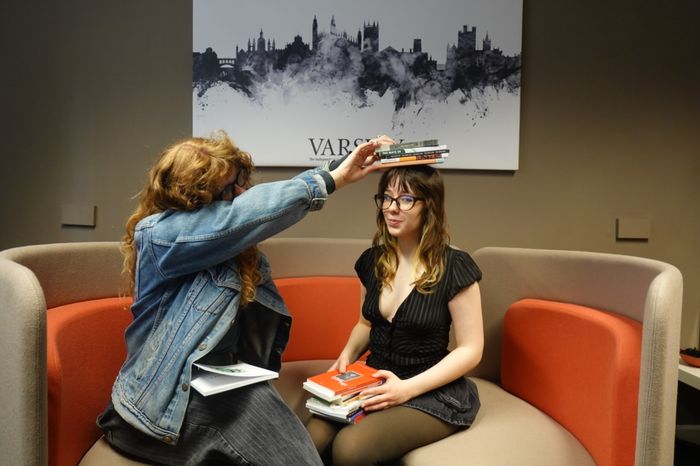
Easter Term is almost here, and Daisy Cooper and Jessica Leer, the Editors-in-Chief of The Mays 34, seem to be ready to start it vigorously and joyfully, sitting for this interview with smiley faces and radiant energy.
The Mays has been publishing a selection of new writing and artwork from students at Cambridge and Oxford every year since 1992. To this day, the anthology is edited by students. Thinking about Cooper’s and Leer’s roles, I wonder what their initial approach to the editing of the anthology was. “Initially, we both came into The Mays with a very unique look,” Leer explains. “Both of us were previously illustrators, so we wanted to push the boundaries between art and prose, juggling more between imagery and the narrative,” adds Cooper.
In a sense, the Editors’ approaches influence the anthology’s tone and set of contributions chosen for each year. “While in some previous editions, there was a prevalence of poetry and prose, this time, we wanted it to be more illustrated,” Leer tells me. These preferences depend on so many circumstances, according to Cooper: “Being illustrators, it was almost instinctive for us to give particular attention to art, but we also established a guiding pinpoint for all the contributions.” Every edition of The Mays has a recurring theme which, purposefully or unintentionally, binds all the contributions. The two Editors-in-Chief tell me that their initial vision for the publication harmonised so well that it was easy for them to find this edition’s theme. So what is this year’s fil rouge?
“Every edition of The Mays has a recurring theme”
“We thought about the theme of identity as a guiding circle,” Cooper explains: “Specifically, it was interesting to focus on the identity of Oxbridge students, predominantly about the interaction between highs and lows that student life involves.” They tell me that, as Cambridge students, our identity and student life are continuously influenced by social media, so the internet impacts us more than we think. Besides, the theme of identity was also fundamental to create a personal and unique anthology, which combines personal and universal experiences: “We wanted to showcase the range of what students can be, as well as what affects and fascinates them. To do so, we included diverse pieces that explore perspectives, ideals, and stories of people’s lives,” says Leer. Interestingly, animated and unanimated elements from the past take part in the anthology and often haunt the narratives: “Childhood and school memories are quite present. In some pieces, authors included the lives of family members, the stories they had heard, and the people who stuck with them,” they add.
But identity is not the only recurring theme in the anthology. Cooper and Leer explain to me how a natural theme was as recurrent as the flow of waves: “We were amazed by the recurring presence of water in the submissions. It did not have a daunting function; instead, water often grasped a sense of nostalgia and the sentimental,” Leer observes. “We thought about a reason behind this aesthetic interest, so maybe this comes from a common fascination for the river Cam,” replies Cooper jokingly. What is certain is that, juggling with aesthetics and memories, this anthology can be imagined through an abstract visual: “It would probably be an old postcard of a seaside town”, they suggest: “A place that contains so many people and so many stories, all bound by nostalgia. This particularly resonates with this year’s publication.”
“We wanted to showcase the range of what students can be, as well as what affects and fascinates them”
Each year, The Mays provides a continuation of the previous publications, perhaps hinting at shared themes and styles. As Cooper argues: “Nostalgia conveys an interesting hook to last year’s anthology, especially its reflection on past voices and ancient feelings.” However, both editors want to specify that this anthology is not all about the past. “Some contributions manage to be nostalgic,” Leer explains: “But they also contain elements of everyday life and the modern day, even referencing public transport and crowded cities.” On top of this, nostalgia aptly describes the feeling of the two Editors-in-Chief, who ruminate on their role for the editorial team of this and last year’s anthology. “It’s nostalgic for us as well because we were part of the editorial team last year, too. It’s nice to think about both these years; we had the chance to meet very lovely people,” says Cooper. “Being part of the process last year was quite helpful because it made the thought process for this year’s edition smoother.”
I could tell that their favourite part of this anthology was the team cooperation required to make it work. “After all, the final production of this anthology is the result of such a collaboration between people who helped each other. Everyone’s contribution has been fundamental,” they explain. I wonder whether changing roles and tasks from one year to another was hard, but they reassure me that “becoming Editors-in-Chief inevitably included new challenges, but our team was great, and they helped us make the right decisions.”
Thinking about the style and media of the artistic contributions, I wonder what we can expect from this year’s choice. “We definitely think that this publication is quite eclectic,” they explain: “It has so many elements that it almost feels like looking at stained glass.” Variety is always a strength, which, in this case, sheds light on the broad artistic talent of Oxbridge students.
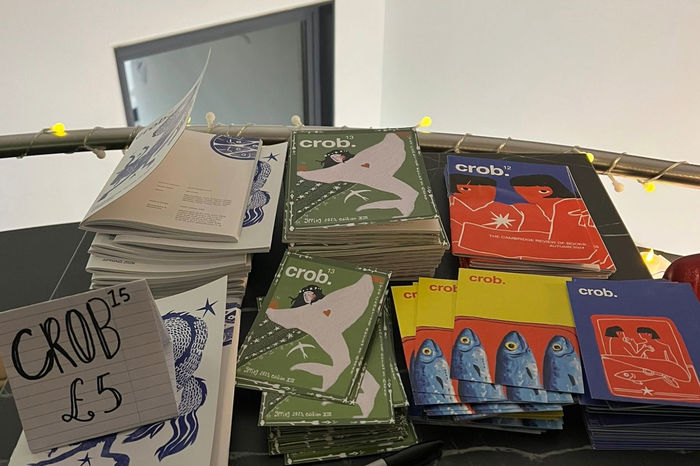
For the most curious of us, the Editors-in-Chief provide two hints on what to expect from The Mays 34. Cooper proposes the first: “We deliberately juxtaposed drastically different pieces of work. Even though they might seem unrelated to each other, they are coordinated by the bigger structure of the anthology, which divides the narrative into three phases: morning, noon, and night.” Leer continues, proposing the second hint: “If we could summarise the anthology in three words, we would probably choose ‘pop culture’, ‘nostalgic’, and ‘personal’.”
With hints like these, it is impossible not to be excited about this publication. Regardless of the affinities and divergences with the previous editions, The Mays anthology is still a cornerstone of the Oxbridge literary and artistic tradition, and certainly not one to be missed!
 Comment / The Cambridge drift1 June 2026
 Comment / Top of the slops: the competitiveness of college dining4 June 2026
 News / Cambridge psychologist warns against blanket social media ban for under-16s1 June 2026
 News / University support staff strikes end after month of action2 June 2026
 Music / We need to talk about Kendrick2 June 2026
- Comment / Top of the slops: the competitiveness of college dining4 June 2026
 Interviews / Bible Scholar Mattie Mae Motl: “God is a woman”4 June 2026
 Features / One big happy (college) family?4 June 2026
 Theatre / Bold beginnings in the Corpus Playroom 3 June 2026
- Music / We need to talk about Kendrick2 June 2026