The Cambridge cult-ure
Beatrice Tharme explores how literary culture and Cambridge culture are intertwined
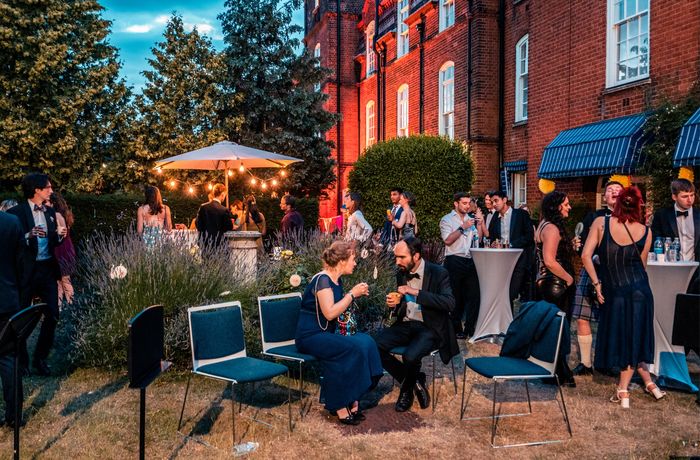
Cambridge is a cult. Or appears very much like one. Whether you look at bizarre Bridgemas traditions or the antics on Jesus Green on C-Sunday, the evidence is all around us during term time. That’s without even mentioning the abbreviation of literally everything. Artistic media also plays into the cultish reputation of Oxbridge; its exclusivity, elitism and mystique puts a microscope on its microcosm.
I just finished reading Olivie Blake’s contemporary, ironic, feminist novel Girl Dinner. Consuming the un-literary has become therapy for me post the end of term – I procrastinate my second year dissertation by tearing through the flesh of popular reads. Yet, this book took me out of my term-induced reading slump. This is a novel set in the TikTok era of trad-wives and ‘Girl Dinners’. Its plot involves initiating into the most exclusive sorority at the sufficiently nondescript Ivy League University with a dark and vengeful twist. What’s not to like? For a chronically online, frustrated feminist reader like me, I find it obvious that a cultishly-inclined, university text like this should be enough to take me out of the mindset of my own ‘cult’: The Cult of Cambridge.
“Consuming the un-literary has become therapy for me post the end of term”
Cults and fandom in literature and pop culture equally seem to keep fans in a chokehold, a similarity between the mystique of Cambridge and literary fixations. What is a cult classic? What makes exclusivity so captivating? Why do we continue to talk about cults and what happens when we over-use the term?
‘Cult’ as a term is obviously difficult to use as liberally as I have above. It is tempting to envision an esoteric, exclusive community undergoing strange rituals to indoctrinate its members. Echoes of “who would ever be stupid enough to become embroiled in such a trap?” ring out. But, in recent years, media analysts have noted cultish behaviour in various fandoms; singers viewed like idols, concerts reframed as leader worship. We can even date this to early fan culture, as Byromania saw the first parasocial relationships develop. One particularly extreme example of such an obsession is a disturbing story where a fan (or ex-lover, depending on who you believe) sent her pubic hair in a letter to Lord Byron, claiming their relationship was mutual.
The term ‘cult classic’ has been used for decades. It, albeit disputedly, denotes a specific genre of film, literature or art that has been admired by an esoteric group to the point where it becomes near-obsession. When it comes to books, we look at Catcher in the Rye, On the Road or to the 20th-century era of dystopia that encompasses 1984, Fahrenheit 451 and A Clockwork Orange. Many of these works share a sardonic tone, some dramatising traits of cults within their content – cult worship ironically prompting cult worship. The anarchic violence in A Clockwork Orange is enshrouded by Burgess’s newly constructed language, which readers must decipher by absorption. Despite total readerly moral objection, we are forced to brainwash ourselves to some extent by learning Nadsat. The gobbledegook “anti-language” spoken by Alex and the Droogs is used to deride women and makes mocking fun out of violence (“horrorshow” is the word for ‘good’). We revel in being ‘in-the-know’, being part of the exclusivity, the ‘us’ in the us-versus-them. But the price paid is unwitting normalisation of male teenage violence that plays out in the dystopian world.
“Readers who seek community are drawn to certain aesthetics within the texts they consume”
Readers who seek community are drawn to certain aesthetics within the texts they consume. A certain pocket of BookTok was obsessed with dark academia, a form of escape during lockdown. This focused on core, exclusive groups, ones which meet and do mysterious things. Donna Tart’s The Secret History epitomised this trope. Her novel depicted cultish behaviours to the max, enrapturing the main character Richard and later forcing us all to realise that exclusivity not only attracts but entraps. This is the type of fascination with Oxbridge that the media shares, alongside many applicants and outsiders.

The Cult of Cambridge encourages us to romanticise access to locked doors, to certain networks and to the rituals we all buy into and derive fun from. Snubbing Cambridge idiosyncrasies seems to win you little during term time. Cambridge cultishness made me sceptical at first, but I realised that it links me to the art I know and even cultishly enjoy. Even so, striking the balance between the fake-real-world of this university and coming up for air once in a while is crucial. But nevertheless, living the life represented in novels and being a part of the Cambridge cult, no matter how much you partake in its traditions, is something we’ll all look back on as a formative moment.
 Comment / The Cambridge drift1 June 2026
 Comment / Top of the slops: the competitiveness of college dining4 June 2026
 News / Cambridge psychologist warns against blanket social media ban for under-16s1 June 2026
 News / University support staff strikes end after month of action2 June 2026
 Music / We need to talk about Kendrick2 June 2026
- Comment / Top of the slops: the competitiveness of college dining4 June 2026
 Interviews / Bible Scholar Mattie Mae Motl: “God is a woman”4 June 2026
 Features / One big happy (college) family?4 June 2026
 Theatre / Bold beginnings in the Corpus Playroom 3 June 2026
- Music / We need to talk about Kendrick2 June 2026