Shakespeare in the sun
Millie Wooler looks back with nostalgia on her first year encounters with the Bard

If you’re an English student, the first term of your first year is the most quintessentially “Cambridge” part of your degree. The whole summer becomes consumed by one man, Shakespeare, and life just begins to feel like a twee daytime TV programme set at the university. As my friends and I were tied to the desks inside our college library the other day, gazing out over the bright sun and the fresh lawn of our college grounds, we began to reminisce (in the form of roughly-written notes in the margins of my medieval revision) about how much we miss where we were this time last year.
For us, this meant long group discussions (sometimes lasting several hours) with our DoS about whichever niche we had landed upon that week, and two trips to the Bridge Theatre in London with our college to see Richard II and A Midsummer Night’s Dream. What we remembered most was the weather, having blocked out the particularly stifling days, we focused on more pleasant sun, days spent dozing at the Botanical Gardens while ‘reading’ Coriolanus.
“Even a tragedy can be lightened by the presence of a lush lawn and a bit of sun”
For me, there was the added memory of the May Week Shakespeare plays. In beautiful gardens alive with flowers, such as the Fellows’ Garden at Trinity Hall, hastily-produced plays like Henry IV Part I are performed by the Cam. Few things evoke nostalgia for quaint old Shakespeare quite like a quaint English garden.
While a production of Hamlet in a chapel on a stormy night, or Romeo and Juliet by candlelight, would embody deeper implications of the texts, these farcical, light-hearted and nostalgic productions are the perfect break at the end of a tough year. As English students, we’ve done enough analysis of “the dark side of Shakespeare” to last us a lifetime. Being able to just enjoy a comedy or a more light-hearted history without any implications can ground us again in just why we chose to come to Cambridge in the first place.
Even a tragedy can be lightened by the presence of a lush lawn and a bit of sun. Romeo and Juliet ceases to be a proto-Gothic masterpiece and instead becomes a rushed charge through the melodrama of youth. The post-Branagh gloom of Henry V falls away to offer a slight glimpse at the Olivier-era patriotism (although perhaps modern audiences aren’t quite as eager for that to return in full). Even Falstaff no longer feels excessive and becomes again the jovial old Master of Revels.
“It feels distinctly possible that Bohemia could have a coastline, or that Arden could spring to life in the centre of Cambridge”
Shakespeare’s plays were mostly conceived to be played in the open air, save a few composed specifically for the Blackfriars. The audience’s attitude would have definitely depended upon the weather. I can’t imagine particularly enjoying standing in the Globe as the rain lashes down overhead. The sun is therefore essential to the crowd receiving a play and its characters well.
Even for those of us who avoid the sun itself at all cost, it is true that the return of the light brings a sense of the world coming back to life. The Forest of Arden and the countries of Sicilia and Bohemia don’t seem so much the creation of Shakespeare’s fancy. It feels distinctly possible that Bohemia could have a coastline, or that Arden could spring to life in the centre of Cambridge.
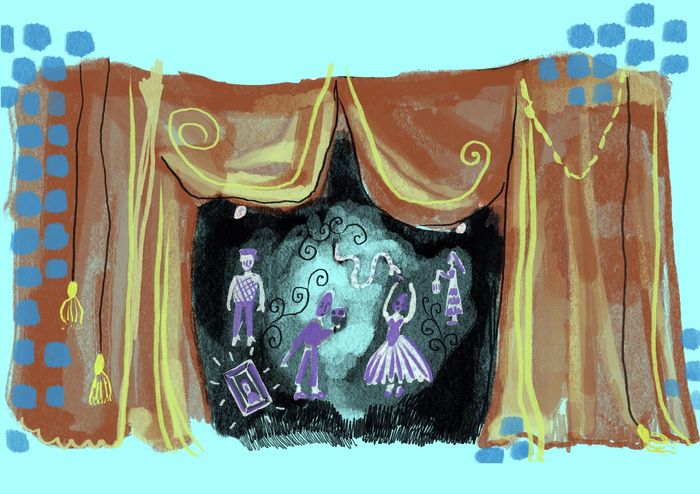
To the first year Englings, I say, embrace the sun this term! And to everyone else, I say, embrace Shakespeare while it’s warm and bright outside. Watch all the May Week plays you can, and maybe put on one of your own. Nostalgia and fuzzy feelings of sentimentality can be problematic when we are working as literary critics, but when we are watching Shakespeare for fun, it can be a useful tool for connecting with past audiences, and understanding what drew them to his plays in the first place. Perhaps it can even help us to understand for ourselves where these more nostalgic readings of his work come from.
But most of all, I say embrace this quintessentially Cambridge experience while you still have the chance.
 News / Simon Goldhill resigns following sexual misconduct investigation16 June 2026
 News / Ted Yip elected Union President after contested race 19 June 2026
 Theatre / ‘Mental illness doesn’t exist in a vacuum’ says Obsessive, Compulsive, Divine 18 June 2026
 Lifestyle / You can’t always get what you want 18 June 2026
 Comment / Exercise, academia, and the Cambridge addiction to both17 June 2026
 News / News in Brief: Pokémon, planting, and the plague21 June 2026
 Theatre / Shakespeare in the sun 21 June 2026
 Lifestyle / Far-flung foodie favourites21 June 2026
 Fashion / The trials and tribulations of sewing your own wardrobe19 June 2026
 Science / Science can tell us right from wrong19 June 2026