The trials and tribulations of sewing your own wardrobe
Katie Ballingall offers a beginner’s guide to sewing, stumbling, and starting again
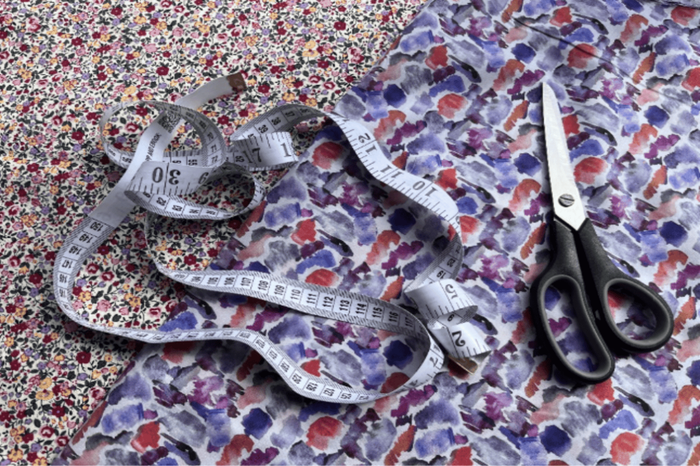
Sewing is one of those hobbies I’ve picked up on and off for years. It’s a rather useful one, whether you are mending a small hole or making a masterpiece from scratch. From choosing the pattern and fabric to matching the colour of the thread, sewing your own clothes allows you to customise a garment entirely – at least in theory – for the perfect fit.
Recently, Churchill’s sewing society, ‘Fabricated’, has allowed me to test the waters of sewing my own clothes. I have made, and continue to make, plenty of mistakes along the way, so I thought perhaps my fellow sewing enthusiasts and amateurs could learn from some of my mishaps.
“Perhaps my fellow sewing enthusiasts and amateurs could learn from some of my mishaps”
Patterns
Using your own clothes as templates has the benefits of not having to buy costly patterns, while still ensuring a fit tailored to you. Yet without a clear set of instructions, it is all too easy to make the wrong cut. When tracing onto your fabric, there are a myriad of details to keep in mind. For example, for sewing pyjamas:
- You should stretch the waistband to account for the elastic that will be inserted later
- Remember to flip your shorts every time you trace a different side
- Then, don’t forget to leave extra material at the top and bottom for hemming, and around the sides for seam allowance.
- Finally, beware which pieces you are sewing together – I most definitely have fallen into this trap!
That said, if you struggle to wrap your head around these or are sewing your first garment, then perhaps it is better to buy the pattern after all, or at least ensure you have someone skilled nearby to lend a hand.
Fabric
Moving on to the fabric, admittedly, it can be quite pricey. If you take into consideration the time it takes to transform the material into an actual item of clothing as well, you can reasonably question whether it is worth it. However, sewing your own wardrobe is not just for the end product (although if I have a successful project, you will most certainly see me wearing it everywhere!), but for the process as well. I think there is something therapeutic about the methodical work of handling fabric, pinning pieces together and stitching them into shape. Particularly during exam season, a creative hobby can be just the outlet you need.
“Particularly during exam season, a creative hobby can be just the outlet you need”
Hemming and lining
Unless, of course, you’re French hemming, in which case nothing is calming about that at all. It is, truly, a devious sewing nightmare, for it takes twice the stitching and pressing of a standard seam. The arduous labour does pay off, though: French hemming allows you to enclose your stitches without an overlocker, preventing rough seams from sitting on the inside of your clothes. But this requires caution and precision, and it is all too easy to be left with a strip of fabric peeking out. This, therefore, requires careful attention to detail when pinning and a fair part of patience. Admittedly, French hemming can be infuriatingly finicky, so like me, you might opt to avoid this entirely.
Sewing without a lining can make this a bit easier, but be wary of fabrics which can be seen through. Equally, too little fabric can be just as problematic, as the fabric can get caught in the machine. If this does happen, proceed with caution and try not to snap the needle – another sin I was guilty of.
In the Cambridge summer heat, I think skirts are staple pieces, providing some colour and flair while keeping you cool. After a weeks-long hunt for a midi skirt, I finally found the perfect blue and green ruffly floral skirt, only to find out that it was sold out in my size. But I refused to give in. With sheer determination, some scissors, and a trip to town, I was ready to attempt the project myself – despite knowing that my overambition would catch up just next week.
“But with a little optimism, it might become your best invention yet”
The first skirt I made a few years ago was for my drama exam, a crimson circle skirt perfect for the ambitious and daring Jo March. Circle skirts give a beautiful shape, but a horrible hem. My solution to avoid hemming was to sew a lining in, but this was a fair amount of material for a single garment and wasn’t particularly friendly for the summer heat. Therefore, with greater care and perhaps an iron this time, I am hoping to hem successfully – or at least hide the evidence with a strip of lace.

Amid the frustration and challenges in learning how to sew, I am grateful for the comfort and companionship provided by sewing clubs. You could find out if your college has a sewing club or even start your own. Sewing in a group adds some sociability, someone to give advice, or, at the very least, someone to laugh with when a project turns into a disaster. My tote bag was a success, and my pyjamas a failure. Sewing is not always logical; stitches which should work sometimes just don’t, and sometimes the machine is having one of those days. A mistake can send you in an unexpected direction, but with a little optimism, it might become your best invention yet. Perseverance is key; it will work eventually, and you will be left with a hand-tailored garment knowing every inch of it is your own.
 News / Simon Goldhill resigns following sexual misconduct investigation16 June 2026
 Comment / Exercise, academia, and the Cambridge addiction to both17 June 2026
 Theatre / A celebration of Queer Love in sacred spaces: Romeo and Juliet in Peterhouse Chapel16 June 2026
 Theatre / ‘Mental illness doesn’t exist in a vacuum’ says Obsessive, Compulsive, Divine 18 June 2026
 Music / ‘Returning again and again’ to the Bateman room16 June 2026
 Fashion / The trials and tribulations of sewing your own wardrobe19 June 2026
 Science / Science can tell us right from wrong19 June 2026
 News / Ted Yip elected Union President after contested race 19 June 2026
 Lifestyle / You can’t always get what you want 18 June 2026
- Theatre / ‘Mental illness doesn’t exist in a vacuum’ says Obsessive, Compulsive, Divine 18 June 2026