
Commercial Feature
The Wellness Blind Spot: We’re Obsessed With Skin — But What About Our Hair?
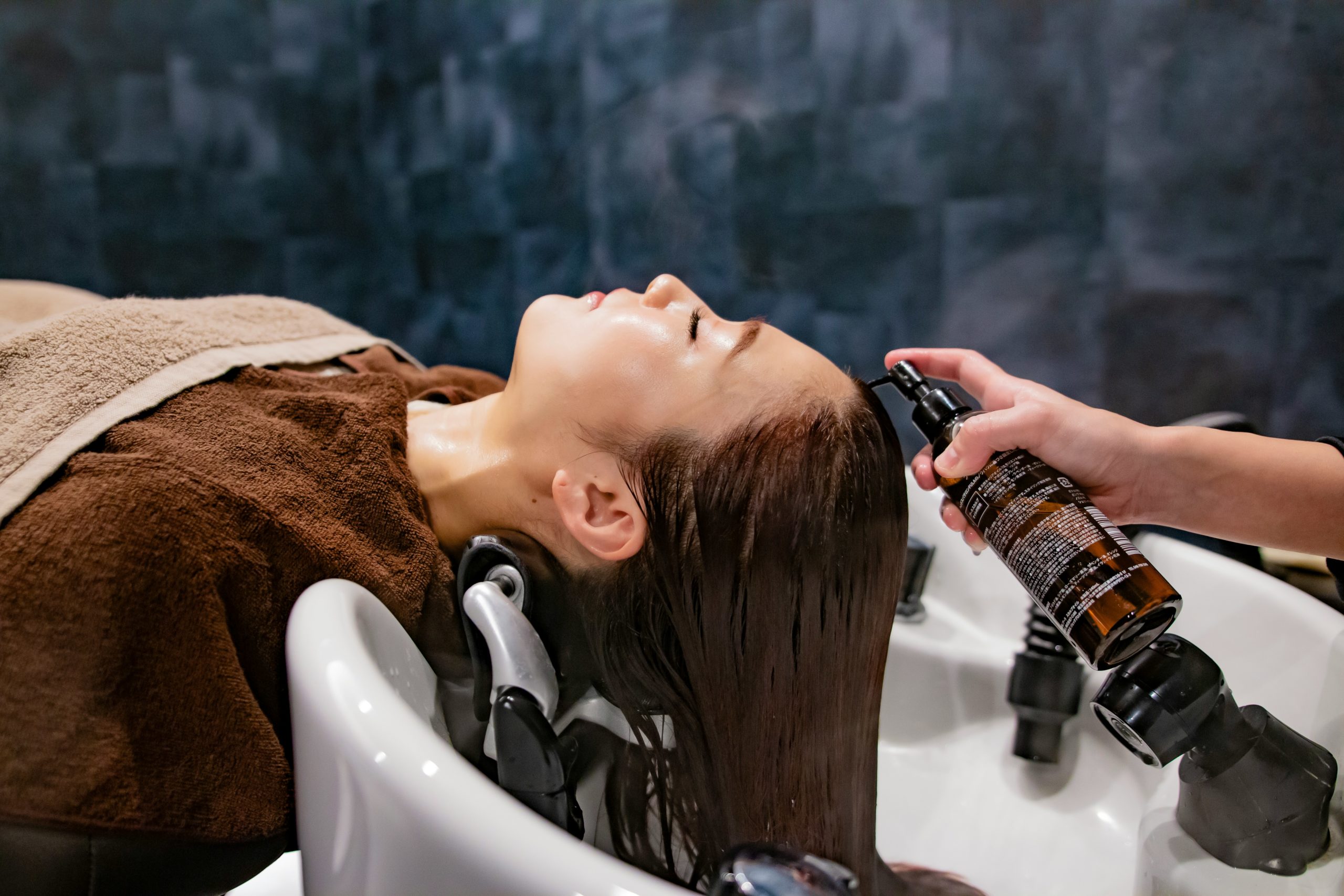
Almost everywhere you look, be it a pharmacy or a beauty account, you immediately notice that skincare is a serious science but haircare is just a nice extra. A lot of people can name three skincare serums in their sleep, but only a few can tell you exactly what is happening to their hair. This is not just a spending pattern where people prefer to spend on skincare. Instead, it’s a knowledge gap that most people don’t notice until they start losing two inches of hair at every trim.
The Routine Missing a Step
Skincare education is widely cited these days, which is why a lot of consumers ask about ceramides, retinol percentages, and whether their SPF covers both UVB and UVA. Unfortunately, this kind of scrutiny is not reflected in terms of haircare products. People usually assess the shampoo they are looking to buy by how it smells instead of what it can actually do for one’s hair.
Olaplex did not create the bond repair category by marketing harder. Instead, it made every other product in the shower look like it was not solving the problem it was intended to. Olaplex repairs disulfide bonds at a molecular level, and this is something that no mainstream shampoos has succeeded in doing.
What Is Actually Breaking Your Hair
Heat styling gets most of the blame, and it deserves some of it, but the full list is longer and more mundane: chemical treatments, brushing, tight elastics, sun exposure, the friction of a cotton pillowcase. Each puts mechanical or chemical stress on the disulfide bonds that give hair its structure; when those bonds break without repair, the hair does not just look dull. It loses elasticity, snaps at the ends, and stops holding its shape.
Most haircare routines never address this. People spend months rebuilding their skin barrier, then switch shampoos and wonder why their hair feels worse; the damage is cumulative and invisible until breakage is already obvious.
Conditioning Treats the Surface; Bond Repair Fixes What Is Beneath It
For a long time, hair treatments meant conditioning, coating the outside of the strand to make it feel smoother. That improves softness but leaves the structural problem untouched; the hair feels better for a day and snaps off at the ends by Friday.
Olaplex’s patented active ingredient, bis-aminopropyl diglycol dimaleate, works by finding single sulphur hydrogen bonds broken during chemical or mechanical stress and cross-linking them back into disulfide bonds, the ones responsible for strength and elasticity. The No.3 Hair Perfector is the most practical at-home version, a pre-shampoo treatment that works from inside the strand rather than sealing over the surface. It will not make hair feel soft while it sits on; what it does is rebuild the architecture that makes softness and shine possible.
Colour Clients Are Compounding Damage Appointment by Appointment
A stylist refusing to bleach a client’s hair is not being difficult; the hair is already so structurally compromised that lifting further would cause irreversible breakage, and no toner fixes that. This is where skipping bond repair shows up most clearly, not in how the hair looks after a single session, but in what becomes impossible to do six months later.
Colour and lightening services break disulfide bonds as a matter of basic chemistry. People who return to the salon every eight weeks without any repair step between appointments are not maintaining their colour; they are narrowing what a stylist can safely offer them.
Hair Deserves the Same Science Standard as Skin
The wellness category has grown fast enough to absorb collagen supplements, LED masks, and lymphatic drainage tools. Hair, the one thing most people interact with every single day, still gets treated as maintenance rather than care, which is a strange hierarchy given that its structural health responds directly to what is put on it.
The products exist. The science has been established for over a decade. What is still catching up is the expectation; most people still accept a bad hair year the way they would never accept a bad skin year.
 News / Venue cancels Cambridge talk by right-wing commentator Matt Goodwin after backlash28 May 2026
 Interviews / Cambridge MP Daniel Zeichner on political realism and the ‘politics of grievance’29 May 2026
 Features / The language of optimisation and the architecture of merit30 May 2026
 Comment / We must support our strikers29 May 2026
 Lifestyle / Blind Date: ‘I should’ve changed my socks’24 May 2026
 Film & TV / Project Hail Mary’s production design shows the power of human creativity30 May 2026
 Music / This music DOES contain hope30 May 2026
 Sport / Should we play more BUCS?30 May 2026
- Features / The language of optimisation and the architecture of merit30 May 2026
- Comment / We must support our strikers29 May 2026
