
Commercial Feature
The One Thing Most UK Renovations Get Wrong (And It Has Nothing to Do With Your Kitchen)
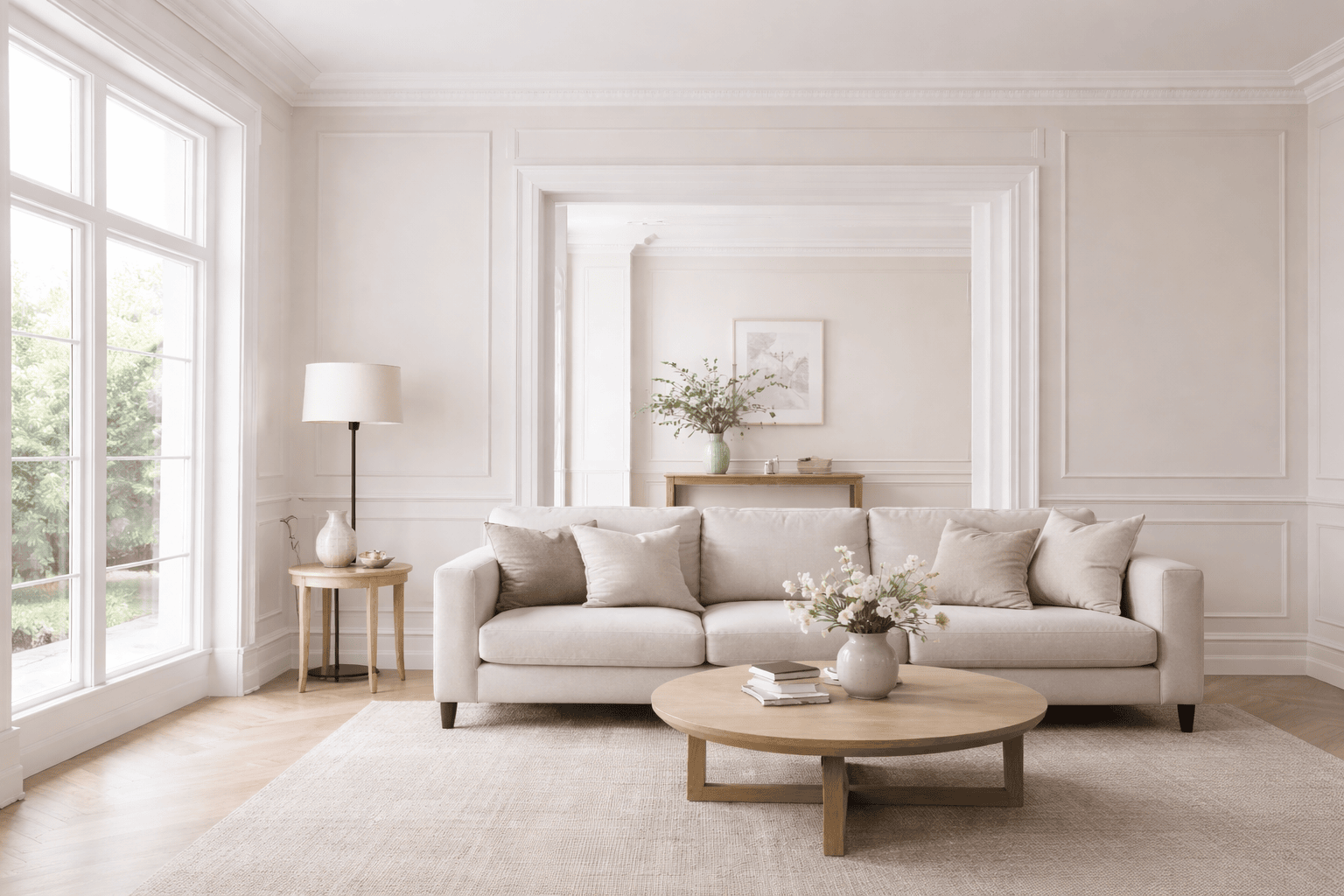
British homeowners have never spent more on their homes. According to the 2025 Houzz & Home study, the median renovation spend hit £21,440 in 2024- up 26% in a single year. Kitchens, bathrooms and flooring absorb the lion’s share of that money, and for understandable reasons: these are the rooms that appear in listing photos, that buyers notice first, and that deliver the most visible results.
But spend any time speaking to people who work with interior spaces day in and day out, and a different concern keeps surfacing. Not about what homeowners are spending money on, but about what they’re quietly ignoring while they do it.
“Most renovation budgets are concentrated at eye level,” says Adam McGrory, who runs MR Mouldings, a specialist supplier of architectural trim to homeowners and tradespeople across the UK. “The biggest design mistakes usually happen below it- specifically, at the point where the wall meets the floor.”
He’s talking about proportion. And it’s a word that doesn’t get nearly enough airtime in renovation conversations.
Why We Overlook It
Proportion is not a photogenic concept. It doesn’t have a Pinterest board. It doesn’t trend in the same way that a specific shade of green or a particular kitchen tap style does. And crucially, it isn’t sold to you in a showroom.
The Houzz data makes clear that worktops are the defining decision in most kitchen renovations- 92% of homeowners upgraded them, with most choosing based on look and feel rather than cost. That makes sense: worktops are tactile, immediate and visible. You can stand in a showroom and feel the weight of engineered quartz under your hand.
Skirting boards don’t work that way. Trim isn’t displayed dramatically. Nobody has a conversation about it over a glass of wine at a kitchen showroom. And so it gets selected late, often from whatever the builder already has on the van, and rarely with any consideration of the ceiling height or room it’s going into.
The result is homes where the surfaces are immaculate but something still feels slightly unresolved. Not wrong, exactly. Just not quite finished.
What Period Homes Understood
Historic British architecture was built around the idea that architectural detail was not decoration- it was proportion made physical.
In Georgian interiors, everything from skirting height to cornice depth was considered in relation to the room as a whole. Victorian homes followed similar logic: in a reception room with three-metre ceilings, skirting boards of 150mm to 225mm were standard, not because builders were being indulgent, but because the relationship between floor trim and ceiling height required that weight to make the room feel balanced. Strip it away, and the wall becomes an unbroken vertical sheet that the eye doesn’t know what to do with.
This wasn’t lost on later architects. The modernist idea that ornament is crime led to stripped-back interiors, but even the most rigorous minimalists- from Mies van der Rohe to John Pawson- were obsessive about proportion and transition. The difference is that modernism required a level of architectural discipline in how those clean surfaces were handled that most domestic construction simply doesn’t apply.
“The Victorians weren’t being decorative,” Adam says. “They were responding to volume. Taller ceilings need visual weight at the base. Without it, the space feels incomplete.”
The 70mm Problem
One specific issue comes up in Adam’s work more than any other.
In most volume new builds, and in many renovated homes that follow similar minimal principles, a single skirting board of around 70mm is installed throughout the entire property. Every room. Same profile. Same height. It’s an efficient specification that makes procurement simple and installation quick.
But at standard ceiling heights of 2.4 to 2.7 metres, 70mm reads as visually underweight. It makes no claim on the wall above it. Furniture placed against it looks untethered. The room lacks what interior designers call “grounding”- the visual anchor at the base of a wall that tells the eye where the floor plane ends.
The fix is not expensive. The material difference between a 70mm developer board and a properly proportioned 150mm or 180mm alternative is modest. But the effect on how a room feels is immediate- and it’s the kind of change that visitors notice without being able to explain why.
“Proportion is invisible when it’s right,” Adam says. “But when it’s wrong, you feel it immediately, even if you can’t name it.”
Structure Before Styling
This principle- that structural harmony should come before surface finishes- is one that professional designers apply consistently, even when homeowners don’t.
It’s also one that pays dividends long-term. Kitchens and bathrooms date. Paint colours change. But a room with the right bones, where skirting height relates to ceiling height, where skirting and architrave share a profile family, where cornice softens the ceiling line- that room will outlast a dozen surface trends.
Kitchen and bathroom renovations each yield around 50% ROI in value terms, which is a rational reason to prioritise them. But proportion doesn’t cost nearly as much to get right, and its returns are felt every day you live in the house, not just when you come to sell it.
“Kitchens date,” Adam says. “Brassware goes in and out of fashion every few years. But if the scale of the room is right- if the bones are there- you can update the finishes for decades and it still works.”
Where to Start
For homeowners wondering whether proportion is something they can realistically address without a full renovation, the answer is yes- and the hallway is usually the right place to begin.
The hallway is the transitional space. It’s the room through which every other room is entered, and it sets the visual register for the whole house. Upgrading skirting and matching the architrave profile in a hallway is a contained, affordable project with an effect that’s felt throughout the property.
From there, the living room benefits most from proportionate skirting- particularly in open-plan spaces where the wall is exposed over a large area. And for homeowners who’ve noticed that flat walls feel abrupt or undifferentiated, panel moulding offers a way to introduce the rhythm and shadow lines that bare surfaces lack, without touching the structure of the room at all.
None of this requires a full renovation budget. It requires the same thing that good proportion has always required: a bit of thought given to the edges, before all the attention goes to the middle.
Adam McGrory is the founder of MR Mouldings, supplying MDF skirting boards, architraves, wall panelling and cornice profiles to homeowners and tradespeople across the UK. Browse the full range at mdfskirtingmouldings.co.uk.
 News / Record-breaking £190 million donation will fund new Cambridge School of Government2 April 2026
 News / Downing law society banned from holding formals in College for a year31 March 2026
 News / Missing Sidgwick sculpture spotted in Oxford 1 April 2026
 News / Homerton plans to convert former Labour Club into student accom1 April 2026
 News / Cambridge alumnus Matt Brittin appointed BBC director-general3 April 2026
 Lifestyle / Blind Date: ‘I lived to tell the tale!’5 April 2026
 Theatre / What’s in a costume? 5 April 2026
 Features / The rise of the June Event 5 April 2026
 Music / A pastel, pastoral production of Acis and Galatea 4 April 2026
 Film & TV / Interviewing the other side of creativity4 April 2026
