
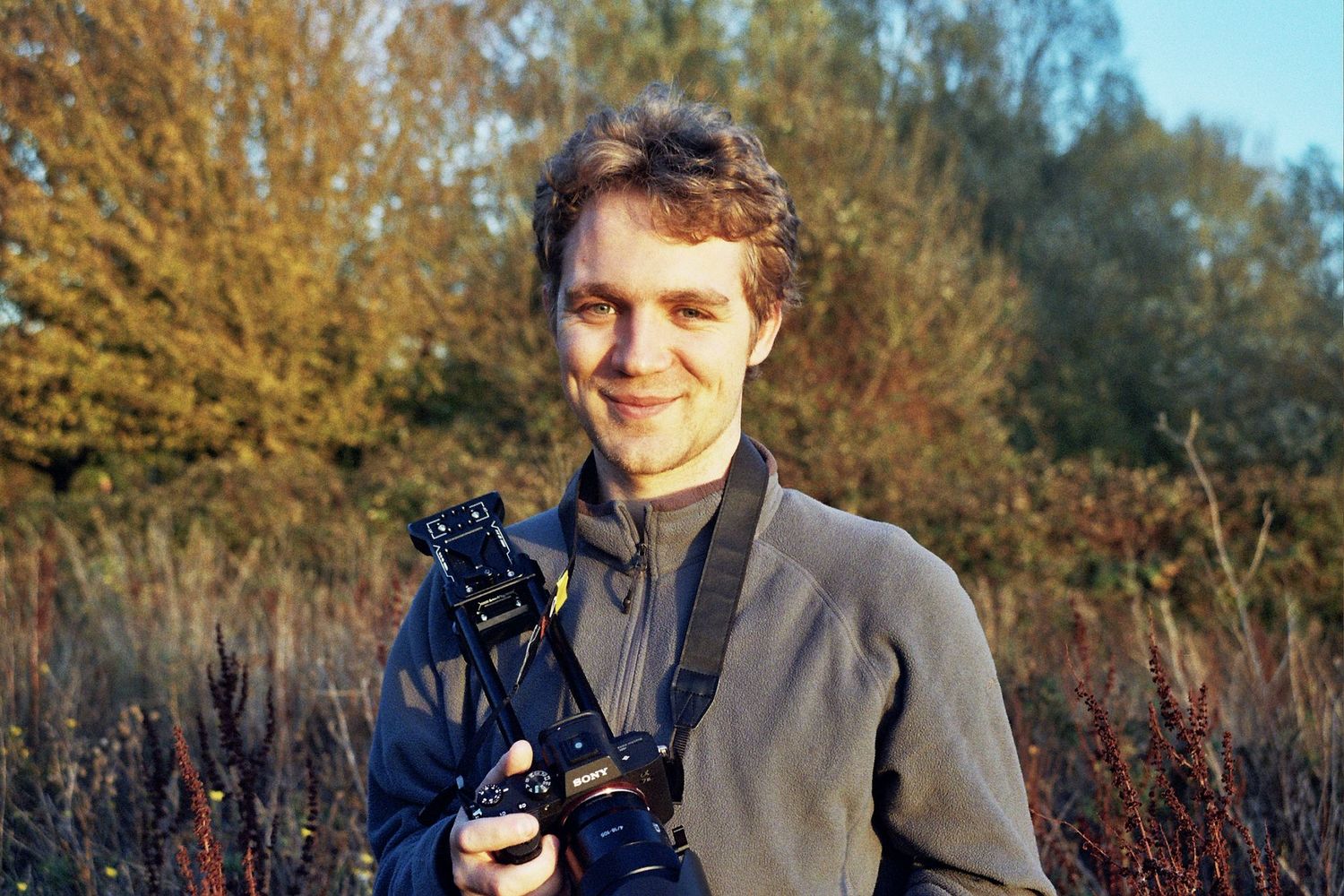
“It’s easy to feel like when it comes to making films, or theatre, or anything creative, you need to be either a writer, or an actor, or a director,” acknowledges engineering student and film editor and producer Finlay Wyer, but “those in production are just as important” in helping to “bring other people’s art of life.” Finlay’s point is widely acknowledged but rarely dwelt upon. Audiences tend to direct their praise toward what appears on screen: compelling performances, sharp dialogue, or the director’s distinctive vision. And yet, this isn’t simply a failure of attention. In many ways, the invisibility of production work is the point. A truly accomplished film is one in which its technical artistry remains largely unnoticed, creating an experience that often feels effortless and complete.
Still, if the aim is to remain unseen, it raises an important question: how does one enter and gain experience in such a vital yet overlooked field? In speaking with Finlay – who works with the amateur filmmaking society Silver Street Productions at Queens’ college – I had the opportunity to explore this question, and many more like it: ultimately wondering, what is it like be someone who operates beyond the spotlight, but in many ways controls the scene?
First, I think it is helpful to clarify what it is that Finlay does. Finaly is the technical director for Silver Street productions. This means that he is involved in the process (and processes) of planning, shooting, and editing the various projects that the society undertake, carefully organising and facilitating their artistic vision from a more practical and technical side. He summarised his role aptly when he suggested that he was concerned not only with “which shot best serves this moment, but also which angle, what type of lighting,” and also, later on, what edits need to be done. It’s a fascinating role that helps to draw on the technical, just as much as the creative when helping to bring a story to the screen. Reflecting on his experience in the role, Finlay stated that it is “weird filming knowing that when you wrap a shoot its only half done,” and that it will later be you in post-production “trying to put together a very complicated puzzle”
“Finlay laughed while he told the story, but I felt sure that it was a moment that carried much more humour in retrospect”

Working in this role demands a wide-ranging and flexible skill set – something Finlay himself acknowledged with modesty, never quite claiming credit for his own success. Chief among these skills is adaptability. Discussing The Only Fruit (Silver Street’s most recent short film), he explained that the crew were tasked with shooting “25 minutes of video in one weekend” – an ambitious undertaking by student filmmaking standards. Finlay described how he drew up “three different schedules” for the shoot, constantly revising plans in response to changing conditions. He also relied on a range of “unconventional” solutions to compensate for limited resources, particularly the challenge of “not having a great camera,” a professional studio setting, or a ballooning budget. These included creating makeshift lighting by “blacking out the window of a student room with card,” as well as carefully stitching together different parts of the shoot in post-production to produce a cohesive final piece. One particularly impressive moment showcasing the sometimes-fidgety work a technical director has to undertake came to light when Finlay recounted having to redo the audio for the trailer for Ribcage by rerecording the dialogue by perfectly “matching the lip movements” with the actor’s mouths. Finlay laughed while he told the story, but I felt sure that it was a moment that carried much more humour in retrospect than in its initial frustrating realisation.
It is not all inventive thinking and creative glory, however. Finlay was also willing to talk about the ways in which the role requires more than just technical fineness. As is often the case, working with other people can be at once fulfilling and frustrating. As Finlay acknowledged with all the time pressure and heavy workload the “skill of organising people is not something that just happens in Cambridge, it very much has to be done.” Finlay emphasised that planning is something he has learnt along the way, becoming increasingly mindful of other people’s limits. While filming The Only Fruit, for example, Finlay relayed how he had to remain aware to the fact that “people also need time for rest,” particularly when a shoot is so “emotionally intense”. However, Finlay was also quick to point out the team at Silver Street made his job easier. For one, the actors “knew their lines so well and were so consistent with their performance”. Secondly, there was a real comradery among the cast that encouraged non-hierarchical engagement and suggestions from all sides, allowing for genuinely constructive feedback. And finally, Finlay highlighted that the writer and director of the project, Madeleine Whitmore was very conscious of the ways in which her work had to be made inside the limits of “practical application,” which meant the work lent itself to “much more impressive things”.
“‘I do this because I want to, not because it’s my job’”

Nevertheless, the technical side of filmmaking is often approached with greater caution by students; Finlay even stressed that “if there isn’t someone there to support you it can feel very trial by fire.” But he was keen to emphasise that this does not necessarily have to be the case. Now hosting a new event called ‘Scene In An Evening’, Silver Street has opened up additional opportunities for engagement in student filmmaking. The event enables a small team without previous experience to be led by the more seasoned members of Silver Street in the production of a small film. Finlay stressed that the film will not be shown anywhere, and that it should be seen as more of an opportunity to gain “hands-on experience.”

“I believe there are a lot of people who want to do things in film,” Finlay asserted: “But they just need that first little thing, and we hope to be that little thing.” Finlay’s advocacy for the programme seemed to mimic his own involvement, initially starting with little technical knowledge, but slowly climbing the steep hill of experience to get to where he is today. While applications for this year’s event have already passed (look to @silverstreetproductions for the future), Finlay suggested that he wanted to be “running this every year,” hoping to give each new cohort of students an occasion to “start trying new things”.
Thinking about his career as a student filmmaker so far, Finlay was keen to emphasise that “we at Silver Street have been very lucky.” From receiving great support from the advice of AV Theatre technical manager, Richard De Cordova, to being lent the Queens’ communication department’s “fancy” camera, or even receiving funding support from the English DoS, Andrew Zurcher, but that doesn’t seem to me to be the whole story. In Finlay’s story of engagement, as well as that from the entire Silver Street team, there seems to be a deeper internal striving: a genuine desire to put everything they have into creative expression. Despite his success in the field, Finlay was eager to suggest: “I do this because I want to, not because it’s my job.” And who knows, after trying your hand at his often-under-appreciated skill, you might find that you discover a new love too.
