The rise of the June Event
Eleanor Baldwin asks event presidents why colleges are seeking alternatives to May Balls

May Week has been one of Cambridge’s most iconic traditions since the 1830s, originally taking place in the week before exams. The original May Ball – although shifting in style with the entourage of aesthetics over the years – was an exclusive, black-tie event. Live music, champagne, and unlimited food afforded a night that prided itself on opulence and expense. Today, the classic May Ball remains a cornerstone of May Week, with ticket sales resembling something of Ticketmaster’s chaos. However, May Week has evolved far from its original iteration, expanding to emphasise accessibility over indulgence. From June Events to garden parties, events have diversified from the historically paradigmatic black-tie affair. For those who don’t make it to a May Ball, this shift means there are now plenty of alternative events that still capture the spirit of May Week.
Last Michaelmas, Churchill announced their decision to host a June Event in place of their usual biannual May Ball. The event’s president, Frank He, told Varsity that the June Event offered “a more affordable alternative” for them, which holds “accessibility as the core focus”. With the theme of ‘summer solstice’, the night will include an array of entertainment and interactive events which seek to balance a cheaper ticket with an “authentic May Week experience”.
“The recurring question has always been: are May Balls actually worth the price?”
Hughes’ Hall’s June Event president, Riya Mavroidis, also echoed this sentiment. The college chose such an event as a “more intimate and accessible alternative,” which they believe feels “livelier, more social, and easier to navigate”. The success of their 2025 event, which was “extremely well-received by students,” demonstrated the importance of offering such an alternative, which can appeal to a wider range of budgets. Far from being limiting or restrictive, the shift to a June Event is clearly a forward-looking change, actively striving towards a more inclusive and sustainable vision. By reimagining May Week, the June Event sets a precedent for proving tradition can evolve without losing its spirit.
The recurring question has always been: are May Balls actually worth the price? When multiple colleges are charging well upwards of £200 for one night, it’s perhaps not surprising that many students can be reluctant to splurge their savings. The president for the Trinity Hall June Event, Beth Hannant, argues the June Event holds an important place in the changing May Week landscape, and hopes that it continues to find room in the middle ground: “That is where its charm lies, doing a little bit of everything to a very good standard.” She then refers to the intimacy unique to an event like this, kept in balance with a relatively more “affordable” price, as the event’s main selling points. One challenge these events potentially face however is selling tickets early – something Trinity Hall’s June Event committee concedes that they are very conscious of. As students wait for May Ball resales or spend their Easter vacation weighing up the plurality of options available to them, this sadly feels inevitable.
“That is where its charm lies, doing a little bit of everything to a very good standard”
With Emmanuel cancelling their June Event last year, before several other colleges who were unable to financially sustain their events followed suit, this uncertainty is commonly felt. As Easter draws closer, Trinity Hall has just been impelled to announce a ‘first week of April’ discount. Affordability clearly continues to shape the very structure of May Week events, especially in a market so saturated with options. Riya shares the struggle of working with a smaller budget, “particularly in a May Week environment where larger colleges host high-profile May Balls with more resources and are well-known”. As seen with Churchill and Trinity Hall, strategies like launching earlier ticket sales to secure early revenue are major focal points for the Hughes Hall committee. Attracting attendees to these lesser-known events requires a skilled, specific and tailored marketing strategy.
When asked “what is the main advantage of hosting a June Event,” all 3 presidents were unanimous in their answer: “Of course, the price”. Despite not having the reputation or wealth of resources that May Balls take for granted, I’m struck by the genuine enjoyment and enthusiasm of those working to bring these nights to life. All of them highlight the dedication of their committees, and Riya keenly reflects: “Seeing that coordination translate into something tangible has been incredibly rewarding”. As Frank and Beth look towards future June Events, they hope they will strengthen intra-collegiate links.
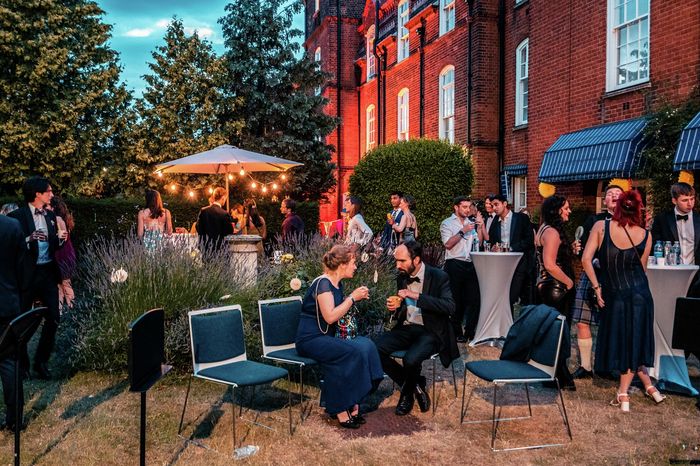
While the traditional May Ball continues to hold its allure, the rise of June Events suggests that tradition is also being reshaped and redefined. As Riya summarises: “The success of the June Event suggests that there is real demand for high-quality events that are also more affordable”. The rise of alternatives means students on a budget still have the opportunity to celebrate the end of the year in style.
 Comment / Top of the slops: the competitiveness of college dining4 June 2026
 Interviews / What’s the story behind Pages coffee house?8 June 2026
 News / News in Brief: Cambridge crowns, council confirmations, and competitive cricket8 June 2026
 Comment / The Cambridge drift1 June 2026
 News / Cambridge researchers produce ‘world-first’ AI vaccine6 June 2026
 Arts / Don’t rush me – I’m reading!9 June 2026
 Lifestyle / Don’t Cry at Me, Argentina – a next-year abroad story8 June 2026
- News / News in Brief: Cambridge crowns, council confirmations, and competitive cricket8 June 2026
 Science / Failure is the foundation of science8 June 2026
 Fashion / The hidden gems of formal fashion8 June 2026