
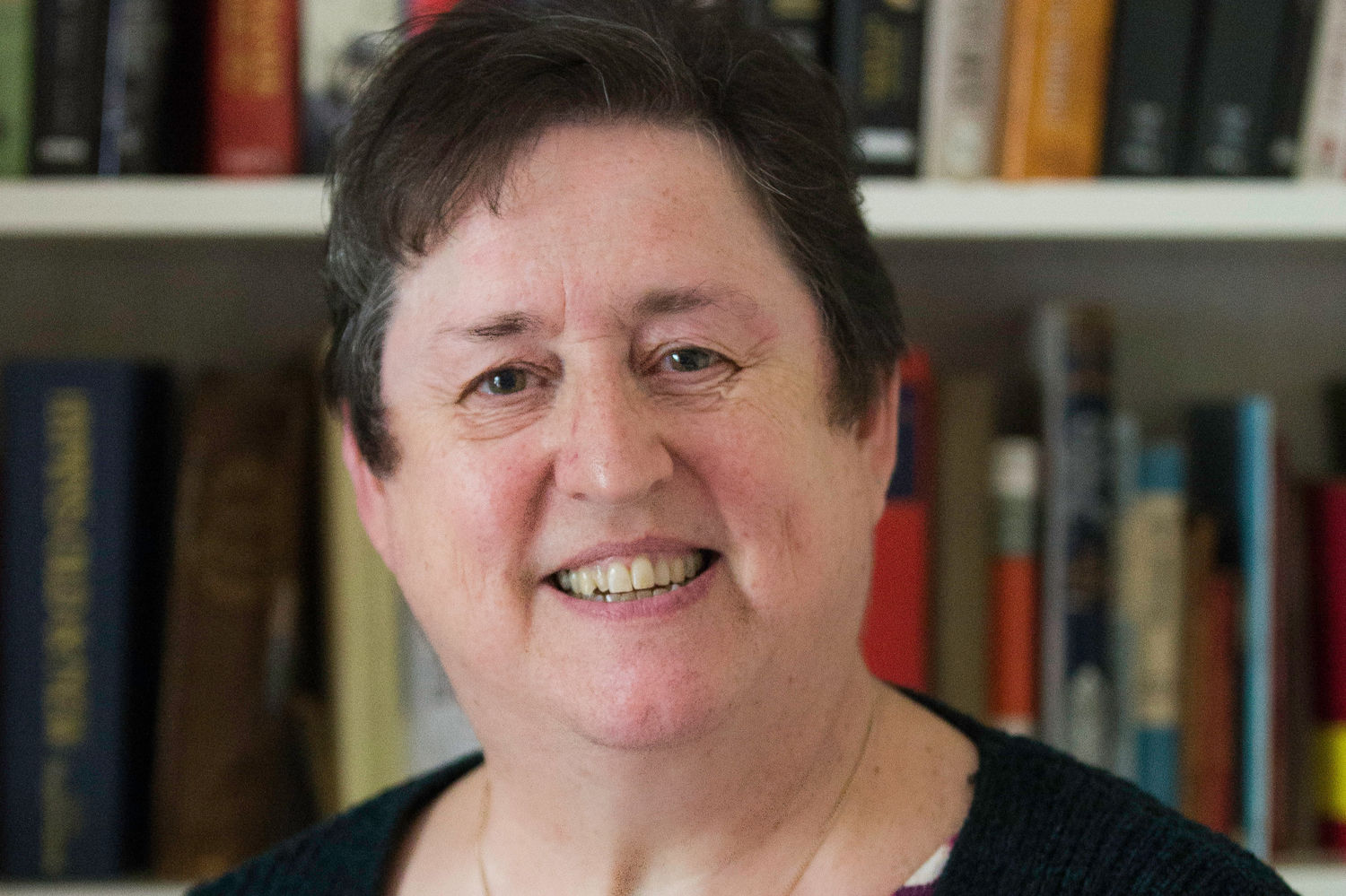
What comes to mind when you picture a nun? Perhaps strict, pious figures from Sunday School, or you imagine your favourite media depictions, twirling around the Austrian alps to the music of Rogers and Hammerstein. I entered my meeting with Dr Sr Gemma Simmonds with these images in mind, but left with a fuller picture of what a life devoted to the Church could look like. Through Simmonds, the life of a sister that I glimpsed was, above all, one of caring; be it in the calm, still moments in corners of Cambridge, or the passionate defence of the poor in South America
“There was a real social and political critique coming out of theology, coming out of the Church”
Simmonds had been a Sister of the Order of Jesus for two years by the time she joined Newnham College to study languages. She describes the concurrent commitments to the University and her religious sisterhood as being “very unusual,” but she nonetheless spent “three tremendous years” with friends at Cambridge who accepted her untraditional student lifestyle. After teaching for ten years in schools run by the Order, Dr Simmonds looked beyond the UK and traveled to Brazil as a missionary, where she worked to attenuate the problems and suffering of those stricken by poverty in the Baixada Fluminense, in the state of Rio de Janeiro.
At first, I was unsure of how to characterise Christian missionary work in South America, a continent where inequality has in large part been due to colonisation, including by Catholic missionaries. Far from shying away from this history, Simmonds confronts these challenges head on. She cites the words of Archbishop Helder Camara, stating that “when I give the poor something to eat, people call me a saint; when I ask why the poor have nothing to eat, they call me a communist.” The implication here is that such questions constitute betrayal of one’s state. To Simmonds, however, the purpose of missionary work was not to attenuate the suffering of the poor in a temporary capacity, but to wrestle with the injustices that continue to penetrate the lives of innocent people. “There was a real social and political critique coming out of theology, coming out of the Church,” she tells me.
“I think Jesus would ask questions about racism, about the exclusion of people for all sorts of reasons”
This critique was not always well received. Simmonds provides a striking image of a procession held on Pentecost Sunday while she was in Brazil. “People had these big wooden processional crosses,” she tells me, “and on them, they’d draped white t-shirts, and they’d gone to the butchers and got animal blood, and had soaked the t-shirts in blood.” Each bloodied t-shirt had a picture of someone killed for their attempts to address rampant inequality in Brazil. The procession sought to depict these activists as martyrs, who lost their lives due to their support of the poor. “There must have been about 45 of them,” Simmonds tells me. As we hold the reality of this persecution in mind, the room fills with a solemn silence and Simmonds looks down, contemplating the lives lost to the cause.
Simmonds then continues by drawing a connection here to the crucifixion of Christ: “When he said things that made them feel all wooly and comfortable, that was great; when he said things that were really challenging, they wanted to kill him.” We return to the treatment of Christ later in our conversation, and Simmonds is confident that modern UK society would react the same way today: “I think he would ask questions about racism, about the exclusion of people for all sorts of reasons, whether it’s race, or gender, or sexuality.” Reflecting on this, she recalls accidentally finding herself in the middle of a Tommy Robinson march in London, where she was “absolutely horrified by just the sheer naked aggression” of those protesting, and claiming that they did so in the name of the gospel. She asserts: “I did wonder which gospel he meant, because it wasn’t the one written by Matthew, Mark, Luke or John – that’s for sure!” To Simmonds, it is dangerous for the Church to facilitate this outpouring of hatred and aggression, and it must avoid facilitating the ends of those who have “very different intentions from those of Jesus Christ when he came on Earth.”
“The prison system was working as an alternative to the provision of high level psychiatric help”
Once she returned to the UK, she began working as a chaplain at the University of Cambridge University. Her life took another turn when the train robber Ronnie Biggs, who she met in Brazil, got her involved with the case of a woman incarcerated in Holloway prison. From then, Simmonds began a career in prison ministry alongside her calling in the University. “I was partly in Holloway prison, partly in the University of Cambridge, which was an amazing contrast” she tells me. She later elaborates on that “contrast” she observed and experienced, explaining that the women in Royal Holloway prison “had no sense of any hope for a future for themselves,” and adding that “the prison system was working as an alternative to the provision of high level psychiatric help.” Cambridge, however, was “full of people who had huge hopes for themselves, because being at Cambridge was already an indicator of privilege and access.” The disparity in access to help holds up a mirror to how privileged life in Cambridge can be. Walking out of the interview and back towards central Cambridge, I couldn’t help but reflect on my own privilege. It felt odd to walk back into buildings soaked in prestige, having just heard about the stark lack of hope experienced by those allotted a different set of cards in life.
“I think it’s when we shut down and we don’t want to meet the other – that’s when we’re in trouble”
Despite a life which has led her to contend with the brutality and inequality of our world, Simmonds asserts that she finds hope “in the goodness, in the generosity of people”. This, Simmonds suggests, can be found anywhere if you look for it, telling me that “you meet it in tiny ways”. One such example she gives me is the charity Lyns House, which “promotes friendships between people within the University and adults with learning difficulties.” She also remains hopeful that dialogue across social boundaries is capable of bridging schisms between people, regardless of any animosity which may currently exist. She cites another example that upholds her hope for human connection: “I work with a fabulous group up in Cumbria called the Rose Castle foundation. They are trying to train young people, young adults from areas of religious conflict around the world to become reconcilers.”
Curiosity and compassion have been central to Simmond’s work as a missionary, as Simmonds believes that curiosity is essential to create a more tolerant world. “I think it’s when we shut down and we don’t want to meet the other: ‘I’m not interested in you. You have nothing to teach me. I have nothing to learn from you.’ That’s when we’re in trouble.”
