The activist behind ‘Cambridge is Chopped’
Kamilla Khusnutdinova talks to drag performer Guillotina about his recently-founded social movement in Cambridge
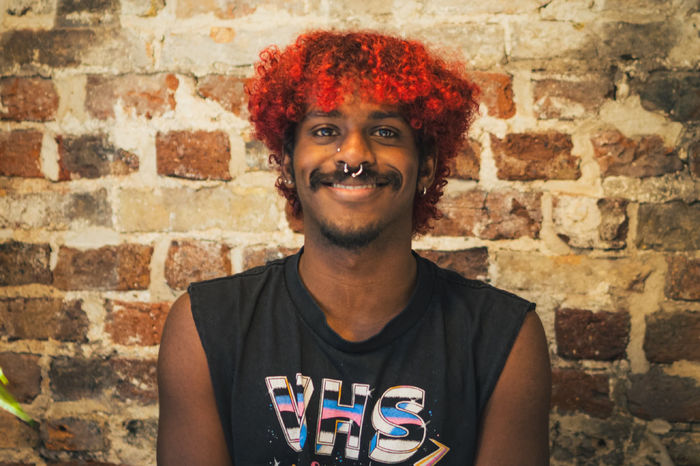
When I told friends I was meeting Cambridge local Guillotina for coffee later that afternoon, I received immediate nods of recognition. Currently, his name and his activism needs little introduction, and the disquieting story behind it is a large reason why.
One of the city’s most prominent Black drag performers has become something of a BNOC in recent times, and not by accident. Over the past few months, through a series of strikingly-produced Instagram videos, he’s built a social movement that has forced Cambridge to reckon with itself.
It started in November. Guillotina was out late with a friend in town when someone – potentially a university student – directed a racial slur at them. “I’m sat there shell-shocked,” he recalls. “Like, I just got called a slur – what?” A police investigation followed, then quickly fizzled out. But something else had already been set in motion.
He relayed his experience on social media through a series of well-produced, green screen videos. They quickly gained traction thanks to their punchy message and professional look. “I had all this [filming] equipment that I wanted to use for drag content originally,” he explains. The most-viewed video has been watched over 200,000 times.
“My existence as a black queer person felt overlooked and misunderstood”
What followed was an outpouring, mainly from local residents and students, of similar stories. “Even people outside of Cambridge were reaching out to me,” he mentions.
He’s quick, however, to define what the movement is not. “‘Cambridge is Chopped’ is not meant to demonise the University,” he clarifies. Instead, the aim is simpler and arguably more uncomfortable: to make people sit with the question of whether they’re willing to take action against injustice. “I’m definitely not the first person to try to make Cambridge better,” he tells me, “but I think I’m the only person doing it right now.”
The issues Guillotina identifies run deeper than this one incident. Even within Cambridge’s queer community, he describes feeling like an outsider. “My existence as a black queer person felt overlooked and misunderstood,” he tells me, in a space that feels “dominated by people who fit a particular image” of what an LGBT person is supposed to look like. “I felt the only way I could fit in with the queer community [here] was to gain a greater sense of masculinity,” he explains. He cut his hair, grew out his moustache and slowly let go of the androgynous look he embodied before.
“I haven’t spoken to my family in years”
He identifies another disconnect, one that feels particular to Cambridge. A surprising proportion of the queer community here, he observes, come from very supportive backgrounds. “Watching people bring their parents to drag shows and they’re like, ‘Woo, I’m so proud of you, honey!’ I was like – what the fuck?”
His own experience could not have been more different. He grew up near Camden – “definitely not anything glamorous,” – in circumstances where a nose piercing alone sparked a physical confrontation. “I was brought up in an abusive household and I haven’t spoken to my family in years,” he recalls. When he arrived in Cambridge with hopes of becoming a full-time performer, he anticipated an experience of building a found family through his work. “But I came here,” he continues, “and it’s almost like I was playing catch-up.”
When I ask about potentially returning to London, he explains that moving out of Cambridge would mean taking on another job – a constraint that has kept him rooted in a way that feels less than chosen. “The best way to describe it,” he says plainly, “is I’m stuck here.” It’s striking to hear that from an activist, but he considers that perhaps this tension is precisely what gives his movement its edge. His lived experience, he reflects, may have played a role in how it has been organised. “The way I’ve had to plan [Cambridge is Chopped] is how I had to plan to escape my household – which worked.” He pauses and considers. “Maybe it’s like I have this trauma response to plan my way out of a bad situation.”
“The students here are the future of Cambridge”
The movement itself is structured in phases. This is partly for rigour, and partly because, as he reminds me several times: “I’m only one person.” Stage 1, launched on 2 March, was focused on gathering first-hand accounts of discrimination across Cambridge. He describes three kinds of responses to his movement online: hate, sympathy, and solidarity. The latter, he says: “is currently what I’m looking for.” He adds, “the main thing is I want it to be anonymous”: a safeguard that aims to encourage more people to come forward.
He dismisses any attempt to pin a timeline on the movement’s progress. The change he’s after, he explains, shouldn’t be rushed, but it can be pressured. Social media, he says, is the mechanism to achieve that. “The change I’m looking for is structural. The way we get there is by using social media to publicise.” Guillotina is more than aware, too, of the way platforms can tip from mobilisation into chaos. He hopes that “it becomes a way for us to work together instead of attacking others.”
When I ask about what role he sees the university playing, he’s unambiguous: “The students here are the future of Cambridge”. He clarifies that whilst “the entire town is meant to participate in this movement,” he sees in young people a particular potential to help provide it with momentum, through social media and word of mouth.

He highlights that on 17 May, he plans to host an open forum event where he can “discuss with the community” his next steps surrounding the movement.
Guillotina is stuck in Cambridge, but from that place of constraint, he’s built something that has reached hundreds of thousands of people and counting. Cambridge, he’s telling us, is ‘chopped’: there are systematic issues in our city that desperately need addressing. The question now is if we’re all willing to do something about that.
 News / Simon Goldhill resigns following sexual misconduct investigation16 June 2026
 Comment / Exercise, academia, and the Cambridge addiction to both17 June 2026
 Theatre / A celebration of Queer Love in sacred spaces: Romeo and Juliet in Peterhouse Chapel16 June 2026
 Music / ‘Returning again and again’ to the Bateman room16 June 2026
 Lifestyle / Breaking no contact…hours15 June 2026
 Lifestyle / You can’t always get what you want 18 June 2026
 Theatre / ‘Mental illness doesn’t exist in a vacuum’ says Obsessive, Compulsive, Divine 18 June 2026
 News / Caius to begin antisemitism inquiry after Nazi symbol carved into bench18 June 2026
 Film & TV / Gen Z, FilmTok and the A24 problem17 June 2026
 Features / Are the Footlights getting dimmer?17 June 2026