A letter to the student writers of Cambridge
Millie Wooler reveals her top tips for writing the next great student play
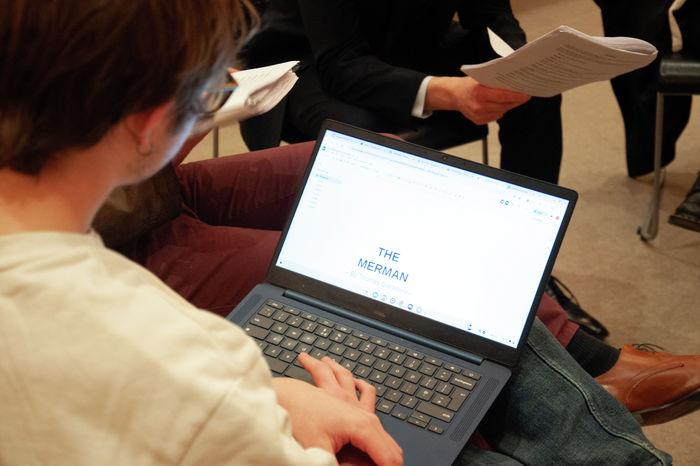
It’s pretty obvious that I’m a cranky, picky reviewer who is not afraid to say what she thinks about all that’s happening in CamDram. What gives her the right? I hear you ask. For the last two terms, I have taken a step back from the Theatre section at Varsity, in part to spread my wings over in Music, but also to be able to help edit some of my friends’ plays while also working on my own (ever-delayed) masterpiece.
Over these two terms, I’ve come to realise what really draws audiences into plays, and what compels them to go away, not leaving the glowing reviews that writers so desperately crave. This list is of course subjective – but it comes from a place of genuine experience and hard work.
1. Write what you know (within reason)
“Write what you know” is such a hackneyed phrase, so overused that it risks losing meaning entirely. No play is going to be your best work if you don’t care enough about its content. If the writer gets bored part way through the play, then there is no hope for the audience. What’s more, it’s vital that you really do know what you are writing about. Exploring unfamiliar belief-systems, communities, or perspectives can be incredibly rewarding, but can become problematic if you lean too heavily into stereotypes, or worse do not check that everything that you say is true and properly applied.
“If you are not comfortable saying something to someone’s face, do not write it into a play”
A note of caution: stages are very vulnerable spaces. Whether you are writing a one-man play for yourself to perform, or a larger-scale production for a more varied past, you have to remember that basing something on your own real experience will leave you exposed. If you are not comfortable saying something to someone’s face, do not write it into a play.
2. Remember your audience
I am terrible for using colloquialism in my writing. That local flavour can endear an audience to your voice more quickly than anything else. However, you also have to bear in mind how diverse the audience in Cambridge theatres are. On several occasions as an editor, I have found myself losing track of a play’s conversation because it has been peppered with, for example, London slang that never quite made it into the Yorkshire dialect.
This is no reason to neglect your personal idiolect – my characters will continue to call cash ‘brass’ and say ‘y’all reet? ’ for ‘hello’ – but just remember that sometimes the more obscure parts of a dialect may need a little bit of clarification in one way or another. But that’s just a prompt for more creativity.
3. Remember it is a play
This sounds like the most obvious piece of advice on the planet, until you actually take up your pen (I highly recommend a pen for the first drafts) and begin writing. Then you suddenly realise that you have enough plots and subplots to fill a novel. I remember back in my days of drama club being told never to include a scene that doesn’t advance the plot in some way; if your characters are just sitting and eating cornflakes, those cornflakes had better come back to bite them.
“Please, dear writers of Cambridge, get an editor. Even better, get several”
I am not saying that your play has to be straightforward (please, please put some complexity in there), but even a two-hour play cannot contain all the meandering of a Laurence Sterne novel. One or two plotlines are more than enough to entertain us – and it’s easier to remember to tie everything up, if there are fewer loose ends.
4. The Golden Rule
My absolute top, golden rule is more of a request for extra work. Please, dear writers of Cambridge, get an editor. Even better, get several. As an audience, it is so easy to tell which plays have been edited by multiple people, and which have never been read by anyone before casting.

Editors are an essential part of the process. We can find the loose ends, bounce new ideas off you and tell you where the play falls flat. The best editors will sit for multiple rounds of intense revision; not because your writing is terrible, but because it is great and they want that to shine through. Asking someone to edit your work can be a daunting task, but so is putting on a play. You will feel so much more confident having had those several extra pairs of eyes on it before offering it up to your cast.
Editors aren’t perfect; but they might just help you solve the other problems on this list, too.
 Comment / Top of the slops: the competitiveness of college dining4 June 2026
 Interviews / What’s the story behind Pages coffee house?8 June 2026
 News / News in Brief: Cambridge crowns, council confirmations, and competitive cricket8 June 2026
 Comment / The Cambridge drift1 June 2026
 News / Cambridge researchers produce ‘world-first’ AI vaccine6 June 2026
 Arts / Don’t rush me – I’m reading!9 June 2026
 Lifestyle / Don’t Cry at Me, Argentina – a next-year abroad story8 June 2026
- News / News in Brief: Cambridge crowns, council confirmations, and competitive cricket8 June 2026
 Science / Failure is the foundation of science8 June 2026
 Fashion / The hidden gems of formal fashion8 June 2026