Is the ‘voiage’ worth it?
Eve Nicholls talks to Voi users about the benefits and drawbacks of the vehicle

According to Cambridge City Council, there are 300 Voi scooters and 50 bikes lining the roads of Cambridge. On my walk between Bridge Street and King’s Parade, I think I might have seen them all.
Since their introduction in October 2020, these fluorescent two-wheelers have provoked excitement and curiosity among the city’s students and residents alike. Striking somewhere between neon orange and hot pink, they are certainly hard to miss. Abandoned scooters have altered the city’s geography, congregating at busy parking spots and being discarded clunkily in the middle of pavements. Given this spatial transformation, you would surely be forgiven for thinking that ‘Britain’s Cycle City’ may soon need a new name.
“You would surely be forgiven for thinking that ‘Britain’s Cycle City’ may soon need a new name”
The ubiquity of e-scooters in Cambridge is a relatively recent phenomenon. In 2020, the Department for Transport launched multiple e-scooter trials across the UK as part of a proclaimed effort to support green travel and supplement public transport services. James Bolton, Voi UK’s general manager, has previously said that the Cambridge scheme is one of the best used in the UK. He supported the expansion of the scheme’s geographical boundaries in 2025 and claimed to have “received regular requests from residents […] about boosting our fleet size and operating area”. In November, the Cambridge & Peterborough Combined Authority further recommended that the city’s contract with Voi be extended until May 2028, the latest in a string of extensions since the initiative began. The University of Cambridge Sustainability web page even guides students and staff towards the ‘Voi 4 Students’ discount, which offers a 20% reduction on the cost of rides or monthly passes.
The expansion, however, has come with complications. Despite the proliferation of Vois across the city, it is still technically illegal to ride a privately owned e-scooter on public land. During a three day city-wide crackdown in August, the Cambridgeshire Constabulary seized 94 e-bikes and e-scooters and has since continued to patrol and seize offending ’micro-mobiles’. Even Inspector Shawn Emms, from the Cambridge neighbourhood team, admitted that it was a “confusing picture”.
My own experience with Vois, a precarious, rushed journey to meet a friend finishing his final exam, was admittedly brief. I was therefore curious to hear from some regular Voi users to gain greater insight into the benefits and drawbacks of these vehicles. Armed with a hastily made DIY cardboard sign, I took to the streets of Cambridge, hoping to find these dedicated Voi users in their natural habitats.
Standing at the bottom of Castle Hill, I found a diverse group of ‘Voiagers’. My first interviewee, a second year at Clare, had been on two trips that very day. He emphasised their convenience as a mode of transport and explained that he used their bikes (never scooters) to travel between music rehearsals and to the station. Like many other commuters, he seemed resigned to the visual clutter that these vehicles brought to the city, conceding: “they are quite ugly, but oh well”.
“They are quite ugly, but oh well”
Necessity evidently drove these would-be pedestrians to the electric appeal of Voi cycles. One man, a postgrad at St Edmund’s, pointed to his booted, broken foot to explain his scooting habit and admitted that he “doesn’t spend a lot of time thinking about the visuals”.
My next batch of interviewees, however, expressed an astonishing degree of embarrassment about their respective Voi use. As one third year at Jesus put it: “It’s all about shame for me”. For these commuters, the aesthetic implications of being seen on a Voi (as well as the actual costs) had deterred them from regular use, and yet they kept coming back. One second year at Churchill admitted as much, reflecting that there was something he couldn’t quite resist about the image of a gowned silhouette scooting off into the night. In his opinion, nothing is “more freeing” than an evening Voi journey, when “you’ve got your gown on, and you’re going really fast, and it’s like flying behind you”.
I had, rather reductively, assumed that members of further-flung colleges would be the first to step on a Voi. As an alternative and efficient mode of transport, they can significantly reduce journey times, and a new parking station was recently installed outside Churchill. But for my final interviewee, a third year student at Homerton, the appeal of Vois was limited. He professed a retained affinity for the classic “power walk” up and down Hills Road, which allowed him to pause and reflect while getting his daily steps in, and insisted that slower journeys still had their merit.
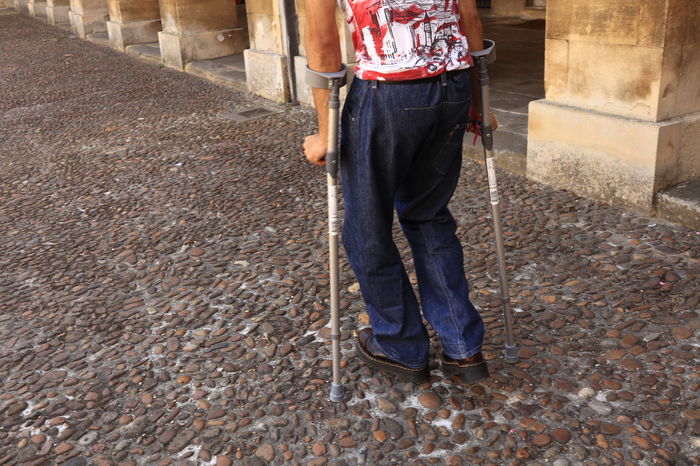
Vois still have a long way to go, therefore, before they take over the city’s commuting habits. Cobbled streets, changeable costs, and a certain degree of embarrassment all stand in their way. As a modernisation of the classic Cambridge cycle, however, it doesn’t look like they are going anywhere.
 Features / The language of optimisation and the architecture of merit30 May 2026
 News / Venue cancels Cambridge talk by right-wing commentator Matt Goodwin after backlash28 May 2026
 Comment / We must support our strikers29 May 2026
 Theatre / CUMT’s The Wind in the Willows brings a classic to life 31 May 2026
 Interviews / Cambridge MP Daniel Zeichner on political realism and the ‘politics of grievance’29 May 2026
 Fashion / From princesses to PAs, power dressing is nothing new31 May 2026
 Lifestyle / What kind of punter are you?31 May 2026
- Theatre / CUMT’s The Wind in the Willows brings a classic to life 31 May 2026
 Science / Wired and tired: the science of caffeine31 May 2026
 Interviews / ‘Thank you for the music’: ABBA Support Society on friendship and managing stress through fun 31 May 2026