‘Returning again and again’ to the Bateman room
Cerys Burch attends a recital by Cameron Fox honouring Nick Drake and his original performance
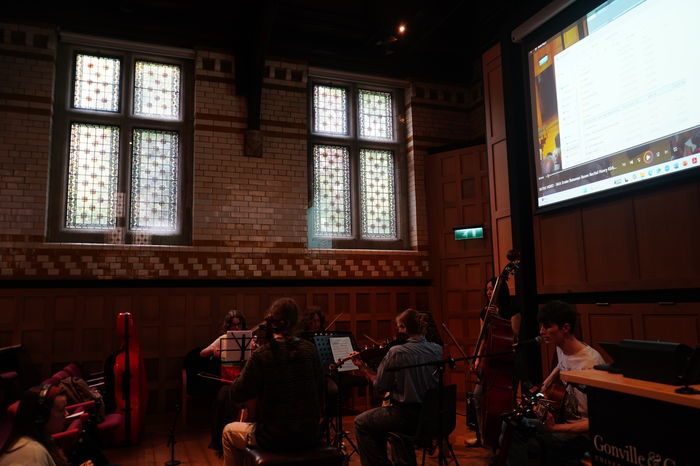
One evening in 1968, friends Nick Drake and Robert Kirby organised their first dedicated concert in Gonville & Caius. Now, over half a century later, Caius undergraduate, Cameron Fox, set out to recreate this recital. With the collaboration of Lucas Harley, who organised the classical arrangements, the two nights of performances gave new life to Nick Drake’s classics and were a joy to hear.
Despite the current popularity of Nick Drake’s music, with Fox’s recital expanding to two nights due to popular demand, there has been a surprising lack of focus on Drake’s legacy over the years. Nick Drake seemed to have a tricky relationship with Cambridge, studying English as a student at Fitzwilliam college but dropping out in 1969. Spending more time with his guitar than at supervisions, it seemed that his degree came second to Drake’s passion for music.
“I was impressed by the freshness and ease the performances conveyed”
Nevertheless, despite his disaffection, Cambridge appears to have left its mark on Drake. Drawing on his education, Drake’s song are infused with the contours of a literary mind, specifically inspired by Romantics like William Blake, said to be one of the only subjects that struck a chord with him at university. Alongside education, Fox notes that without Cambridge, Drake “wouldn’t have had the opportunities he had to perform with classical musicians and meet Robert and have that kind of style on his album.”
During the first recital, Robert Kirby’s son, Henry Kirby, performed a speech touching on the music his father made with Nick Drake, alongside Peter Rice, who was also at Cambridge at the same time as Drake. Rice recorded the original recital in the Bateman room in 1968, playing snippets of this recording to the audience. As Drake avoided live performances for most of his career, these clips were an uncommon privilege to hear. Rice noted that it is the only recorded Nick Drake performance that you will hear ending in applause.
It was at Cambridge where Drake began working on his first album, Five Leaves Left, a folk album with soft, poetic vocals which flow together beautifully with its acoustic instrumentals. Recreating the original Bateman recital, ‘The Thoughts Of Mary Jane’ and ‘Day Is Done’ from Five Leaves Left were performed alongside ‘The Time of No Reply’, ‘Magic’, and ‘My Love Left with the Rain’ which were never put on the album. I was impressed by the freshness and ease the performances conveyed, with the collaboration of young musicians offering something that felt unique and yet unmistakably familiar to Nick Drake’s work.
“These open tunings ‘allow him to sound like a piano’”
One key component to the accuracy of this performance was the care taken by Lucas Harley to transcribe Kirby’s classical arrangements for the string quartet, double bass, and flute. These transcriptions took around two weeks to finish, alongside the creation of Lucas’ own arrangement for ‘My Love Left With the Rain’, which, unlike the other songs, had no complete recording to support him. This attention to detail and focus on “negative space” allowed the recital to have a sound that felt especially faithful to Drake’s work and made the recital even more wonderful to witness.
Attentiveness and care marked the performance, with Cameron using two guitars to access the range of tunings needed for Drake’s songs. Though he may have “snapped at least five high E strings over the past couple of weeks” rehearsing, Cameron explains that despite the frustration, “you can’t play his songs without these tunings.” These open tunings “allow him to sound like a piano,” says Cameron, as “you can have the bass notes, the higher melody, the chords – but only the open tunings will allow you to have the complete picture.” It seems, then, that Nick Drake’s unique tunings allows for “a more expansive sound, such as with ‘Place to Be’, where it seems like he’s playing more notes than he is at a time.”
“While we will never have Drake back, we can continue playing, sharing, and loving his music”
When asked why Nick Drake should be honoured today, Cameron replies: “he was an absolutely incredible songwriter, and an incredible musician whose music resonates with people now and will continue to do so.” In performing the two recitals in honour of Nick Drake, Cameron and all the musicians supporting him worked to keep his creative legacy alive. This is not the only event celebrating Drake’s music, with an annual Nick Drake gathering taking place in his hometown of Tanworth-In-Arden, bringing together fans to celebrate his life and perform his songs.
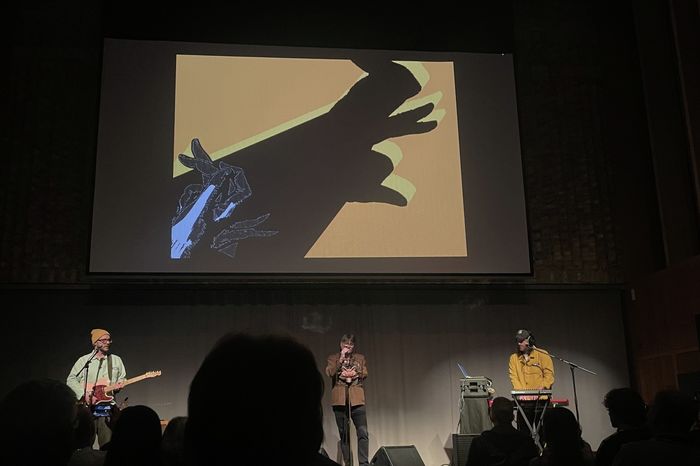
Unfortunately, Nick Drake died at the age of just 26, after struggling with his mental health near the end of his life. Ticket sales for the recital contributed to a fundraiser for Mind Charity, an organisation Drake’s family have previously raised money for. While we will never have Drake back, we can continue playing, sharing, and loving his music. In the words of Cameron, “I think Nick Drake could still be alive today and we’d still look back on his albums in awe of how good they are. His music speaks for itself.”
 Sport / The imperfect privilege of Cambridge sport12 June 2026
 News / News in Brief: prizes, planning proposals, and pottery14 June 2026
 Lifestyle / Blind Date: ‘It was like the romantic version of a Saw trap’14 June 2026
 Comment / Top of the slops: the competitiveness of college dining4 June 2026
 Lifestyle / Confessions of a May Ball crasher12 June 2026
 Theatre / A celebration of Queer Love in sacred spaces: Romeo and Juliet in Peterhouse Chapel16 June 2026
 Music / ‘Returning again and again’ to the Bateman room16 June 2026
 News / Simon Goldhill resigns following sexual misconduct investigation16 June 2026
 Lifestyle / Breaking no contact…hours15 June 2026
 Comment / My favourite dance floor is the one with my friends on it15 June 2026