Identity and belonging in Crossing Points
Nikita Vajrala sits down with the winner of the CUADC’s first-ever writing competition, Yusuf Adia, on his upcoming play Crossing Points
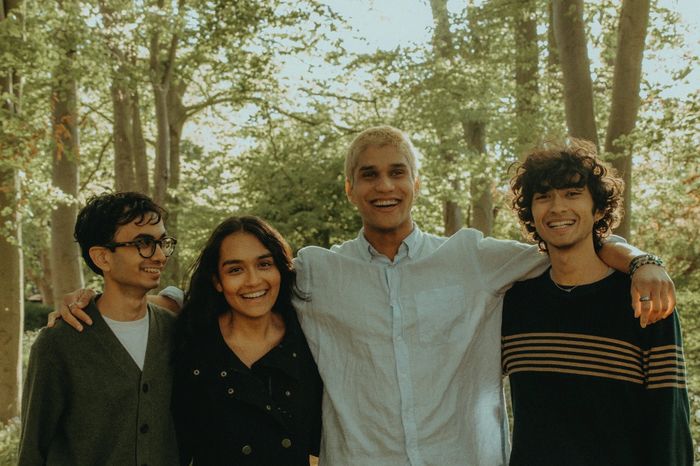
Crossing Points explores South Asian immigrant narratives of belonging and selfhood through a collection of monologues that speak to four different lives; four distinct yet connected journeys. Yusuf Adia’s protagonists grapple with their liminal identities ensconced between their ancestral heritage and the British society they have assimilated into, the monologues capture the revelatory turning points of Ismail, Layla, Safwan, and Yasser’s lives as they arrive at a crossroads.
The winner of the ADC’s first ever writing competition, Yusuf Adia, is a final-year medical student at St John’s. Yusuf’s inspiration derives from a mosaic of stories he heard from his parents and grandparents, drawing on “what life was like growing up when they were young”, and the communal animosity that they endured. The characters that comprise Crossing Points were formed through Yusuf’s involvement in writing nights, such as Smörgåsbord, A Cauldron of BATS and HATCH, entering each of the monologues individually before consolidating them into a single play.
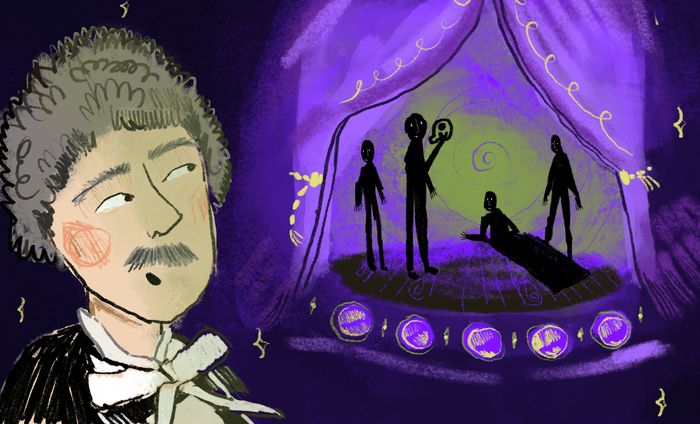
After watching Constellation Street, by Matthew Bulgo, in the Corpus Playroom, Yusuf realised the potential of the monologue form. Drawing upon the entangled lives of Bulgo’s protagonists searching for meaning, he translated this into an expression of “the South Asian experience in the UK”. If you’ve ever seen stagings of Hamlet’s soliloquies, you would know that the trademark of this intimate monologue form is its interaction with the unseen observer. Monologues compel us to interact with the play’s characters in a deeply personal, implicated way – a profound rupture of the boundaries between the character and the audience as we step into their consciousness.
The play symbolises “a set of stories that puts ‘the people’ at the heart of the stage”
The four protagonists that encompass Yusuf’s play are as disparate and idiosyncratic as the immigrant experience in Britain: there is no single journey but rather the play symbolises “a set of stories that puts ‘the people’ at the heart of the stage” and echoes the stories Yusuf heard in the past. I was curious to hear how the rise of racist anti-migrant rhetoric impacted and shaped Crossing Points. Yusuf responded that he chose to centre the play on the characters “to reclaim some of the humanity that the dehumanising language of politics strips away”. Yusuf’s fixation on the individual is evoked by the monologue form of the play, this revocation of passive spectatorship necessitates introspection and self-scrutiny, an element of engagement that will undeniably be emphasised by the intimate space of the Corpus Playroom.
While talking with Yusuf, one of the most striking characters to me was Ismail, an individual who realises “I’m obviously other” and responds to this awareness by “stripping away the richness of his cultural heritage to fully assimilate, a hollow goal”. Likewise, after Yusuf’s description of the emotional climax of the play, a monologic “crystallisation on that big question: who am I?” it is clear how the question of the self is at the forefront of Crossing Points. The play revolves on the fluidity of life’s trajectory, the self is not an identity bound into fixity but in constant flux; as such, Yusuf’s characters are derived from all stages of life to communicate the universality of this single, looming question.
“I feel like there’s a lot lost in that translation, there’s a tragedy to it, you’re in this sort of half-way house”
What sparked Yusuf’s entrance into Cambridge’s world of theatre was writing for Addenbrooke’s Charity Pantomime in the summer after his fourth year of Medicine. Having previously only written articles, Yusuf found that the novelty in “the wordplay of it all” drew him into the world of playwriting. He felt that the accessible commitment level facilitated a mindset of experimentation: “let’s see how it goes”. One of his articles for the Cambridge Language Collective underscores the experience of losing one’s ancestral language. This is a central theme in one of the monologues that draws upon this loss of one’s linguistic identity: “I feel like there’s a lot lost in that translation, there’s a tragedy to it, you’re in this sort of half-way house”. The gravity of this statement is captured in a moment of realisation for one of Yusuf’s characters where he stumbles upon a letter in Gujarati and realises that he is the only remaining member of his family that can understand the language. Yusuf admits ‘I don’t even know how big the tragedy is’ as we discussed how our shared experience of growing up not knowing our mother tongues impacted us. However, there is always the opportunity for reconnection and a rediscovery of one’s linguistic roots – languages can be learned and new identities can be forged.
When asked whether he had any advice to aspiring playwrights, Yusuf replied with the age-old adage: “write as much as you can, the more you write, the better you get” and stressed the importance of “get [ting] your work out there”. After all, Crossing Points would never have reached the stage of Corpus playroom without Yusuf’s own venture to “submit it and see what happens”.
Crossing Points will be playing at the Corpus Playroom from the 12th - 16th May (7pm)
 Comment / Top of the slops: the competitiveness of college dining4 June 2026
 Interviews / What’s the story behind Pages coffee house?8 June 2026
 News / News in Brief: Cambridge crowns, council confirmations, and competitive cricket8 June 2026
 Comment / The Cambridge drift1 June 2026
 News / Cambridge researchers produce ‘world-first’ AI vaccine6 June 2026
 Arts / Don’t rush me – I’m reading!9 June 2026
 Lifestyle / Don’t Cry at Me, Argentina – a next-year abroad story8 June 2026
- News / News in Brief: Cambridge crowns, council confirmations, and competitive cricket8 June 2026
 Science / Failure is the foundation of science8 June 2026
 Fashion / The hidden gems of formal fashion8 June 2026