
Commercial Feature
What Interior Designers Know About Study Spaces (That Explains Why You Can’t Focus)
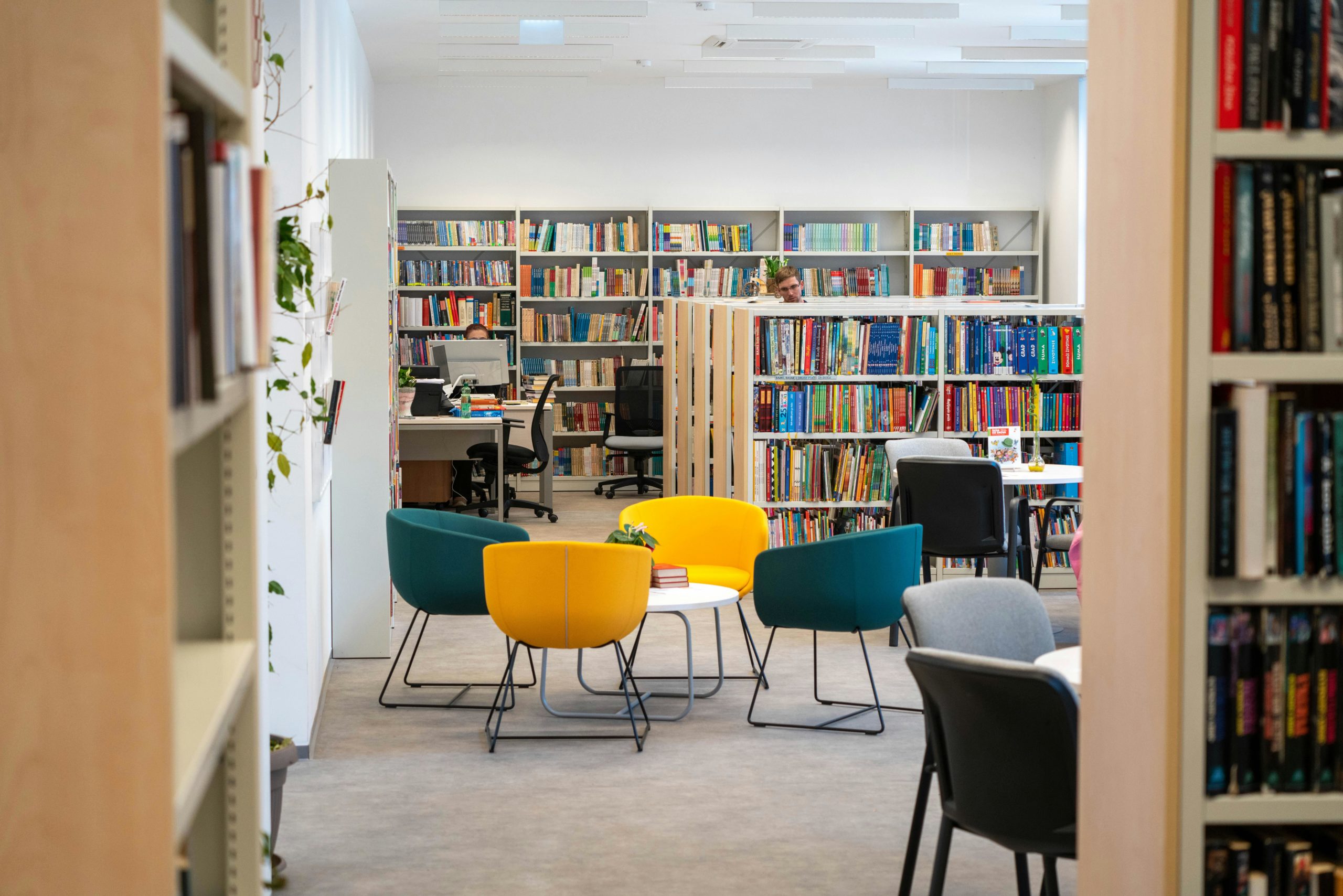
University libraries have long been places of quiet crisis management, frantic revision sessions, last-minute essay writing, and the low hum of collective anxiety. However, an increasing number of institutions are now seriously reconsidering how to design spaces where students are expected to concentrate for hours on end. The conversation is no longer just about square footage or adequate Wi-Fi. It is, increasingly, about furniture.
The shift is driven partly by research into ergonomics and cognitive performance, and partly by a broader cultural change in how universities compete for students. Wellness is a key consideration in many contexts these days, and renowned furniture brands like Mattiazzi, Giorgetti, and Poltrona Frau are increasingly being considered in settings beyond the domestic living room, thanks to their focus on postural well-being. When a student spends six hours at a desk, the chair they sit on is not a neutral factor.
Desks that adapt to anyone
Posturally speaking, desks are where most of the damage is done. A fixed-height surface that ignores the user’s build, combined with a monitor positioned too low or too far, creates the kind of sustained muscular strain that accumulates invisibly across a three-hour session.
Fantoni’s Framework 2.0 collection includes a series of modular worktops, lockers, containers, bookcases, and desks that allow to create workstations to suit any space. Furthermore, the desks are equipped with an electric mechanism that adjusts the height of the worktop to suit any needs. Meanwhile, Archiutti Hadis Desk takes a lighter approach: its contemporary shapes and white surface keep the visual field clean, creating a bright, relaxing atmosphere.
Another valid alternative for modern university libraries is the Kristalia Sushi Workstation. This modular desk is designed for cable routing and available with an opal methacrylate privacy screen that manages the tension between openness and focus that shared study rooms rarely resolve well.
Aesthetic seating improves study experience
While the ergonomic chair market has expanded dramatically in the last decade, design quality has not always kept pace with functionality. However, chairs like the Luxy Meraviglia are designed with dynamic lumbar support and, thanks to their versatility, fit well in both modern, youthful spaces and more classic environments.
The Arper Duna 02 takes a different approach: its light and enveloping shapes make shared spaces feel less oppressive.
Students who are physically uncomfortable tend to leave earlier rather than push through, which is something the design of a chair can quietly influence in either direction.
The lamp changes everything quietly
Lighting in study rooms is frequently treated as infrastructure rather than design. The result is uniform overhead fluorescent lighting that flattens the space and contributes to eye fatigue during long study sessions. Table lamps are an effective solution to these problems.
The Porada Ekero Move Lamp is a wireless lamp with an elegant and sophisticated design. It is equipped with an LED light whose brightness can be adjusted according to any preferences and needs of the surrounding environment.
Inspired by the classic abat-jour model, the Fontana Arte Equatore table lamp differs in that its light source comes from a metal band positioned on the external lampshade.
Both lamps offer two approaches to task lighting, providing illumination at individual workstations without overwhelming shared spaces.
Different studying needs different furniture
It is reasonable to argue that not all studying is the same. Reading a novel for a literature seminar, for example, is not the same cognitive act as working through a problem set, and furniture suited to one activity is not necessarily suited to the other.
For this reason, it might be useful to add seating such as the Arketipo Belair Armchair and the Arflex Marenco Armchair to study rooms. Both have long been associated with a particular kind of bodily comfort that allows for prolonged concentration.
The case for considering the design of study spaces is not immediately obvious to university committees. Student retention data, well-being outcome research, and the increasingly competitive landscape of higher education are all concepts that can be more easily translated into institutional language. The more challenging question is not whether better-designed study spaces improve student performance. Most experts in this field believe they do. The harder question is who decides whether it is worth paying for.
 Interviews / How sustainable is your college? CLOC on their college ranking system24 May 2026
 News / Cambridge researchers warn of ‘underestimated brilliance’ if AI grades essays26 May 2026
 Lifestyle / Blind Date: ‘I should’ve changed my socks’24 May 2026
 Comment / The no man’s land between triposes25 May 2026
 News / News in Brief: ducks, dinosaurs, and drama series25 May 2026
 Theatre / A letter to the student writers of Cambridge 27 May 2026
 Film & TV / The Saab’s long road to Hollywood27 May 2026
- News / Cambridge researchers warn of ‘underestimated brilliance’ if AI grades essays26 May 2026
 Music / Soundtrack your life26 May 2026
 Arts / Does Cambridge lack spaces for creative freedom? 26 May 2026
