Where science and international collaboration collide
Bibi Boyce speaks to Dr Sarah Williams about her work at CERN, the largest particle physics laboratory in the world
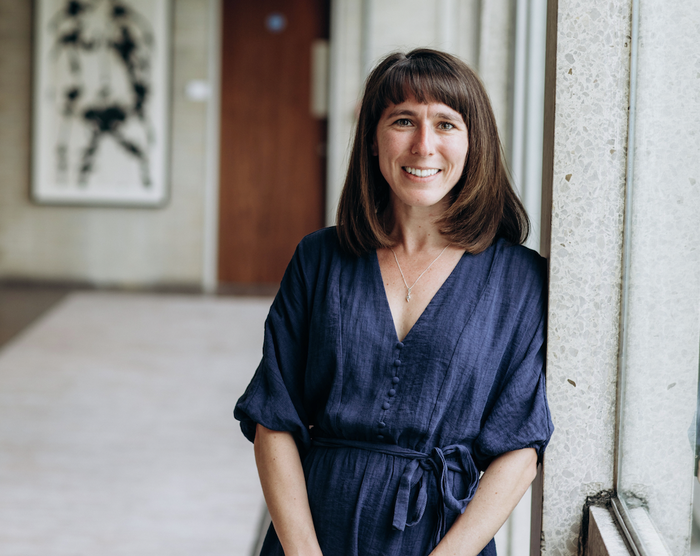
Not everyone can say that their supervisor once had to reschedule because they were “making a short trip to CERN,” but I can. Dr Sarah Williams, Assistant Professor of High Energy Physics at the Cavendish Laboratory and my first-year physics supervisor, has been a member of the ATLAS collaboration at CERN since 2010.
What happens at CERN?
As a particle physicist, what we want to be able to do is understand what the universe is made of on the smallest possible scale and how those particles interact with each other. Over its history CERN has housed increasingly large particle accelerators, up to the Large Hadron Collider (LHC) which is a 27-kilometre ring colliding protons very close to the speed of light. These collisions happen 40 million times a second, and that’s not just single protons, that’s bunches of protons, passing bunches of protons – it’s very messy. When the protons interact, we get new particles produced, and our detector is basically a giant cylindrical onion combining lots of different subsystems that tries to measure the momentum and energy of all the particles produced in that collision. Event by event, we can try to reconstruct what particles we think might have been produced, and then compare those data sets to our predictions to see whether they match the theory, or could be something new.
“These collisions happen 40 million times a second – it’s very messy”
What questions are you trying to answer?
Lots of questions about why the laws of physics behave the way they do, but in terms of big questions about the universe that we hope to answer with our experiments: we’re thinking about what dark matter is made of – that’s something we know exists in the universe, but we don’t have a candidate for what it’s made of in our current model; we think that matter and antimatter should have been made in roughly equal amounts in the Big Bang, so we want to know why there’s more matter than antimatter in the universe; we want to understand if the Higgs boson we discovered at the LHC has the properties that are predicted in the Standard Model, or if it could actually be a portal to something new.
What does an average visit entail?
Lots of coffee. You spend a lot of time in meetings discussing with collaborators: the progress of projects, what needs to be done next. The good thing about being there in person is you can sometimes sit down and actually work through a problem or some code together. The thing I really like about being there is being able to actually see face-to-face the people that I often spend a lot of time with in Zoom meetings!
“I would say the defining point where I decided I wanted to enter particle physics was when I got to be a summer student at CERN”
Have you always aimed for a career in particle physics?
When I was 16, I wanted to become a politician, but I was steered towards science at A-level due to my terrible essay writing skills. I then came to Cambridge and studied Natural Sciences, where I did eventually specialise in physics (though, again, I was slightly on the fence for a while between physics and chemistry, but eventually chose physics due to my terrible chemistry lab skills). I would say the defining point where I decided I wanted to enter particle physics was when I got to be a summer student at CERN at the end of my third year (and I’d encourage every third year undergraduate to apply!). I was inspired by the international community; meeting and working with people from all around the world trying to answer the same questions.
“You get to answer very cool questions, work in these tremendous experiments, and meet a lot of really inspiring people along the way”
What advice would you give to someone hoping to pursue a similar career?
I would certainly say go for it. I think now is a really exciting time to be considering going into particle physics. I would encourage anyone thinking about particle physics, but wondering whether it’s for them to actually go and visit CERN and get a feel for it yourself, or speak to people you might know in the field. When I was growing up, I had a slightly traditional and stereotypical view of what a scientist was. But the thing I really like about my role as a particle physicist is that it’s so varied. I do spend a lot of time analysing experimental data, but you get to answer very cool questions, work in these tremendous experiments, and meet a lot of really inspiring people along the way.
How has the landscape changed over the last 15 years?
It’s changed a lot, and partly because we now understand things a lot more, but certainly also because the expectations about what the future looks like have shifted. We’ve been running the LHC for over 15 years and we’ve discovered the Higgs, but we’re yet to find any other signs of new physics. We know that the Standard Model can’t be a complete Theory of Everything, but what it’s really telling us is we’re going to have to work a lot harder in order to uncover signs of something new. The other thing we need to be honest about is that the international landscape is now very different to what it was 15 years ago, which brings challenges when planning future experiments beyond the LHC. It means that we have to be more open and communicative with the outside world about what values our science has beyond just answering the ‘big’ questions, including technology development, training talented researchers, and (hopefully) inspiring the next generation of scientists.
 News / C4P vandalises University offices over divestment10 June 2026
 Comment / Top of the slops: the competitiveness of college dining4 June 2026
 Comment / ‘On the Poverty of Student Life’: sixty years on10 June 2026
 Interviews / What’s the story behind Pages coffee house?8 June 2026
 News / News in Brief: Cambridge crowns, council confirmations, and competitive cricket8 June 2026
 Lifestyle / Confessions of a May Ball crasher12 June 2026
 Lifestyle / May Week horoscopes12 June 2026
 Lifestyle / The finalist’s bucket list12 June 2026
 Theatre / All of Cambridge is a stage12 June 2026
 Music / ‘It’s feminine intuition’: predictions for OR312 June 2026