Sons of imprisoned Saudi scholars urge Cambridge to call off deal with Saudi defence ministry
University leadership is facing calls to scrap plans to provide training courses for Saudi defence ministry staff

The sons of two scholars facing the death penalty in Saudi Arabia have appealed to the University of Cambridge to drop proposals to run staff training courses for Saudi Arabia’s ministry of defence.
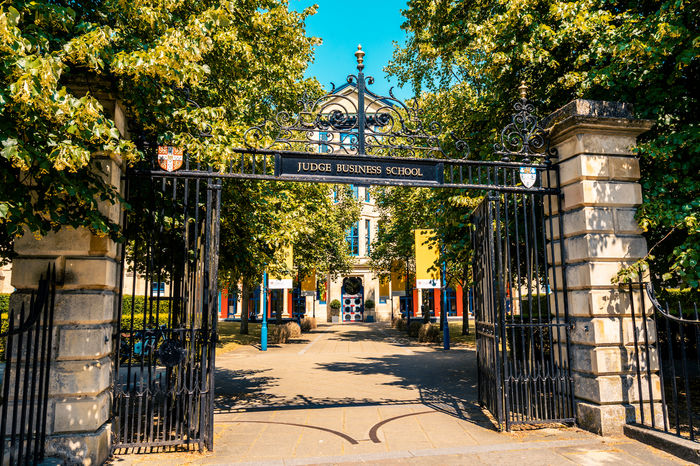
Last week, it was reported that the Judge Business School (JBS) had been authorised to offer “leadership development” and “innovation management” training for Saudi defence ministry staff, despite opposition within the University over Saudi Arabia’s human rights record and restrictions on academic freedom.
Abobaker Almalki and Abdullah al-Odah – whose fathers have been prosecuted for almost a decade by Saudi courts – have called on the University’s chancellor, Lord Chris Smith, and vice-chancellor, Professor Deborah Prentice, to halt any deal with the Saudi defence ministry.
The joint letter from Almalki and al-Odah says: “We feel compelled to reach out as families who have spent years watching our loved ones suffer for exercising the very freedoms that the university stands to protect.”
The letter claims that a “prestigious partnership like this risks legitimising [the Saudi crown prince] Mohammed bin Salman’s false narrative of reform, despite evidence of continued human rights abuses. The Saudi authorities executed at least 356 people last year, the most in the kingdom’s modern history.”
Saudi Arabia’s public prosecutor allegedly called for the death penalty for the Islamic scholars and authors Hassan Farhan al-Maliki and Salman al-Odah on a “range of vaguely formulated charges,” according to international human rights organisations.
Al-Maliki, a religious reformer and commentator, has been imprisoned since 2017 on multiple charges, including holding interviews with foreign media and possessing banned books.
In 2017, al-Odah was also arrested due to his social media posts, and accused of “mocking the government’s achievements,” among other charges, before Saudi’s secretive specialised criminal court.
Jeed Basyouni, from the human rights organisation Reprieve, said: “Universities pride themselves on being the home of free thought and academic debate. Even in the face of external pressure, freedom of speech is meant to be upheld as a foundational principle of higher education.
“Hassan and Salman risk execution because they dared to express themselves, as scholars and public figures. A deal like this makes a mockery of the values that institutors like Cambridge claim to represent, and risks further legitimising Mohammed bin Salman’s draconian regime.”
Cambridge’s committee on benefactions and external and legal affairs, which is responsible for scrutinising funding and research proposals for reputational risk, approved a request by JBS earlier this year to seek a “memorandum of understanding” (MoU) with the Saudi ministry of defence to develop executive education courses.
When approached by The Guardian, the University declined to comment on the letter, and referred to a previous statement by JBS, which said: “Cambridge Judge business school has not signed such an MoU with the Saudi Arabia defence ministry.”
Documents seen by Varsity show that JBS officials sought and received permission from the benefactions committee “to enter into a memorandum of understanding” with the Saudi defence ministry at a meeting in January. Vice-chancellor Prentice is chair of the committee.
Senior academics at the University said they were “horrified” by the proposal, while Jemimah Steinfeld, the chief executive of Index on Censorship, described it as “repugnant”.
Steinfield said: “Even if an agreement is fleshed out to state academic freedom would be protected, self-censorship has a terrible habit of creeping in when money is on the line”.
The letter from the sons of the imprisoned scholars added: “In our view, the only meaningful safeguard is to insist that Saudi Arabia end its repression of freedom of expression and release those who are being prosecuted for nothing more than their beliefs, as a pre-condition for engagement.”
The University of Cambridge was contacted for comment.
 Comment / Top of the slops: the competitiveness of college dining4 June 2026
 Interviews / What’s the story behind Pages coffee house?8 June 2026
 News / News in Brief: Cambridge crowns, council confirmations, and competitive cricket8 June 2026
 Comment / The Cambridge drift1 June 2026
 News / Cambridge researchers produce ‘world-first’ AI vaccine6 June 2026
 Arts / Don’t rush me – I’m reading!9 June 2026
 Lifestyle / Don’t Cry at Me, Argentina – a next-year abroad story8 June 2026
- News / News in Brief: Cambridge crowns, council confirmations, and competitive cricket8 June 2026
 Science / Failure is the foundation of science8 June 2026
 Fashion / The hidden gems of formal fashion8 June 2026