Is the sex of an embryo entirely up to chance?
Ellie Davies explores the science of sex determination, and whether it’s as random as we think
Everyone knows – and is often fascinated by – the moment of fertilisation: when a sperm meets an egg and, in an instant, a new life begins. For many expectant parents, the suspense of whether their baby will be a boy or girl is part of the excitement. In recent years, social-media-fuelled gender reveals have only amplified this fascination. But what if this supposedly unpredictable event isn’t as random as we think? What if sex isn’t entirely left to chance?
In humans, sex determination is usually described as a random process. The egg always carries an X chromosome, while sperm either carry an X or Y. When fertilisation occurs, the resulting embryo is therefore either XX (female) or XY (male), depending on which sperm reaches the egg first. Yet, as with many biological rules, there are exceptions.
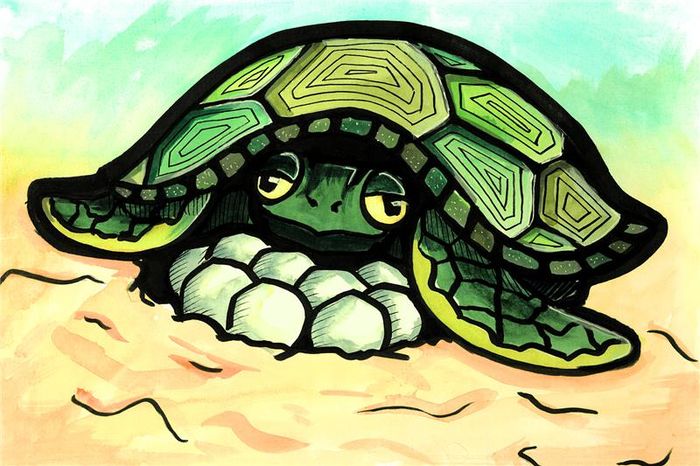
In many species of turtles, for example, sex is not determined at fertilisation at all. Instead, it depends on the temperature of the sand in which the eggs are laid. Typically, warmer sand produces females, while cooler sand produces males. With global temperatures rising due to climate change, scientists initially feared that turtle populations could become overwhelmingly female, threatening future reproduction.
“Wolbachia can kill male embryos or even convert genetic males into females, resulting in populations that are almost entirely female”
Surprisingly, this hasn’t happened. In many populations, sex ratios remain close to 50:50. One explanation lies in the behaviour of the mothers themselves. Female turtles appear able to choose nesting sites with subtly different temperatures, laying eggs in warmer or cooler sand in ways that help balance the sex ratio of their offspring – crucial for the survival of the species.
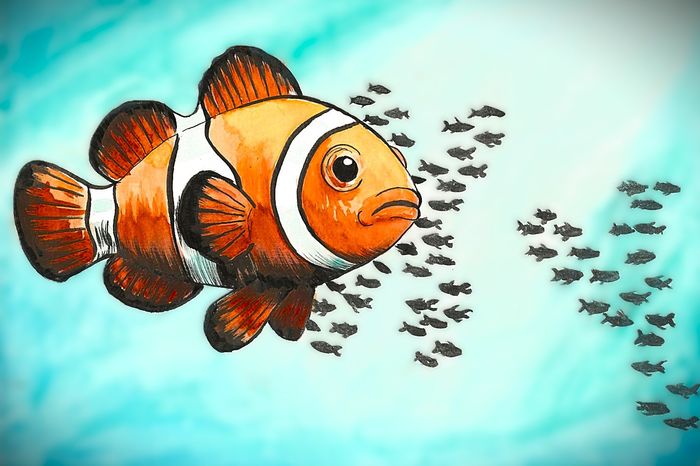
Turtles aren’t the only organisms capable of manipulating sex ratios. Some microbes – such as the bacterium Wolbachia – exploit the system to their own advantage. Upon infection of an insect, the bacteria can dramatically distort its sex ratio. Because the bacteria are transmitted through eggs, producing more females increases their chances of spreading, and thus, survival. To achieve this, Wolbachia can kill male embryos or even convert genetic males into females, resulting in populations that are almost entirely female.
“A ‘selfish gene’ might be biasing the sex ratio”
Biological quirks like these raise an intriguing question: could something similar ever happen in humans? A recent study published in Nature examined the genealogy of a family in Utah that produced roughly twice as many boys as girls across seven generations. Such a persistent imbalance is unusual and has prompted scientists to investigate whether a so-called “selfish gene” might be biasing the sex ratio in this family. Given the range of sex-distorting mechanisms seen across the animal kingdom, the idea is not entirely far-fetched.
Meanwhile, modern reproductive technologies may also begin to blur the line between chance and choice. In vitro fertilisation (IVF) has transformed fertility treatment, allowing many couples to conceive who otherwise could not. However, it also creates opportunities for subtle biases in how embryos are selected, perhaps skewing the natural balance of the sexes.
“Modern reproductive technologies may also begin to blur the line between chance and choice”
Pre-implantation genetic testing is commonly used during IVF to screen embryos for serious genetic disorders before implantation. In the UK, identifying the sex of an embryo is only permitted when there is a risk of a serious sex-linked disease. This restriction exists for good reason: if sex selection were widely available, it could lead to strong social preferences that distort the natural balance between males and females.
However, not all countries enforce such restrictions. Some prospective parents travel abroad for embryo testing, raising difficult questions about where the boundary between medicine and personal choice should lie.
The idea of ‘designer babies’ is often raised in these discussions. If we can choose one characteristic – such as sex – what would prevent us from selecting others in the future? At what point does reproduction shift from a biological process to a form of biological customisation?
For now, nature still holds the upper hand. Despite turtles carefully choosing their nesting sites, bacteria manipulating insect reproduction, and unusual families producing skewed sex ratios, the sex of most human babies remains largely unpredictable. And perhaps that element of uncertainty – the surprise of who a new life will become – is part of what makes it so remarkable.
 Comment / Top of the slops: the competitiveness of college dining4 June 2026
 Interviews / What’s the story behind Pages coffee house?8 June 2026
 News / News in Brief: Cambridge crowns, council confirmations, and competitive cricket8 June 2026
 Comment / The Cambridge drift1 June 2026
 News / Cambridge researchers produce ‘world-first’ AI vaccine6 June 2026
 Arts / Don’t rush me – I’m reading!9 June 2026
 Lifestyle / Don’t Cry at Me, Argentina – a next-year abroad story8 June 2026
- News / News in Brief: Cambridge crowns, council confirmations, and competitive cricket8 June 2026
 Science / Failure is the foundation of science8 June 2026
 Fashion / The hidden gems of formal fashion8 June 2026