From prog to pastiche
Jemima Peterson takes you through five concept albums you’ll likely not have heard and of and likely never forget
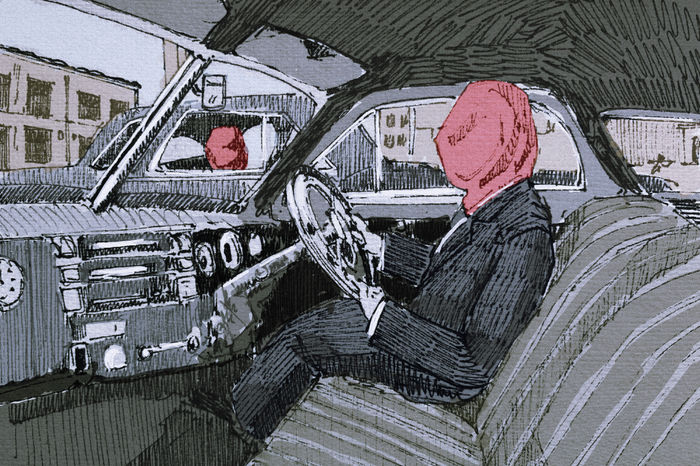
There’s a certain arrogance necessary for the impetus to make a concept album; I like that in a musician. This arrogance might be a symptom of an unexpected wave of success or simply of an overinflated ego: no matter where it comes from, it leads to ambitious music. As the adage goes, limitation breeds creativity, and writing songs to fit into an overarching narrative tends to lead either to extravagant success or extravagant failure – think Lou Reed and Metallica’s infamous Lulu, in which your ears can be blessed by James Hetfield’s repeatedly declaring “I am the table!”
Regardless of coup or calamity, the concept album guarantees an interesting listen (although for the failures, perhaps not a relisten); rest assured, I’ve kept the following list to the successes. It would be easy for me to wax lyrical about Pink Floyd’s The Wall or Nine Inch Nails’ The Downward Spiral et al, but to avoid treading over well-worn ground, I’ve decided to focus on some of my perhaps lesser-known favourites.
Outside – David Bowie
Yes, I’m aware that starting with Bowie is an unconventional way to begin an “albums that you might not have heard of” list. Even so, I do believe that his output in the nineties is underappreciated, foremost, this Twin Peaks-inspired composition.
Focusing on the investigation of the fictional detective Nathan Adler into the murder of a teenager, Bowie combines relatively straightforward singles ‘The Hearts Filthy Lesson’, ‘Strangers When We Meet’ and ‘Hallo Spaceboy’ with spoken word “segues” wryly performed from the perspective of characters in the tale. This all occurs amidst a patchwork of influences, with Bowie’s melodic sensibility balancing the chaos of industrial music, jazz and occasional hints of trip-hop.
“For an album so focused on looking back, it is undeniably progressive”
Ys – Joanna Newsom
If a marker of a successful concept is immersion, then the sense you get of being transported to the legendary city of Ys itself when listening to this album will not disappoint. Musically, it abounds with yearning for a fantastical golden age, the orchestral arrangements guided by Newsom’s harp and idiosyncratic voice.
While the setting is golden, the subject certainly problematises this: her lyrics transpose catastrophe onto charm, dramatising events from her own life among an allegorical landscape. For an album so focused on looking back, it is undeniably progressive – I have the impulse to describe the songs not as songs but rather as sprawling suites, or fables put to music; it’s captivating.
Everywhere at the End of Time – The Caretaker
This entry is a little like cheating, as it refers not to one album but a series of six – bear with me, though. Intended to reflect a patient’s experience of dementia, the albums were released at six-month intervals to mirror the real-time progression of the disease. What begins as extracts from 1920s big band music, even accompanied by the crackle of the gramophone, deteriorates into fragments and traces; these further deteriorate into ambient noise near the end of the series.
It’s a moving listen, and it moves me in a manner quite distinct from the career-defining ballad or the agonisingly honest lyric. One simply can’t sit down and listen to nearly seven hours of music (at least, I can’t): it will inevitably blend into the background as you go about your day, yet every so often it will break through the haze of ambience and surprise you with its poignancy.
“Grandiose yet tender, the instrumental tracks propel the narrative forward”
Nude – Camel
Considering that the heyday of the concept album coincided with the heyday of seventies progressive rock, it would be remiss if I didn’t include some classic prog representation. A little less well-known than Yes, Van der Graaf Generator and the like, Camel is a band led by warmth and melody, fronted more by Andy Latimer’s gorgeous guitar playing than his understated vocals.
This later effort of theirs is based on the tale of Hiroo Onoda, a Japanese soldier who remained on an island conducting guerrilla warfare for twenty-eight years after the end of the Second World War, refusing to believe reports of the fact. Grandiose yet tender, the instrumental tracks propel the narrative forward just as artfully as or even more so than those with lyrics.
Frances the Mute – The Mars Volta
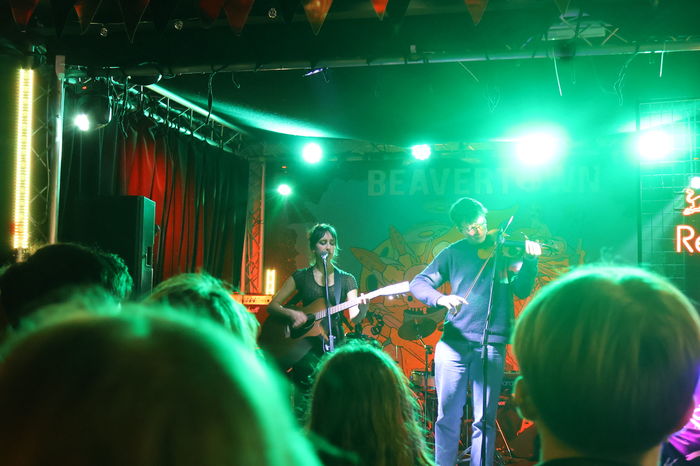
It amuses me to follow the serenity of Nude with the frenetic mayhem of The Mars Volta’s Frances the Mute to close the list. Having made a name for themselves with the energy and eccentrically obscure lyrics of their debut, Deloused in the Comatorium, Omar Rodríguez-López and Cedric Bixler-Zavala decided to venture further into the extraordinary and the bizarre with their second album. Ostensibly following a man named Vismund Cygnus as he delves into his own past, the mode of narration shifts effortlessly song-to-song, from the relentless dirge of ‘The Widow’ to the Latin influence on ‘L’Via L’Viaquez’. Frances the Mute baffled me on first listen – I still don’t think I’ve fully come to grips with it yet, but I’ll keep trying.
I prefer to admire the fact that the making of a concept album will by definition be characterised with the allure of risk and ambition, rather than to suggest any inherent superiority of the form. In a musical climate where the identity of the album grows ever more indistinct, it’s gratifying to turn at times to examples to the contrary.
 News / C4P vandalises University offices over divestment10 June 2026
 Comment / Top of the slops: the competitiveness of college dining4 June 2026
 Lifestyle / A town with a view11 June 2026
 Theatre / The recipe to success this Easter term 10 June 2026
 Comment / ‘On the Poverty of Student Life’: sixty years on10 June 2026
 Lifestyle / Confessions of a May Ball crasher12 June 2026
 Lifestyle / May Week horoscopes12 June 2026
 Lifestyle / The finalist’s bucket list12 June 2026
 Theatre / All of Cambridge is a stage12 June 2026
 Music / ‘It’s feminine intuition’: predictions for OR312 June 2026