Mental health and misinformation: psychiatry in the social media age with Dr Mei Simmons
Rosalind Howell speaks to Dr Meinou Simmons about surviving Cambridge, the NHS and current issues in the mental health field
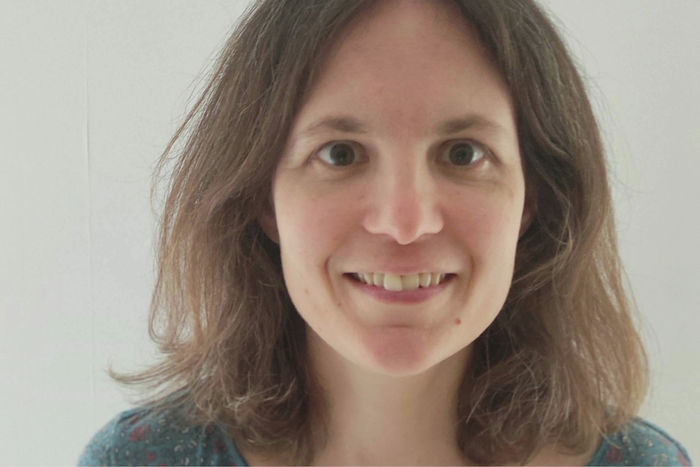
What do mental health, studying at the University of Cambridge, and life in the NHS have in common? As well as being topics surrounded by misunderstanding, misinformation and at times controversy, they’re also the areas in which Dr Meinou Simmons's expertise lie.
When the psychiatrist and author graduated from Girton College in 2004, the mental health landscape looked quite different. “I think stigma has reduced significantly over that time, but there’s still work to be done,” she affirms, especially in terms of funding for services and prioritisation of mental health. “It’s important we give mental health parity of esteem with physical health.”
Dr Simmons, a strong believer in the importance of psychoeducation, is no stranger to the need for expertise and nuance in conversations surrounding mental health. “There’s so much misinformation swirling around,” she reflects, “the internet is a bit like the wild west!” This climate of misinformation is something she hoped to combat by publishing her book, ‘A Guide to the Mental Health of Children and Young People’, inspired by questions she’d received from parents of her patients. “I wanted to signpost people to more reputable sources,” she explains.
“We don’t want to detract away from those people that are really struggling”
As a psychiatrist, Dr Simmons is able to give me a first-hand account of the consequences of this misinformation. One such topic is the overdiagnosis debate, a hot-button issue in the psychiatric world, in which there are “quite a few factors at play.” When it comes to the increased awareness and accessibility of information on mental conditions, and the resulting increase in numbers of people seeking diagnosis, she tells me: “It’s kind of double edged. We don’t want to detract away from those people that are really struggling,” but there’s also a need for triage. “The staffing just can’t keep up in the way that services are commissioned.” Using diagnoses for self identification is “fair enough” in the context of self-discovery, “but I guess because clinical services are so rationed, they’re having to really prioritise those in the greatest need.”
Dr. Simmons takes care to emphasise how classification in psychiatric diagnosis plays a big role in the rate of diagnosis. “Every so many years the classification systems are updated,” according to the current understanding of the literature. With this expansion of understanding, more people that would not otherwise have been identified as having a specific mental health condition are accommodated. While the shifting sands of mental health understanding can be confusing at times, Dr Simmons welcomes many of the changes in mental health discussions, citing the “positive neurodiversity movement.” For her, it is important to understand that neurodiversity is not a mental illness, but a difference.
“It’s important we give mental health parity of esteem with physical health”
While reflecting on Cambridge, Dr Simmons highlights the relationship between lifestyle and mental health. Students should “learn to be a bit boundaried,” ensuring there is time for hobbies and relationships, rather than disappearing into work. Another lesson she learned was that intensity does not need to envelop all spheres of life at Cambridge. Rather than extending the competition of her degree and academics to her downtime, Dr Simmons “learned to steer away” from this intensity and did things “because [she] really wanted to do them, and for enjoyment.”
Life can be chaotic, stressful and overwhelming at times. Dr Simmons recalls feeling like graduation was a “cliff edge” before entering the adult world, but we don’t have to let this take over. “Health trumps everything,” she tells me, summarising the importance of recognising our own humanity, and prioritising our physical and mental wellbeing. Mental health cannot be ignored. The psychiatrist offers a telling remind that “You never know when life will throw you a curveball,” but a strong mental health foundation can provide the skills necessary to navigate those difficult periods, whether in Cambridge or beyond.
 Comment / Top of the slops: the competitiveness of college dining4 June 2026
 Interviews / What’s the story behind Pages coffee house?8 June 2026
 News / News in Brief: Cambridge crowns, council confirmations, and competitive cricket8 June 2026
 Comment / The Cambridge drift1 June 2026
 News / Cambridge researchers produce ‘world-first’ AI vaccine6 June 2026
 Arts / Don’t rush me – I’m reading!9 June 2026
 Lifestyle / Don’t Cry at Me, Argentina – a next-year abroad story8 June 2026
- News / News in Brief: Cambridge crowns, council confirmations, and competitive cricket8 June 2026
 Science / Failure is the foundation of science8 June 2026
 Fashion / The hidden gems of formal fashion8 June 2026